 Kwizi ya Ndiwe dino uti?
 Nkhondo ya madino
 Mpikisano wa madino
 Masewera ang'onoang'ono a madino
 Chimbale cha zomata
 Mindandanda ya TOP ya madino
 Ndidabwitse!
Sinopterus
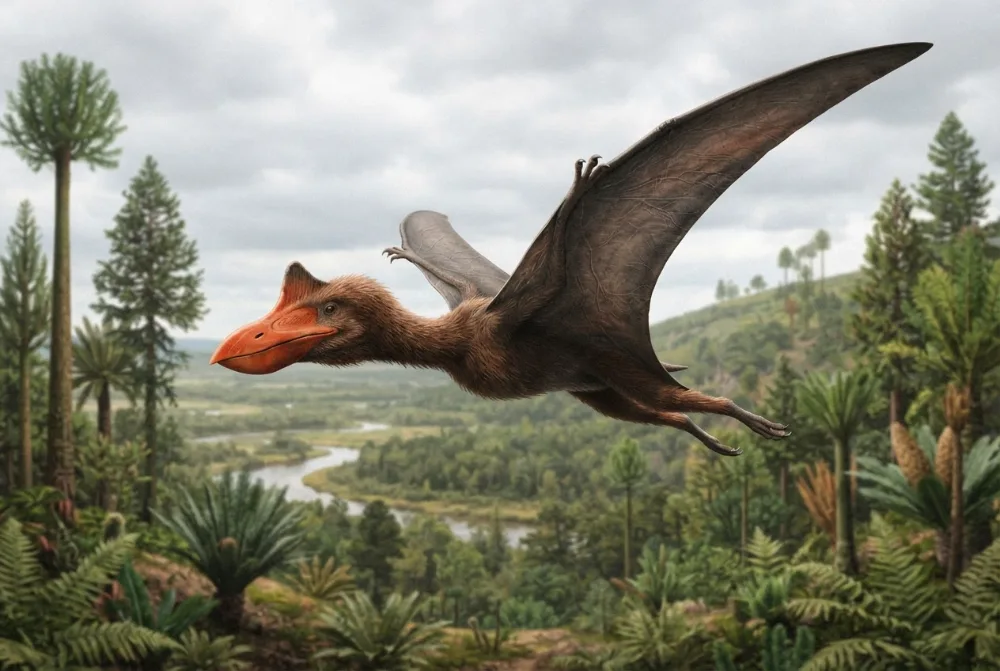
Sinopterus was a flying reptile with a big, toothless beak like a parrot. It lived in China during the Early Cretaceous, about 120 million years ago, and probably ate plants and seeds.13
Ankakhala liti?
Anali wamkulu bwanji?
Mapiko ake anali otambalala bwanji?
Ankalemera bwanji?
 wautali ngati amphaka a pakhomo 4 otsatizana mphuno ndi mchirawolemera pafupifupi ngati mphaka wa pakhomo🍌wolemera ngati nthochi 24⚽akanatha kuuluka kudutsa bwalo lonse la mpira m'masekondi 8
Sinopterus anali wamkulu bwanji poyerekeza ndi IWEYO?
Ndi masamu chabe mu msakatuli wako. Palibe chimene chimasungidwa kapena kutumizidwa kwina kulikonse.
Anali ndi liwiro lotani?


Mfundo zosangalatsa
Sinopterus had a long, bony crest on top of its skull that pointed backward like a spike.1
Its beak had no teeth, similar to modern birds and some other pterosaurs.1
Scientists found tiny plant fossils (phytoliths) in the stomach of a Sinopterus, proving it ate plants.1
Sinopterus also swallowed small stones (gastroliths) to help grind up tough plant food in its gizzard.1
It was one of the first tapejarid pterosaurs found outside Brazil, showing these flying reptiles lived in many places.1
The largest Sinopterus had a wingspan of about 1.9 metres (6.2 feet) and weighed around 2.9 kilograms (6.3 pounds).1
Many scientists now think that only one species of Sinopterus is valid: Sinopterus dongi.2
Mafunso ofunsidwa kwambiri okhudza Sinopterus
?Was Sinopterus a dinosaur?
No, Sinopterus was a pterosaur, a flying reptile, not a dinosaur.1
?How big was Sinopterus?
The largest Sinopterus had a wingspan of about 1.9 metres and weighed around 2.9 kilograms. The type specimen had a skull 17 centimetres long.1
?What did Sinopterus eat?
Sinopterus was a herbivore. Scientists found plant fossils and gastroliths in its stomach, showing it ate seeds, grains, and other plants.1
?Did Sinopterus have teeth?
No, Sinopterus had a toothless, bird-like beak similar to a parrot.1
?When did Sinopterus live?
Sinopterus lived during the Early Cretaceous period, about 120 million years ago.1
?Why did Sinopterus have a crest?
The long bony crest on its skull may have been used for display, such as attracting mates or recognizing other members of its species. Scientists are not completely sure.1
Wothetsa nthano zabodza
Nthano: Some people think Sinopterus ate fish or insects like many other pterosaurs.
Zoona: Stomach contents show Sinopterus was a plant-eater, with no fish bones or insect shells found.1
Kwa akatswiri a madino
- Dzina la sayansi
- Sinopterus
- Anapatsidwa dzina ndi
- Wang and Zhou 20023
- Gulu
- Zokwawa zouluka
- Banja / kladi
- Tapejaridae3
- Magawidwe a sayansi
- Pterosauria > Pterodactyloidea3
- Zaka za miyala
- zaka 121 mpaka 113 miliyoni (Aptian)3
- Mapangidwe a miyala
- Jiufotang3
- Mayiko
- China3
- Zolemba za mafosili
- 3 mu The Paleobiology Database3
- Kupezeka
- Sinopterus was named in 2002 by Chinese paleontologists Wang Xiaolin and Zhou Zhonghe, based on a nearly complete skeleton found in Liaoning, China.13
- Akukambiranabe
- Scientists still debate how many different species of Sinopterus existed, because the crests and sizes vary a lot among fossils.2
Kumene mfundo zimachokera
- Sinopterus (en.wikipedia.org)
- PeerJ A taxonomic revision of the Sinopterus complex (Pterosauria, Tapejaridae) from the Early Cretaceous Jehol Biota, with the new genus Huaxiadraco (peerj.com)
- Sinopterus in The Paleobiology Database (CC BY 4.0): zaka, malo, mapangidwe a miyala, magawidwe a sayansi.
Mfundo iliyonse patsamba lino ili ndi nambala yosonyeza kumene yachokera. Ngati talakwitsa kanthu, pepa, ndife okonda madino, osati magazini ya sayansi. Tiuze pa [email protected] ndipo tikonza.
 Rex ali ndi njala! Dino Wiki ndi ntchito ya bambo kwa mwana wawo wamwamuna wokonda madainoso, yaulere popanda zotsatsa ndi zokazonda. Akuluakulu angadyetse Rex zokhwasula-khwasula kuti tsambali lipitirize kupezeka pa intaneti.Dyetsa Rex
 Pteranodon
 Quetzalcoatlus
 Dorygnathus
 Rhamphorhynchus
 Anhanguera
 Pterodactylus
 Stegosaurus
 Iguanodon
 Archaeopteryx
 Giganotosaurus
 Microraptor
 Deinonychus