 Kwizi ya Ndiwe dino uti?
 Nkhondo ya madino
 Mpikisano wa madino
 Masewera ang'onoang'ono a madino
 Chimbale cha zomata
 Mindandanda ya TOP ya madino
 Ndidabwitse!
Stegoceras
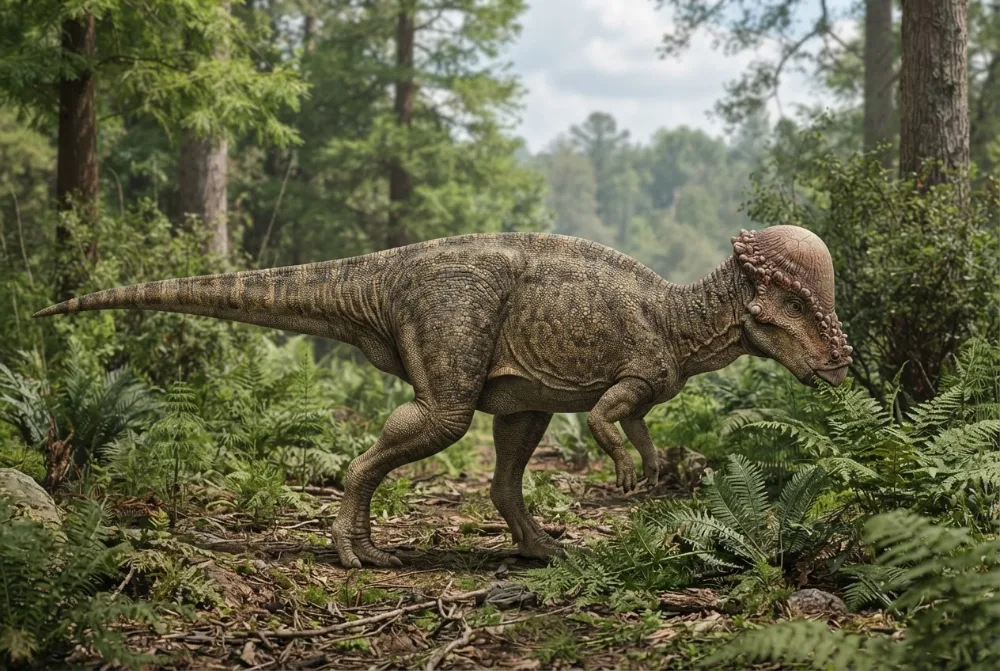
Stegoceras was a small dinosaur with a thick, bony dome on its head. It lived in North America during the Late Cretaceous period, about 77 to 74 million years ago. Scientists think it used its dome for head-butting or showing off to other Stegoceras.1
Ankakhala liti?
Anali wamkulu bwanji?
Anali wautali bwanji?
Ankalemera bwanji?
 wautali ngati agalu 2.5 otsatizana mphuno ndi mchira🍌wautali ngati nthochi 14 zotsatizana
 wolemera ngati amphaka a pakhomo 10🍉wolemera ngati mavwende 8🧸wolemera ngati ana a sukulu ya mkaka 2🎒wolemera ngati ana a sukulu 1🏃akanatha kuthamanga mamita 100 m'masekondi 9.2 (munthu waliwiro kwambiri amafunika 9.6)
Stegoceras anali wamkulu bwanji poyerekeza ndi IWEYO?
Ndi masamu chabe mu msakatuli wako. Palibe chimene chimasungidwa kapena kutumizidwa kwina kulikonse.
Anali ndi liwiro lotani?


Mfundo zosangalatsa
Stegoceras had a thick, smooth dome on top of its skull that grew bigger as it got older.1
The back of its skull had a shelf with small horns made from knobby bumps.1
It had a stiff tail and a broad pelvis, which might have held a big gut for digesting plants.1
Stegoceras was one of the first dome-headed dinosaurs ever discovered, known from skull domes found in 1898.1
Its teeth were small and serrated, good for shearing plants but not for chewing tough fibers.1
Scientists once thought some flat-headed pachycephalosaurs were different species, but they may just be young Stegoceras.1
Mafunso ofunsidwa kwambiri okhudza Stegoceras
?How big was Stegoceras?
About 2 to 2.5 metres (6.6 to 8.2 ft) long and weighed around 10 to 40 kilograms (22 to 88 lb).1
?What did Stegoceras eat?
It was an herbivore, eating plants. Its small, serrated teeth were good for shearing leaves, seeds, and fruit.12
?Did Stegoceras really head-butt?
Scientists are not sure. Some think it used its dome for head-butting or flank-butting, while others think it was for showing off or recognizing its own kind.13
Wothetsa nthano zabodza
Nthano: Many people think Stegoceras used its dome only for head-butting like a battering ram.
Zoona: Scientists debate whether the dome was used for head-butting, flank-butting, or just for display to attract mates.1
Kwa akatswiri a madino
- Dzina la sayansi
- Stegoceras
- Anapatsidwa dzina ndi
- Lambe 19024
- Gulu
- Mitu yozungulira
- Banja / kladi
- Eupachycephalosauria4
- Magawidwe a sayansi
- Ornithischia > Pachycephalosauria4
- Zaka za miyala
- zaka 84 mpaka 66 miliyoni (Campanian / Maastrichtian)4
- Mapangidwe a miyala
- Judith River, Dinosaur Park, Fruitland4
- Mayiko
- Amereka, Kanada4
- Zolemba za mafosili
- 46 mu The Paleobiology Database4
- Amadziwikanso kuti
- Gravitholus, Hanssuessia, Ornatotholus (mayina akale tsopano amawerengedwa ngati nyama yomweyi)4
- Kupezeka
- Stegoceras was named by paleontologist Lawrence Lambe in 1902, based on partial skull domes found in Alberta, Canada, in 1898 and 1901.1
- Akukambiranabe
- Scientists are still unsure whether the species Stegoceras novomexicanum from New Mexico really belongs to Stegoceras or to a different dinosaur.1
Kumene mfundo zimachokera
- Stegoceras (en.wikipedia.org)
- Stegoceras | Natural History Museum (nhm.ac.uk)
- Stegoceras- Enchanted Learning Software (enchantedlearning.com)
- Stegoceras in The Paleobiology Database (CC BY 4.0): zaka, malo, mapangidwe a miyala, magawidwe a sayansi.
Mfundo iliyonse patsamba lino ili ndi nambala yosonyeza kumene yachokera. Ngati talakwitsa kanthu, pepa, ndife okonda madino, osati magazini ya sayansi. Tiuze pa [email protected] ndipo tikonza.
 Rex ali ndi njala! Dino Wiki ndi ntchito ya bambo kwa mwana wawo wamwamuna wokonda madainoso, yaulere popanda zotsatsa ndi zokazonda. Akuluakulu angadyetse Rex zokhwasula-khwasula kuti tsambali lipitirize kupezeka pa intaneti.Dyetsa Rex
 Pachycephalosaurus
 Prenocephale
 Sphaerotholus
 Foraminacephale
 Brontotholus
 Colepiocephale
 Tyrannosaurus
 Triceratops
 Velociraptor
 Spinosaurus
 Ankylosaurus
 Parasaurolophus