 Kwizi ya Ndiwe dino uti?
 Nkhondo ya madino
 Mpikisano wa madino
 Masewera ang'onoang'ono a madino
 Chimbale cha zomata
 Mindandanda ya TOP ya madino
 Ndidabwitse!
Ankakhala liti?

Anali wamkulu bwanji?
Anali wautali bwanji?
Msinkhu wake unali wautali bwanji?
Ankalemera bwanji?
 wautali ngati agalu 3 otsatizana mphuno ndi mchira🍌wautali ngati nthochi 17 zotsatizana
 wolemera ngati amphaka a pakhomo 12🍉wolemera ngati mavwende 10🧸wolemera ngati ana a sukulu ya mkaka 2.5🎒wolemera ngati ana a sukulu 1.5🏃akanatha kuthamanga mamita 100 m'masekondi 7.5 (munthu waliwiro kwambiri amafunika 9.6)
Teihivenator anali wamkulu bwanji poyerekeza ndi IWEYO?
Ndi masamu chabe mu msakatuli wako. Palibe chimene chimasungidwa kapena kutumizidwa kwina kulikonse.
Anali ndi liwiro lotani?


Mfundo zosangalatsa
Teihivenator was named in 2017, making it one of the newest dinosaurs to get a scientific name.1
Its fossils were first discovered in the 1860s and were originally called 'Laelaps macropus'.1
Only a few leg bones and toe bones have been found, so scientists are still learning about this dinosaur.1
Teihivenator lived during the Maastrichtian age, about 72 to 66 million years ago.1
It belonged to a group called Tyrannosauroidea, which includes T. rex and its smaller cousins.1
The fossils were found in the Navesink Formation, which was once a shallow sea environment.1
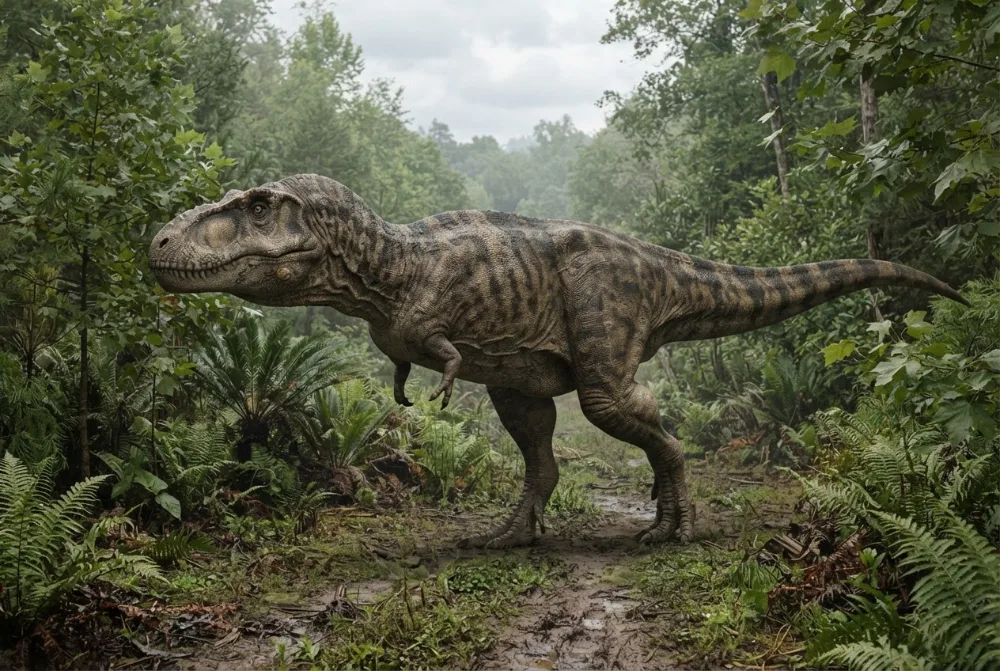
Mafunso ofunsidwa kwambiri okhudza Teihivenator
?What does the name Teihivenator mean?
It means 'strong hunter' from the Arapaho word 'Teihiihan' and the Greek word 'venator'.2
?How big was Teihivenator?
Only a few leg bones have been found, so its exact size is unknown, but it was much smaller than T. rex.3
?When did Teihivenator live?
It lived during the Maastrichtian age, about 72 to 66 million years ago.3
?Where was Teihivenator found?
Its fossils were found in the Navesink Formation in New Jersey, USA, which was once a shallow sea.3
?Is Teihivenator a dinosaur?
Yes, it is a theropod dinosaur and a relative of T. rex.3
?What did Teihivenator eat?
It was a carnivore, meaning it ate meat.3
?Why is Teihivenator's name new?
It was named in 2017 because its fossils were originally called 'Laelaps macropus' but that name was already used for a mite.2
?Could Teihivenator grasp its prey?
Its toe bones suggest it had strong grasping feet, similar to modern predatory birds, but scientists are not certain.2
Kwa akatswiri a madino
- Dzina la sayansi
- Teihivenator
- Anapatsidwa dzina ndi
- Yun 20173
- Gulu
- Matiranosauri
- Banja / kladi
- Tyrannosauroidea3
- Magawidwe a sayansi
- Theropoda > Tyrannosauroidea3
- Zaka za miyala
- zaka 72 mpaka 66 miliyoni (Maastrichtian)3
- Mapangidwe a miyala
- Navesink3
- Mayiko
- Amereka3
- Zolemba za mafosili
- 1 mu The Paleobiology Database3
- Kupezeka
- The first fossils were found in the 1860s by Edward Drinker Cope, who named them Laelaps macropus. In 2017, paleontologist Chan-gyu Yun gave them the new name Teihivenator.1
- Akukambiranabe
- Scientists are not sure if Teihivenator is a valid species or if the few bones belong to a different dinosaur. Some experts think it might be a 'nomen dubium' (doubtful name).1
Kumene mfundo zimachokera
- PBDB Taxon (paleobiodb.org)
- 1Vertebrate Paleontological Institute of Incheon, Incheon 21974, Republic of Korea 2Biological Sciences, Inha University, Incheon 22212, Republic of Korea (dinodata.de)
- Teihivenator in The Paleobiology Database (CC BY 4.0): zaka, malo, mapangidwe a miyala, magawidwe a sayansi.
Mfundo iliyonse patsamba lino ili ndi nambala yosonyeza kumene yachokera. Ngati talakwitsa kanthu, pepa, ndife okonda madino, osati magazini ya sayansi. Tiuze pa [email protected] ndipo tikonza.
 Rex ali ndi njala! Dino Wiki ndi ntchito ya bambo kwa mwana wawo wamwamuna wokonda madainoso, yaulere popanda zotsatsa ndi zokazonda. Akuluakulu angadyetse Rex zokhwasula-khwasula kuti tsambali lipitirize kupezeka pa intaneti.Dyetsa Rex
 Tyrannosaurus
 Tarbosaurus
 Albertosaurus
 Daspletosaurus
 Gorgosaurus
 Alectrosaurus
 Triceratops
 Velociraptor
 Spinosaurus
 Ankylosaurus
 Parasaurolophus
 Pteranodon