 Kwizi ya Ndiwe dino uti?
 Nkhondo ya madino
 Mpikisano wa madino
 Masewera ang'onoang'ono a madino
 Chimbale cha zomata
 Mindandanda ya TOP ya madino
 Ndidabwitse!
Tlatolophus
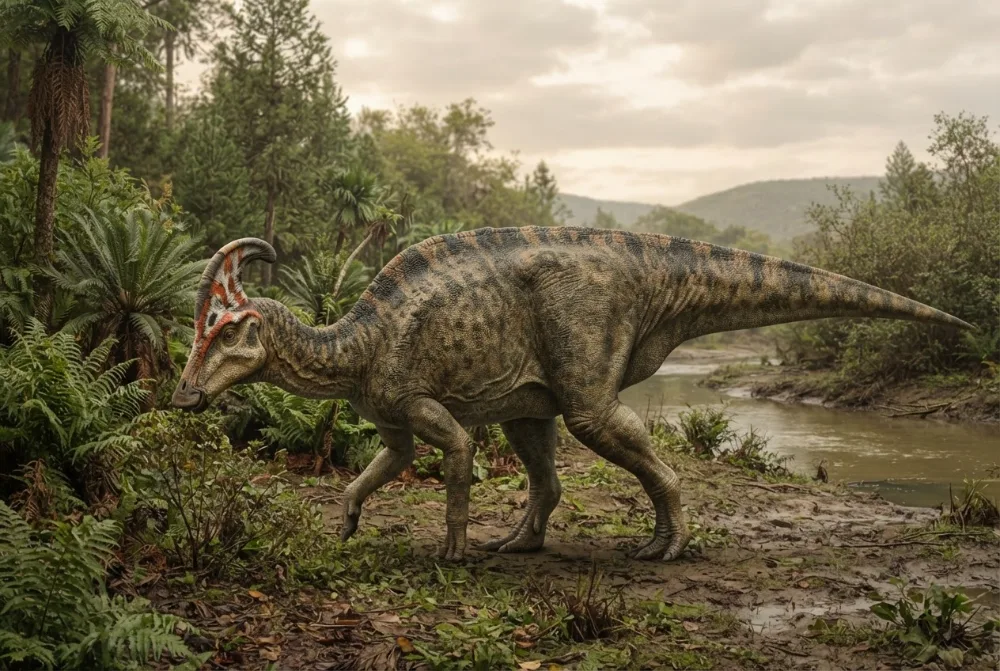
Tlatolophus was a big, plant-eating duck-billed dinosaur with a fancy crest on its head that looked like a comma or a word symbol. It lived in what is now Mexico during the Late Cretaceous, about 73 to 72.5 million years ago. This dinosaur is special because it's one of the most complete duck-billed dinosaurs ever found in Mexico!12
Ankakhala liti?
Anali wamkulu bwanji?
Anali wautali bwanji?
Msinkhu wake unali wautali bwanji?
Ankalemera bwanji?

 wautali ngati agalu 8 otsatizana mphuno ndi mchira🍌wautali ngati nthochi 44 zotsatizanawolemera ngati agalu 150🍉wolemera ngati mavwende 600🎒wolemera ngati makalasi athunthu a ana a sukulu 4🐻❄️wolemera ngati zimbalangondo zoyera 7🏃akanatha kuthamanga mamita 100 m'masekondi 14 (munthu waliwiro kwambiri amafunika 9.6)
Tlatolophus anali wamkulu bwanji poyerekeza ndi IWEYO?
Ndi masamu chabe mu msakatuli wako. Palibe chimene chimasungidwa kapena kutumizidwa kwina kulikonse.
Anali ndi liwiro lotani?


Mfundo zosangalatsa
Tlatolophus's crest was hollow and shaped like an upside-down comma, which may have been used for making sounds or showing off.1
The name Tlatolophus comes from the Nahuatl word 'tlatolli' meaning 'word', because its crest looks like the Aztec symbol for 'word'.1
The first fossil was a tail found in 2005, but it took until 2013 for scientists to dig out the whole skeleton, including the skull.1
Tlatolophus is the most complete lambeosaurine (crested duck-billed dinosaur) ever found in Mexico.2
Its skull was tall, and the crest was made of bones from the nose and upper jaw, not just a separate bone.1
Scientists think Tlatolophus was about 8 meters long and weighed nearly 3 metric tons, as heavy as a small elephant.1
Mafunso ofunsidwa kwambiri okhudza Tlatolophus
?What did Tlatolophus eat?
It was a plant-eater, like all duck-billed dinosaurs. It likely ate leaves, ferns, and other plants with its wide beak.1
?How big was Tlatolophus?
About 8 metres long and weighed nearly 3 metric tons, as heavy as a small elephant.1
?Did Tlatolophus have feathers?
No, duck-billed dinosaurs like Tlatolophus did not have feathers. They were covered in scaly skin.1
?When did Tlatolophus live?
It lived during the Late Cretaceous period, about 73 to 72.5 million years ago.1
Wothetsa nthano zabodza
Nthano: Some people think Tlatolophus could swim in the ocean.
Zoona: No, Tlatolophus was a land dinosaur that walked on four legs or two, and it ate plants on land.4
Kwa akatswiri a madino
- Dzina la sayansi
- Tlatolophus
- Anapatsidwa dzina ndi
- Ramírez-Velasco et al. 20214
- Gulu
- Milomo ya bakha
- Banja / kladi
- Hadrosauridae4
- Magawidwe a sayansi
- Ornithischia > Ornithopoda > Iguanodontia > Hadrosauridae4
- Zaka za miyala
- zaka 84 mpaka 72 miliyoni (Campanian)4
- Mapangidwe a miyala
- Cerro del Pueblo4
- Mayiko
- Mekisiko4
- Zolemba za mafosili
- 1 mu The Paleobiology Database4
- Kupezeka
- The first Tlatolophus fossil was found in 2005 in Mexico, but it wasn't until 2013 that a team from INAH and UNAM started digging it out. They named it Tlatolophus galorum in 2021.12
- Akukambiranabe
- Scientists still debate what the crest was used for, whether for making sounds, attracting mates, or something else.1
Kumene mfundo zimachokera
- Tlatolophus (en.wikipedia.org)
- Tlatolophus galorum, gen. et sp. nov., a parasaurolophini dinosaur from the upper Campanian of the Cerro del Pueblo Formation, Coahuila, northern Mexico (sciencedirect.com)
- El ‘Tlatolophus galorum’, la nueva especie de dinosaurio hallada en México | EL PAÍS México (elpais.com)
- Tlatolophus in The Paleobiology Database (CC BY 4.0): zaka, malo, mapangidwe a miyala, magawidwe a sayansi.
Mfundo iliyonse patsamba lino ili ndi nambala yosonyeza kumene yachokera. Ngati talakwitsa kanthu, pepa, ndife okonda madino, osati magazini ya sayansi. Tiuze pa [email protected] ndipo tikonza.
 Rex ali ndi njala! Dino Wiki ndi ntchito ya bambo kwa mwana wawo wamwamuna wokonda madainoso, yaulere popanda zotsatsa ndi zokazonda. Akuluakulu angadyetse Rex zokhwasula-khwasula kuti tsambali lipitirize kupezeka pa intaneti.Dyetsa Rex
 Parasaurolophus
 Edmontosaurus
 Saurolophus
 Hypacrosaurus
 Corythosaurus
 Kritosaurus
 Tyrannosaurus
 Triceratops
 Velociraptor
 Spinosaurus
 Ankylosaurus
 Pteranodon