 Kwizi ya Ndiwe dino uti?
 Nkhondo ya madino
 Mpikisano wa madino
 Masewera ang'onoang'ono a madino
 Chimbale cha zomata
 Mindandanda ya TOP ya madino
 Ndidabwitse!
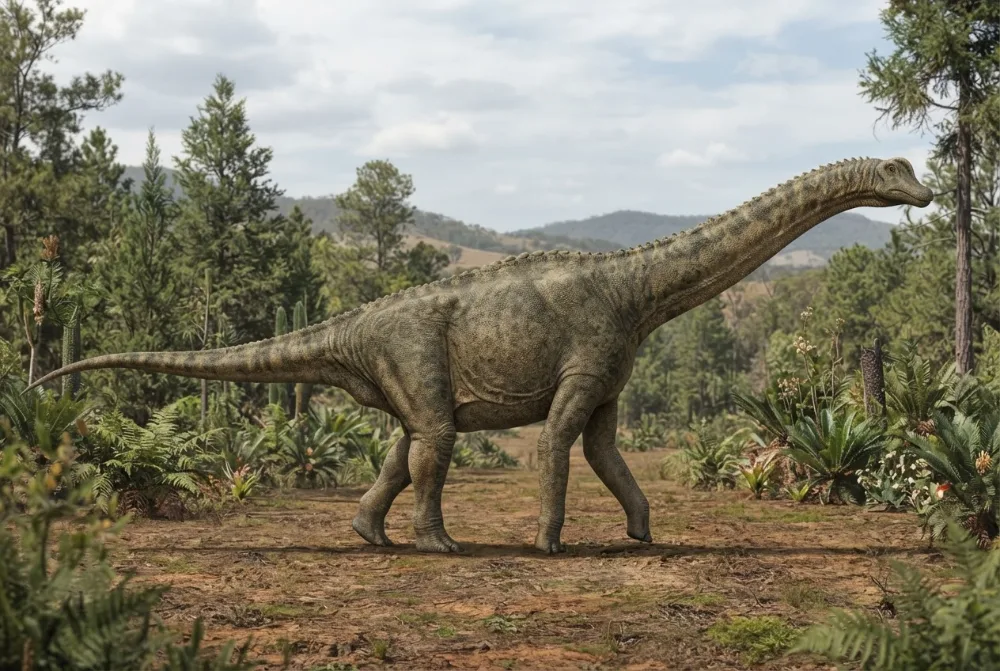
Wintonotitan
Wintonotitan was a long-necked sauropod that lived in Australia about 100 million years ago. It was a plant-eater with a relatively slender body and front legs longer than its back legs. Scientists call it 'Clancy' after a poem by Banjo Patterson.2
Ankakhala liti?
Anali wamkulu bwanji?
Anali wautali bwanji?
Msinkhu wake unali wautali bwanji?
Ankalemera bwanji?

 wautali ngati magalimoto 4 oimikidwa pamzere🍌wautali ngati nthochi 89 zotsatizanawolemera ngati magalimoto 10🍉wolemera ngati mavwende 3000🎒wolemera ngati makalasi athunthu a ana a sukulu 19🐻❄️wolemera ngati zimbalangondo zoyera 33🏃akanatha kuthamanga mamita 100 m'masekondi 26 (munthu waliwiro kwambiri amafunika 9.6)
Wintonotitan anali wamkulu bwanji poyerekeza ndi IWEYO?
Ndi masamu chabe mu msakatuli wako. Palibe chimene chimasungidwa kapena kutumizidwa kwina kulikonse.
Anali ndi liwiro lotani?


Mfundo zosangalatsa
Wintonotitan was one of three new dinosaurs named from the Winton Formation in 2009, along with Diamantinasaurus and Australovenator.1
Its fossils were first discovered in the 1970s by Keith Watts, who donated them to the Queensland Museum. The species name wattsi honors him.2
Wintonotitan had unique tail bones that were biconvex (rounded on both ends) near the tip, which is different from most other sauropods.2
It lived in a river plain environment with large rivers, swamps, and lakes, after the Eromanga Sea had retreated. The climate was subtropical with abundant rainfall.2
Wintonotitan was a relatively small titanosaur, reaching about 15 to 16 metres long, while some other titanosaurs could grow to 35 metres.2
The fossils found include most of the front limb and shoulder girdle, tail vertebrae, ribs, and hip bones, but no skull or teeth have been discovered yet.2
Mafunso ofunsidwa kwambiri okhudza Wintonotitan
?How much did Wintonotitan weigh?
About 10 to 15 tonnes (22,000 to 33,000 pounds). That is roughly as heavy as a large truck.2
?What plants did Wintonotitan eat?
It ate ferns, ginkgoes, conifers, cycads, and early flowering plants that grew in its river-plain home.2
?How did Wintonotitan get its name?
Its name means 'Winton titan', after the town of Winton in Queensland, Australia, where its fossils were found.3
?When did Wintonotitan live?
It lived during the Cretaceous Period, about 100 million years ago.2
Kwa akatswiri a madino
- Dzina la sayansi
- Wintonotitan
- Anapatsidwa dzina ndi
- Hocknull et al. 20094
- Gulu
- Makosi atali
- Banja / kladi
- Diamantinasauria4
- Magawidwe a sayansi
- Sauropodomorpha > Sauropoda > Macronaria4
- Zaka za miyala
- zaka 100 mpaka 90 miliyoni (Cenomanian / Turonian)4
- Mapangidwe a miyala
- Winton4
- Mayiko
- Australia4
- Zolemba za mafosili
- 7 mu The Paleobiology Database4
- Kupezeka
- Wintonotitan was named by Scott Hocknull and colleagues in 2009 based on fossils found near Winton, Queensland. The bones were first collected in the 1970s by Keith Watts and later excavated by the Queensland Museum in the 1980s.12
- Akukambiranabe
- Scientists are not sure what Wintonotitan's skull looked like because no skull bones have been found. They also debate whether it was a basal titanosauriform or a more derived titanosaur.21
Kumene mfundo zimachokera
- New Mid-Cretaceous (Latest Albian) Dinosaurs from Winton, Queensland, Australia | PLOS One (journals.plos.org)
- Dinosaurs - Wintonotitan wattsi - The Australian Museum (australian.museum)
- Wintonotitan (Wikipedia) (Wikipedia)
- Wintonotitan in The Paleobiology Database (CC BY 4.0): zaka, malo, mapangidwe a miyala, magawidwe a sayansi.
Mfundo iliyonse patsamba lino ili ndi nambala yosonyeza kumene yachokera. Ngati talakwitsa kanthu, pepa, ndife okonda madino, osati magazini ya sayansi. Tiuze pa [email protected] ndipo tikonza.
 Rex ali ndi njala! Dino Wiki ndi ntchito ya bambo kwa mwana wawo wamwamuna wokonda madainoso, yaulere popanda zotsatsa ndi zokazonda. Akuluakulu angadyetse Rex zokhwasula-khwasula kuti tsambali lipitirize kupezeka pa intaneti.Dyetsa Rex
 Brachiosaurus
 Diplodocus
 Brontosaurus
 Argentinosaurus
 Camarasaurus
 Morosaurus
 Tyrannosaurus
 Triceratops
 Velociraptor
 Spinosaurus
 Ankylosaurus
 Parasaurolophus