 Kwizi ya Ndiwe dino uti?
 Nkhondo ya madino
 Mpikisano wa madino
 Masewera ang'onoang'ono a madino
 Chimbale cha zomata
 Mindandanda ya TOP ya madino
 Ndidabwitse!
Xiongguanlong
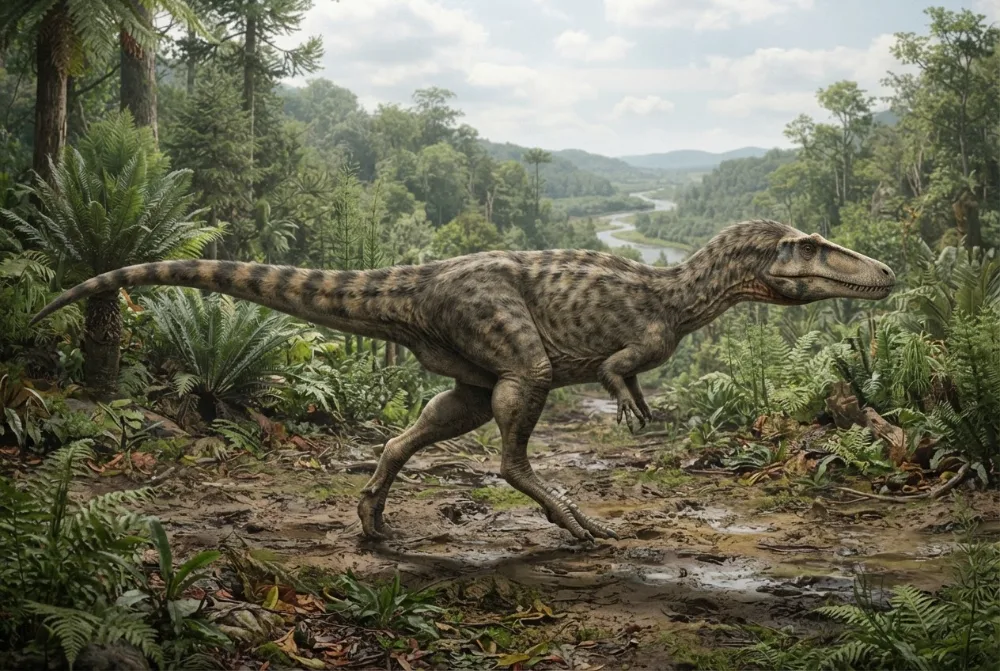
Xiongguanlong was an early cousin of the mighty T. rex. It had a long, narrow snout and lived in what is now China about 120 million years ago. It was a meat-eater that could run after its prey.12
Ankakhala liti?
Anali wamkulu bwanji?
Anali wautali bwanji?
Msinkhu wake unali wautali bwanji?
kuyerekeza
Ankalemera bwanji?
 wautali ngati agalu 5 otsatizana mphuno ndi mchira🍌wautali ngati nthochi 28 zotsatizana🍉wolemera ngati mavwende 54🧸wolemera ngati ana a sukulu ya mkaka 14🎒wolemera ngati ana a sukulu 8🏃akanatha kuthamanga mamita 100 m'masekondi 7.5 (munthu waliwiro kwambiri amafunika 9.6)
Xiongguanlong anali wamkulu bwanji poyerekeza ndi IWEYO?
Ndi masamu chabe mu msakatuli wako. Palibe chimene chimasungidwa kapena kutumizidwa kwina kulikonse.
Anali ndi liwiro lotani?


Mfundo zosangalatsa
Xiongguanlong had a narrow and long muzzle, similar to the later tyrannosaur Alioramus.1
It is the sister taxon to Tyrannosauridae plus Appalachiosaurus, meaning it is closely related to the family that includes T. rex.1
Xiongguanlong shows several features that later became hallmarks of tyrannosaurids, like a sharp crest on the top of its skull and a boxy braincase.1
Its premaxillary teeth had a ridge on the inner side, a feature seen in later tyrannosaurids.1
The slender, unornamented nasals of Xiongguanlong suggest that the evolution of tyrannosaur feeding adaptations was more complex than previously thought.1
Xiongguanlong lived during the Aptian to Albian stages, about 121.4 to 113.2 million years ago.2
Mafunso ofunsidwa kwambiri okhudza Xiongguanlong
?How big was Xiongguanlong?
About 5 metres (16 feet) long and weighed around 270 kilograms (600 pounds).34
?What did Xiongguanlong eat?
It was a meat-eater that hunted small- to medium-sized animals.4
Kwa akatswiri a madino
- Dzina la sayansi
- Xiongguanlong
- Anapatsidwa dzina ndi
- Li et al. 20095
- Gulu
- Matiranosauri
- Banja / kladi
- Tyrannosauroidea5
- Magawidwe a sayansi
- Theropoda > Tyrannosauroidea5
- Zaka za miyala
- zaka 121 mpaka 113 miliyoni (Aptian)5
- Mapangidwe a miyala
- Xiagou5
- Mayiko
- China5
- Zolemba za mafosili
- 1 mu The Paleobiology Database5
- Kupezeka
- Xiongguanlong was named by Daqing Li and colleagues in 2009 based on a fossil found in the Xinminpu Group of Gansu, China.1
- Akukambiranabe
- Scientists are still debating how body size evolved in tyrannosauroids, and whether the trend of increasing size seen in North American tyrannosaurids extends through the whole group.1
Kumene mfundo zimachokera
- A longirostrine tyrannosauroid from the Early Cretaceous of China (royalsocietypublishing.org)
- PBDB Taxon (paleobiodb.org)
- Xiongguanlong (en.wikipedia.org)
- Dinosaur - Xiongguanlong baimoensis - The Australian Museum (australian.museum)
- Xiongguanlong in The Paleobiology Database (CC BY 4.0): zaka, malo, mapangidwe a miyala, magawidwe a sayansi.
Mfundo iliyonse patsamba lino ili ndi nambala yosonyeza kumene yachokera. Ngati talakwitsa kanthu, pepa, ndife okonda madino, osati magazini ya sayansi. Tiuze pa [email protected] ndipo tikonza.
 Rex ali ndi njala! Dino Wiki ndi ntchito ya bambo kwa mwana wawo wamwamuna wokonda madainoso, yaulere popanda zotsatsa ndi zokazonda. Akuluakulu angadyetse Rex zokhwasula-khwasula kuti tsambali lipitirize kupezeka pa intaneti.Dyetsa Rex
 Tyrannosaurus
 Tarbosaurus
 Albertosaurus
 Daspletosaurus
 Gorgosaurus
 Alectrosaurus
 Stegosaurus
 Iguanodon
 Archaeopteryx
 Giganotosaurus
 Microraptor
 Deinonychus