 Ati daayinoo kami? Qormaata
 Lola daayinoo
 Dorgommii daayinoo
 Taphoota daayinoo xixiqqoo
 Albamii istiikarii
 Tarreewwan TOP daayinoo
 Na dinqisiisi!
Alexornis
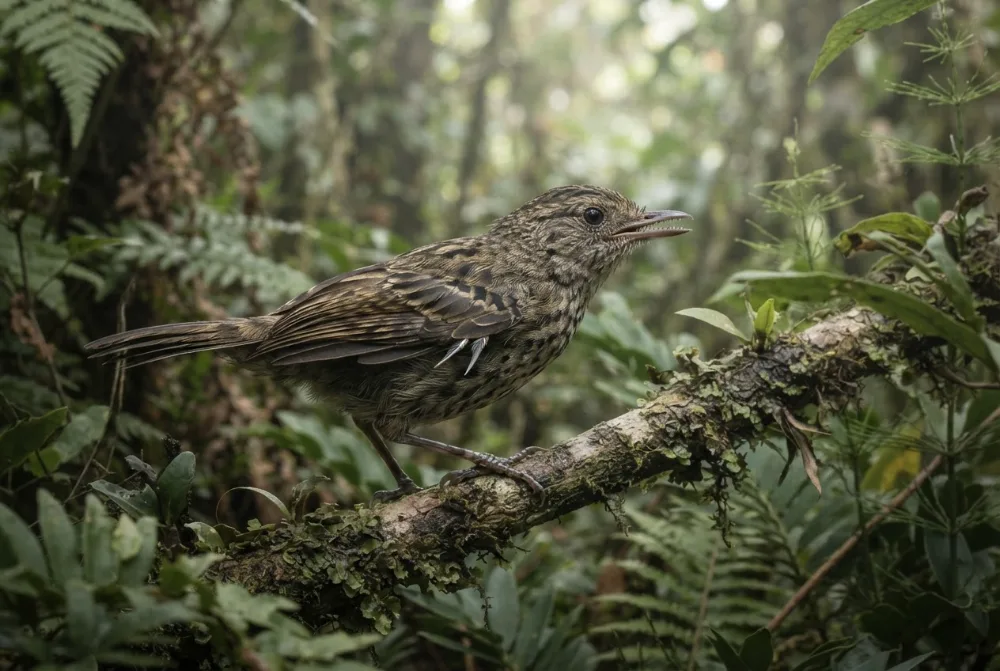
Alexornis was a tiny bird that lived during the Late Cretaceous in what is now Mexico. It was about the size of a sparrow and probably ate insects or other small animals. This bird is special because it belongs to a group called enantiornithines, which had a backwards shoulder joint compared to modern birds.13
Yoom jiraate?
Hammam guddaa ture?
Hammam ulfaataa ture?
SI wajjin yoo wal bira qabamu, Alexornis hammam guddaa ture?
Herrega qofa barbaadduu kee keessatti. Wanti tokkollee hin olkaa'amu, eessayyuu hin ergamu.
Hammam saffisaa ture?


Odeeffannoowwan bashannansiisoo
Alexornis is known from only one partial skeleton, which includes shoulder, wing, and leg bones, but no skull.1
It weighed only about 35.6 grams, which is roughly the same as a modern sparrow.1
When first discovered, scientists thought Alexornis was an ancestor of kingfishers and woodpeckers, but later studies showed it was an enantiornithine bird.1
Enantiornithines like Alexornis had a reversed joint between the shoulder blade and the collarbone, which confused early researchers.1
The fossil was discovered in 1971 and formally described in 1976 by paleontologist Pierce Brodkorb.1
Alexornis lived during the Santonian age of the Late Cretaceous, about 85 to 83 million years ago.3
Gaaffiiwwan waa'ee Alexornis baay'ee gaafataman
?How big was Alexornis?
About the size of a sparrow, weighing roughly 35.6 grams.1
?What did Alexornis eat?
Scientists think it probably ate insects or other small animals, based on its small size and bird-like features.1
?Was Alexornis a dinosaur?
Alexornis was a bird, and birds are a type of dinosaur called avialan dinosaurs. So yes, it was a dinosaur.1
?When did Alexornis live?
It lived during the Late Cretaceous, about 85 to 83 million years ago.1
Seenaa sobaa diigaa
Seenaa sobaa: Some people thought Alexornis was a modern bird ancestor.
Dhugaa: Actually, Alexornis is an enantiornithine, a group of ancient birds that went extinct with the dinosaurs.1
Ogeeyyii daayinootiif
- Maqaa saayinsii
- Alexornis
- Kan maqaa baase
- Brodkorb 19763
- Garee
- Simbirroota jalqabaa
- Maatii / kilaadii
- Alexornithidae3
- Ramaddii
- Theropoda > Avialae3
- Umurii dhagaawwanii
- waggaa miliyoona 86 hanga 84 (Santonian)3
- Caasaawwan dhagaa
- La Bocana Roja3
- Biyyoota
- Meeksikoo3
- Galmee fosilii
- 1 The Paleobiology Database keessa3
- Argannoo
- The only known fossil of Alexornis was found in 1971 near El Rosario, Baja California, Mexico. It was named and described in 1976 by Pierce Brodkorb, who thought it was an ancestor of modern kingfishers and woodpeckers.12
- Ammallee falmisiisaa
- Scientists are still unsure exactly how Alexornis is related to other enantiornithine birds, especially those from South America and Central Asia.1
Odeeffannoon eessaa dhufa
- Alexornis (en.wikipedia.org)
- repository.si.edu (repository.si.edu)
- Alexornis in The Paleobiology Database (CC BY 4.0): umurii, bakkeewwan, caasaawwan dhagaa, ramaddii.
Odeeffannoon fuula kana irra jiru hundi lakkoofsa madda isaa agarsiisu qaba. Yoo waa dogoggorre, dhiifama, nuti jaallattoota daayinoo malee joornaalii saayinsii miti. [email protected] irratti nutti himi, nus ni sirreessina.
 Rex beela'eera! Dino Wiki pirojektii abbaa tokkoo kan ilma isaa daayinoo jaallatuuf hojjetame, bilisa, beeksisa malee fi hordoftuu malee. Ga'eessonni akka inni interneetii irra turuuf Rexiif nyaata xiqqoo kennuu danda'u.Rex soori
 Archaeopteryx
 Hesperornis
 Ichthyornis
 Baptornis
 Jurapteryx
 Gobipteryx
 Tyrannosaurus
 Triceratops
 Velociraptor
 Spinosaurus
 Ankylosaurus
 Parasaurolophus