 Ati daayinoo kami? Qormaata
 Lola daayinoo
 Dorgommii daayinoo
 Taphoota daayinoo xixiqqoo
 Albamii istiikarii
 Tarreewwan TOP daayinoo
 Na dinqisiisi!
Amargatitanis
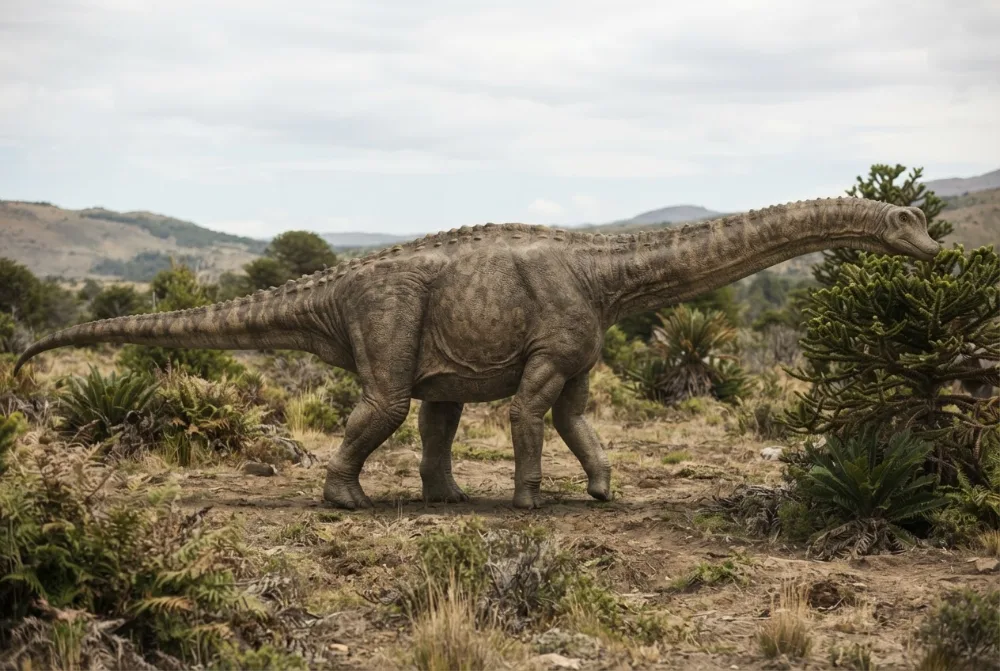
Amargatitanis was a long-necked plant-eater that lived in what is now Argentina. It was a sauropod, but not one of the biggest, it was about as long as a school bus. Its fossils were found near a place called La Amarga, which means 'the bitter one' in Spanish.1
Yoom jiraate?
Hammam guddaa ture?
Hammam dheeraa ture?
Hammam ol-dheeraa ture?
tilmaama
Hammam ulfaataa ture?
 akka konkolaataa 2.5 tarreen dhaabatan dheeraa🍌akka muuzii 67 walitti hiriiran dheeraa
 akka saree 180 ulfaata🍉akka habxuu 700 ulfaata🎒akka kutaalee mana barumsaa guutuu 4 ulfaata🐻❄️akka beeraa adii 8 ulfaata🏃meetira 100 sekondii 17 keessatti fiiguu danda'a (namni hunda caalaa saffisaan 9.6 barbaada)
SI wajjin yoo wal bira qabamu, Amargatitanis hammam guddaa ture?
Herrega qofa barbaadduu kee keessatti. Wanti tokkollee hin olkaa'amu, eessayyuu hin ergamu.
Hammam saffisaa ture?


Odeeffannoowwan bashannansiisoo
Amargatitanis was first thought to be a titanosaur, but later scientists realized it was a dicraeosaurid, a group of sauropods with short necks and tall spines on their vertebrae.1
The only known skeleton of Amargatitanis is incomplete: just a partial hind leg, a hip bone, and two vertebrae. That makes it hard for scientists to know exactly what it looked like.1
Amargatitanis lived about 129 to 123 million years ago, during the Early Cretaceous period.1
The fossils were collected by famous paleontologist José Bonaparte in 1983, but the dinosaur wasn't named until 2007 by Sebastián Apesteguía.1
Amargatitanis shared its home with other sauropods like Amargasaurus and Zapalasaurus. They probably ate different plants to avoid competing for food.1
Like other dicraeosaurids, Amargatitanis had a long tail and strong legs. Its neck was shorter than many other sauropods, so it probably fed at heights up to about 2.7 metres (8.9 feet).1
Gaaffiiwwan waa'ee Amargatitanis baay'ee gaafataman
?How big was Amargatitanis?
About 12 metres (39.7 feet) long and weighed around 3.5 metric tons (3.9 short tons), according to one estimate. Another study gave a higher weight of about 11.4 metric tons (12.6 short tons).1
?What did Amargatitanis eat?
It was a plant-eater, or herbivore. It probably ate low-growing plants because its neck was shorter than many other sauropods.13
?When did Amargatitanis live?
It lived about 129 to 123 million years ago, during the Early Cretaceous period.1
Ogeeyyii daayinootiif
- Maqaa saayinsii
- Amargatitanis
- Kan maqaa baase
- Apesteguía 20073
- Garee
- Morma-dheertota
- Maatii / kilaadii
- Dicraeosauridae3
- Ramaddii
- Sauropodomorpha > Sauropoda > Diplodocoidea3
- Umurii dhagaawwanii
- waggaa miliyoona 126 hanga 121 (Barremian)3
- Caasaawwan dhagaa
- La Amarga3
- Biyyoota
- Arjentiinaa3
- Galmee fosilii
- 1 The Paleobiology Database keessa3
- Argannoo
- Amargatitanis was named by Argentine paleontologist Sebastián Apesteguía in 2007. The fossils were found in 1983 by a team led by José Bonaparte in the La Amarga Formation of Argentina.1
- Ammallee falmisiisaa
- Scientists are not sure whether Amargatitanis is a valid genus or a nomen dubium (doubtful name), because the fossils are so few and fragmentary.2
Odeeffannoon eessaa dhufa
- Amargatitanis (en.wikipedia.org)
- PBDB Taxon (paleobiodb.org)
- Amargatitanis in The Paleobiology Database (CC BY 4.0): umurii, bakkeewwan, caasaawwan dhagaa, ramaddii.
Odeeffannoon fuula kana irra jiru hundi lakkoofsa madda isaa agarsiisu qaba. Yoo waa dogoggorre, dhiifama, nuti jaallattoota daayinoo malee joornaalii saayinsii miti. [email protected] irratti nutti himi, nus ni sirreessina.
 Rex beela'eera! Dino Wiki pirojektii abbaa tokkoo kan ilma isaa daayinoo jaallatuuf hojjetame, bilisa, beeksisa malee fi hordoftuu malee. Ga'eessonni akka inni interneetii irra turuuf Rexiif nyaata xiqqoo kennuu danda'u.Rex soori
 Brachiosaurus
 Diplodocus
 Brontosaurus
 Argentinosaurus
 Camarasaurus
 Morosaurus
 Stegosaurus
 Iguanodon
 Archaeopteryx
 Giganotosaurus
 Microraptor
 Deinonychus