 Ati daayinoo kami? Qormaata
 Lola daayinoo
 Dorgommii daayinoo
 Taphoota daayinoo xixiqqoo
 Albamii istiikarii
 Tarreewwan TOP daayinoo
 Na dinqisiisi!
Yoom jiraate?

Hammam guddaa ture?
Hammam ulfaataa ture?
SI wajjin yoo wal bira qabamu, Avisaurus hammam guddaa ture?
Herrega qofa barbaadduu kee keessatti. Wanti tokkollee hin olkaa'amu, eessayyuu hin ergamu.
Hammam saffisaa ture?


Odeeffannoowwan bashannansiisoo
Avisaurus lived about 68 to 66 million years ago, right before the dinosaurs went extinct.1
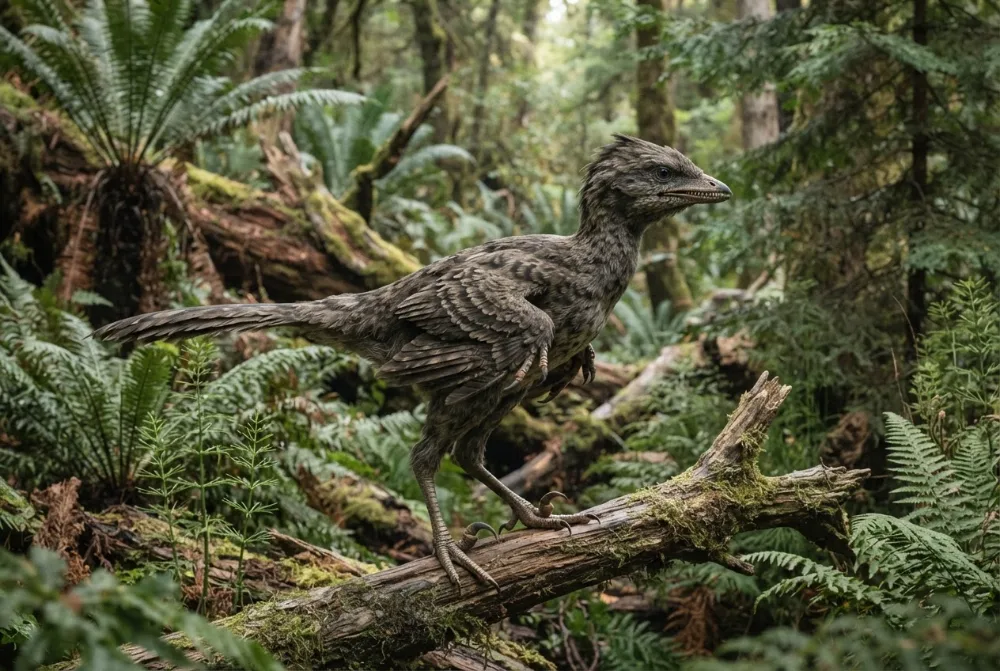
It was one of the largest enantiornithine birds, weighing up to 1.7 kilograms (3.7 pounds).1
The first fossil of Avisaurus was a single foot bone called a tarsometatarsus, found in Montana in 1975.1
Scientists first thought Avisaurus was a non-avian dinosaur, but later realized it was an ancient bird.1
Avisaurus had curved claws on its feet, similar to those of raptor dinosaurs, which helped it catch prey.1
It lived in swamps and river basins along the western shore of a huge sea that split North America.1
Gaaffiiwwan waa'ee Avisaurus baay'ee gaafataman
?Was Avisaurus a dinosaur?
Yes, Avisaurus was a dinosaur. All birds are members of the dinosaur group, and Avisaurus was an enantiornithine bird.1
?How big was Avisaurus?
Avisaurus was a large enantiornithine bird. Avisaurus darwini weighed up to 1.2 kilograms (2.6 pounds), and Avisaurus archibaldi weighed up to 1.7 kilograms (3.7 pounds).1
?What did Avisaurus eat?
Avisaurus was a predator that likely ate other vertebrates. Its curved claws and foot bones suggest it could catch and carry prey, similar to modern hawks and owls.12
?When did Avisaurus live?
Avisaurus lived about 68 to 66 million years ago, during the Late Cretaceous period. It was one of the last enantiornithine birds before the non avian dinosaurs went extinct.1
?Where was Avisaurus found?
Avisaurus fossils have been found in the Hell Creek Formation of Montana, USA. The first fossil was a single foot bone collected in 1975 in Garfield County.1
Seenaa sobaa diigaa
Seenaa sobaa: Avisaurus was a dinosaur.
Dhugaa: Avisaurus was actually an ancient bird, part of a group called enantiornithines. It was a bird-like dinosaur, but not a non-avian dinosaur.1
Ogeeyyii daayinootiif
- Maqaa saayinsii
- Avisaurus
- Kan maqaa baase
- Brett-Surman and Paul 19854
- Garee
- Simbirroota jalqabaa
- Maatii / kilaadii
- Avisauridae4
- Ramaddii
- Theropoda > Avialae4
- Umurii dhagaawwanii
- waggaa miliyoona 72 hanga 66 (Maastrichtian)4
- Caasaawwan dhagaa
- Hell Creek4
- Biyyoota
- Ameerikaa4
- Galmee fosilii
- 2 The Paleobiology Database keessa4
- Argannoo
- Avisaurus was named in 1985 by paleontologists Brett-Surman and Paul. The first fossil, a foot bone, was found in 1975 by J. David Archibald in the Hell Creek Formation of Montana.14
- Ammallee falmisiisaa
- Scientists are not sure exactly how Avisaurus used its claws, whether for hunting or climbing.1
Odeeffannoon eessaa dhufa
- Avisaurus (en.wikipedia.org)
- Predatory birds from the same fossil formation as SUE the T. rex - Field Museum (fieldmuseum.org)
- New enantiornithine diversity in the Hell Creek Formation and the functional morphology of the avisaurid tarsometatarsus (pmc.ncbi.nlm.nih.gov)
- Avisaurus in The Paleobiology Database (CC BY 4.0): umurii, bakkeewwan, caasaawwan dhagaa, ramaddii.
Odeeffannoon fuula kana irra jiru hundi lakkoofsa madda isaa agarsiisu qaba. Yoo waa dogoggorre, dhiifama, nuti jaallattoota daayinoo malee joornaalii saayinsii miti. [email protected] irratti nutti himi, nus ni sirreessina.
 Rex beela'eera! Dino Wiki pirojektii abbaa tokkoo kan ilma isaa daayinoo jaallatuuf hojjetame, bilisa, beeksisa malee fi hordoftuu malee. Ga'eessonni akka inni interneetii irra turuuf Rexiif nyaata xiqqoo kennuu danda'u.Rex soori
 Archaeopteryx
 Hesperornis
 Ichthyornis
 Baptornis
 Jurapteryx
 Gobipteryx
 Tyrannosaurus
 Triceratops
 Velociraptor
 Spinosaurus
 Ankylosaurus
 Parasaurolophus