 Ati daayinoo kami? Qormaata
 Lola daayinoo
 Dorgommii daayinoo
 Taphoota daayinoo xixiqqoo
 Albamii istiikarii
 Tarreewwan TOP daayinoo
 Na dinqisiisi!
Dorygnathus
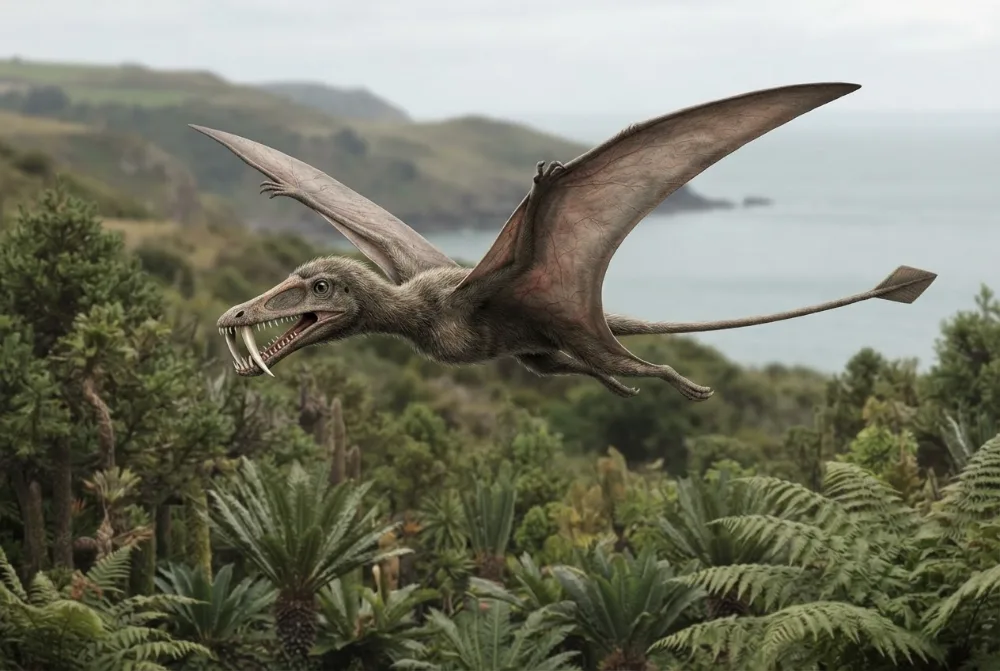
Dorygnathus was a flying reptile that lived during the Early Jurassic, about 180 million years ago. It had a short wingspan of around 1.5 metres (4.9 feet) and a long tail. Its most striking feature was its mouth full of large, curved fangs at the front and smaller teeth at the back.1
Yoom jiraate?
Hammam guddaa ture?
Baalleen isaa hammam bal'aa turan?
 akka adurree manaa 3 funyaan hanga eegeetti dheeraa⚽dirree kubbaa miilaa guutuu sekondii 8.4 keessatti balali'ee ce'uu danda'a
SI wajjin yoo wal bira qabamu, Dorygnathus hammam guddaa ture?
Herrega qofa barbaadduu kee keessatti. Wanti tokkollee hin olkaa'amu, eessayyuu hin ergamu.
Hammam saffisaa ture?


Odeeffannoowwan bashannansiisoo
Dorygnathus had different kinds of teeth: four large fangs in the upper jaw and three or four in the lower jaw at the front, with smaller, straighter teeth behind. This is called heterodonty and is rare in modern reptiles.1
The fifth toe on its hind feet was unusually long and pointed sideways. Scientists think it may have supported a membrane, like the one on its wings.1
Dorygnathus was a close relative of the later pterosaur Rhamphorhynchus, and lived at the same time as another pterosaur called Campylognathoides in Germany.1
Over 50 specimens of Dorygnathus have been found, many in slate quarries. The best fossils are kept at the State Museum of Natural History Stuttgart in Germany.1
Some Dorygnathus teeth show wear from eating hard food like crustaceans or mollusks, not just fish.1
The smallest known Dorygnathus had a wingspan of 60 centimetres (2 feet). Scientists think very young juveniles could not fly far over the open sea.1
Gaaffiiwwan waa'ee Dorygnathus baay'ee gaafataman
?How big was Dorygnathus?
Dorygnathus had a wingspan of about 1.5 metres (4.9 feet), though some large individuals reached 1.7 metres (5.6 feet).12
?What did Dorygnathus eat?
Dorygnathus ate small fish, as shown by fossilised stomach contents. Some teeth also show wear from eating hard food like crustaceans or mollusks.13
?Could Dorygnathus fly?
Yes, Dorygnathus was a flying reptile. It had wings made of skin and other membranes, and its flight muscles attached to a small triangular breastbone.1
?Is Dorygnathus a dinosaur?
No, Dorygnathus was a pterosaur, a flying reptile that lived during the age of dinosaurs, but it was not a dinosaur.1
Ogeeyyii daayinootiif
- Maqaa saayinsii
- Dorygnathus
- Kan maqaa baase
- Wagner 18604
- Garee
- Harkifattoota balali'an
- Maatii / kilaadii
- Rhamphorhynchidae4
- Ramaddii
- Pterosauria > Rhamphorhynchidae4
- Umurii dhagaawwanii
- waggaa miliyoona 184 hanga 183 (Toarcian)4
- Caasaawwan dhagaa
- Posidonia Shale, Posidonienschiefer, Marne de Flize4
- Biyyoota
- Jarmanii, Faransaay4
- Galmee fosilii
- 37 The Paleobiology Database keessa4
- Argannoo
- The first fossils of Dorygnathus were found near Banz, Bavaria, Germany, and were described in 1830 by Carl Theodori as Ornithocephalus banthensis. In 1860, Johann Andreas Wagner gave it the name Dorygnathus, meaning 'spear jaw'.1
- Ammallee falmisiisaa
- Scientists still debate whether Dorygnathus walked on two legs or four. Some think it could walk on two legs because of its long tail, but most now believe all pterosaurs walked on all fours.1
Odeeffannoon eessaa dhufa
- Dorygnathus (en.wikipedia.org)
- The Early Jurassic Pterosaur Dorygnathus Banthensis (Theodori, 1830) | The Palaeontological Association (palass.org)
- Press | State Museum of Natural History Stuttgart (naturkundemuseum-bw.de)
- Dorygnathus in The Paleobiology Database (CC BY 4.0): umurii, bakkeewwan, caasaawwan dhagaa, ramaddii.
Odeeffannoon fuula kana irra jiru hundi lakkoofsa madda isaa agarsiisu qaba. Yoo waa dogoggorre, dhiifama, nuti jaallattoota daayinoo malee joornaalii saayinsii miti. [email protected] irratti nutti himi, nus ni sirreessina.
 Rex beela'eera! Dino Wiki pirojektii abbaa tokkoo kan ilma isaa daayinoo jaallatuuf hojjetame, bilisa, beeksisa malee fi hordoftuu malee. Ga'eessonni akka inni interneetii irra turuuf Rexiif nyaata xiqqoo kennuu danda'u.Rex soori
 Pteranodon
 Quetzalcoatlus
 Rhamphorhynchus
 Anhanguera
 Pterodactylus
 Eudimorphodon
 Dilophosaurus
 Stenopterygius
 Lufengosaurus
 Scutellosaurus
 Yunnanosaurus
 Sinosaurus