 Ati daayinoo kami? Qormaata
 Lola daayinoo
 Dorgommii daayinoo
 Taphoota daayinoo xixiqqoo
 Albamii istiikarii
 Tarreewwan TOP daayinoo
 Na dinqisiisi!
Dysalotosaurus
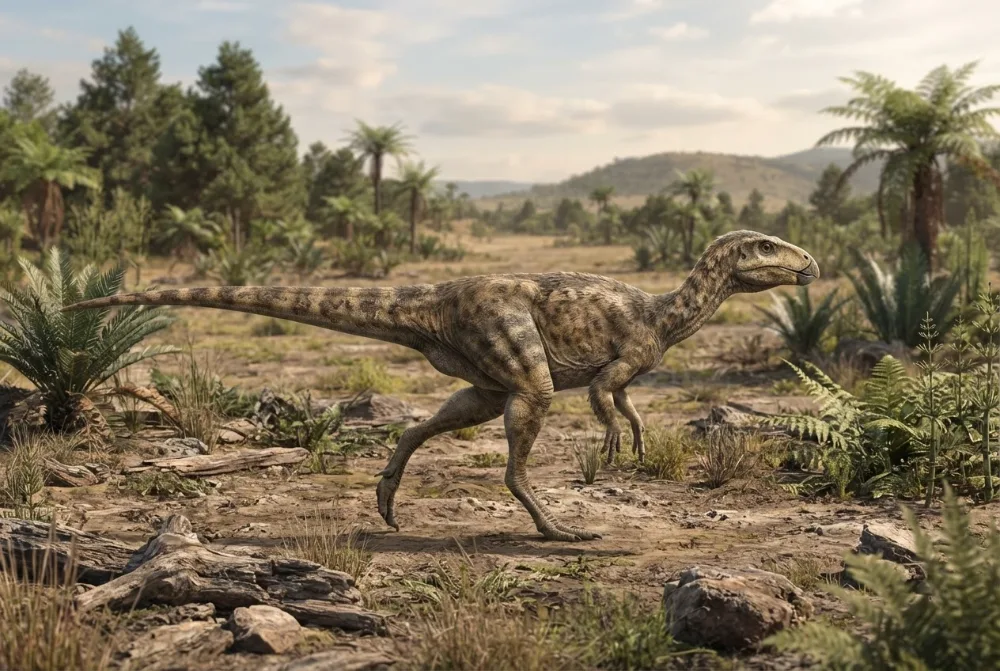
Dysalotosaurus was a small, fast plant-eater that lived in Africa during the Late Jurassic. It ran on two strong legs and had a long tail to help it balance. Thousands of its bones have been found together, suggesting it lived in big herds.1
Yoom jiraate?
Hammam guddaa ture?
Hammam dheeraa ture?
Hammam ol-dheeraa ture?
tilmaama
Hammam ulfaataa ture?
 akka saree 2.5 funyaan hanga eegeetti dheeraa🍌akka muuzii 14 walitti hiriiran dheeraa🍉akka habxuu 16 ulfaata🧸akka ijoollee KG 4 ulfaata🎒akka ijoollee mana barumsaa 2.5 ulfaata🏃meetira 100 sekondii 7.8 keessatti fiiguu danda'a (namni hunda caalaa saffisaan 9.6 barbaada)
SI wajjin yoo wal bira qabamu, Dysalotosaurus hammam guddaa ture?
Herrega qofa barbaadduu kee keessatti. Wanti tokkollee hin olkaa'amu, eessayyuu hin ergamu.
Hammam saffisaa ture?


Odeeffannoowwan bashannansiisoo
Dysalotosaurus lived about 152 to 149 million years ago, during the Kimmeridgian stage of the Late Jurassic.2
Thousands of Dysalotosaurus bones have been found in Tanzania, and scientists think a whole herd died together in a single event.1
Dysalotosaurus had a life expectancy of about 20 years and lived in mixed-age herds.1
Young Dysalotosaurus had different teeth than adults, suggesting they ate a mix of plants and small animals before becoming full herbivores.1
Dysalotosaurus held its head pointing straight forward when not feeding, based on CT scans of its braincase.1
All known Dysalotosaurus specimens were not yet fully grown when they died.1
Gaaffiiwwan waa'ee Dysalotosaurus baay'ee gaafataman
?How big was Dysalotosaurus?
Dysalotosaurus was about 2.5 metres (8.2 ft) long and weighed around 80 kilograms (180 lb).1
?What did Dysalotosaurus eat?
It was a plant-eater, but young Dysalotosaurus may have also eaten small animals before becoming full herbivores.1
?Did Dysalotosaurus live in herds?
Yes, thousands of bones found together suggest it lived in big herds, and a whole herd may have died together.1
?How fast could Dysalotosaurus run?
Its long, powerful hind legs suggest it was a fast runner, but no exact speed is known.1
Ogeeyyii daayinootiif
- Maqaa saayinsii
- Dysalotosaurus
- Kan maqaa baase
- Virchow 19193
- Garee
- Biqiltuu-nyaattota afaan simbirroo qaban
- Maatii / kilaadii
- Dryosauridae3
- Ramaddii
- Ornithischia > Ornithopoda > Iguanodontia3
- Umurii dhagaawwanii
- waggaa miliyoona 152 hanga 149 (Kimmeridgian)3
- Caasaawwan dhagaa
- Tendaguru3
- Biyyoota
- Taanzaaniyaa3
- Galmee fosilii
- 1 The Paleobiology Database keessa3
- Argannoo
- Dysalotosaurus was named by Hans Virchow in 1919. The fossils were found between 1909 and 1913 in Tanzania, Africa. The species name honors German army officer Paul von Lettow-Vorbeck.1
- Ammallee falmisiisaa
- Scientists still debate whether Dysalotosaurus was a separate genus or the same as Dryosaurus.1
Odeeffannoon eessaa dhufa
- Dysalotosaurus (en.wikipedia.org)
- PBDB Taxon (paleobiodb.org)
- Dysalotosaurus in The Paleobiology Database (CC BY 4.0): umurii, bakkeewwan, caasaawwan dhagaa, ramaddii.
Odeeffannoon fuula kana irra jiru hundi lakkoofsa madda isaa agarsiisu qaba. Yoo waa dogoggorre, dhiifama, nuti jaallattoota daayinoo malee joornaalii saayinsii miti. [email protected] irratti nutti himi, nus ni sirreessina.
 Rex beela'eera! Dino Wiki pirojektii abbaa tokkoo kan ilma isaa daayinoo jaallatuuf hojjetame, bilisa, beeksisa malee fi hordoftuu malee. Ga'eessonni akka inni interneetii irra turuuf Rexiif nyaata xiqqoo kennuu danda'u.Rex soori
Garee sana irraa kan biroo: Biqiltuu-nyaattota afaan simbirroo qaban
 IguanodonBiqiltuu-nyaattota afaan simbirroo qaban
 TenontosaurusBiqiltuu-nyaattota afaan simbirroo qaban
 ThescelosaurusBiqiltuu-nyaattota afaan simbirroo qaban
 ZalmoxesBiqiltuu-nyaattota afaan simbirroo qaban
 CamptosaurusBiqiltuu-nyaattota afaan simbirroo qaban
 RhabdodonBiqiltuu-nyaattota afaan simbirroo qaban
 Brachiosaurus
 Diplodocus
 Allosaurus
 Brontosaurus
 Compsognathus
 Camarasaurus