 Ati daayinoo kami? Qormaata
 Lola daayinoo
 Dorgommii daayinoo
 Taphoota daayinoo xixiqqoo
 Albamii istiikarii
 Tarreewwan TOP daayinoo
 Na dinqisiisi!
Eucoelophysis
Eucoelophysis was a small, plant-eating dinosaur that lived about 212 million years ago in what is now New Mexico. It had a beak and walked on two legs, looking a bit like a long-legged lizard. Scientists once thought it was a meat-eater, but now they know it munched on plants.12
Yoom jiraate?
Hammam guddaa ture?
Hammam dheeraa ture?
Hammam ol-dheeraa ture?
tilmaama
 akka saree 3 funyaan hanga eegeetti dheeraa🍌akka muuzii 17 walitti hiriiran dheeraa🏃meetira 100 sekondii 7.8 keessatti fiiguu danda'a (namni hunda caalaa saffisaan 9.6 barbaada)
SI wajjin yoo wal bira qabamu, Eucoelophysis hammam guddaa ture?
Herrega qofa barbaadduu kee keessatti. Wanti tokkollee hin olkaa'amu, eessayyuu hin ergamu.
Hammam saffisaa ture?


Odeeffannoowwan bashannansiisoo
Its fossils were first found in the 1880s by David Baldwin, but were mixed up with another dinosaur called Coelophysis.1
For a long time, scientists thought Eucoelophysis was a meat-eating dinosaur, but in 2007 a study showed it was actually a plant-eater related to Silesaurus.1
Eucoelophysis lived during the Late Triassic period, about 212 million years ago.1
The name Eucoelophysis means 'true hollow form' because it was thought to be the real Coelophysis at first.1
Only a few bones of Eucoelophysis have been found, including parts of the hip and hind legs.1
Eucoelophysis is now placed in a group called Silesauridae, which are close relatives of dinosaurs.1
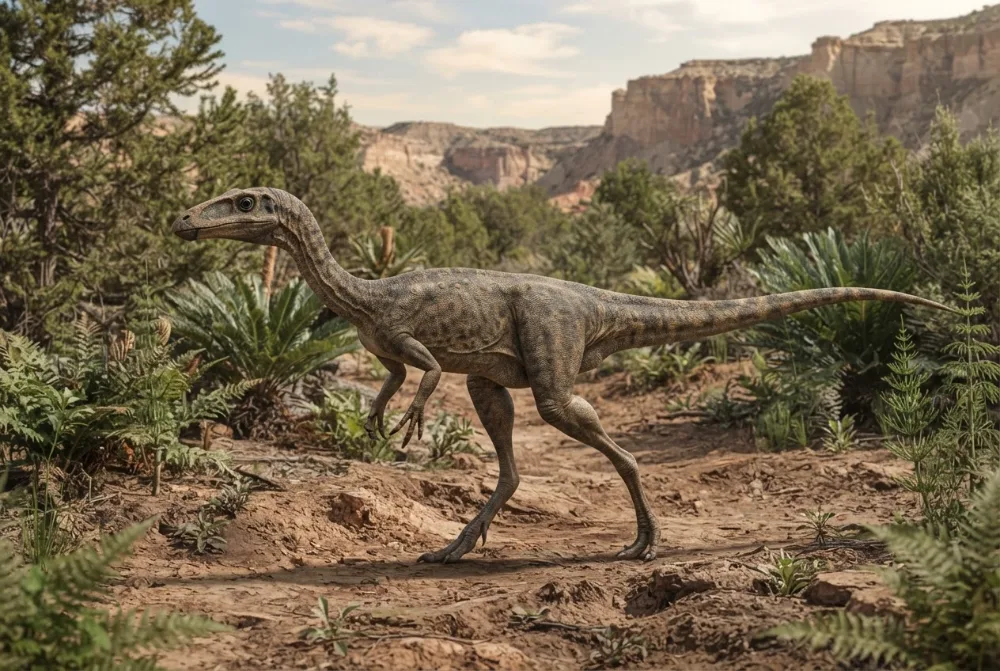
Gaaffiiwwan waa'ee Eucoelophysis baay'ee gaafataman
?Was Eucoelophysis a dinosaur?
No, it is not a dinosaur. Scientists now place it in a group called Silesauridae, which are close relatives of dinosaurs but not true dinosaurs.1
?How big was Eucoelophysis?
The exact size is not known from the few bones found, but it was a small animal, probably about the size of a modern turkey or a small dog.1
?What did Eucoelophysis eat?
It was a plant-eater. It had a beak and munched on plants, unlike the meat-eating dinosaurs it was once mistaken for.1
?When did Eucoelophysis live?
It lived during the Late Triassic period, about 212 million years ago, in what is now New Mexico.1
Ogeeyyii daayinootiif
- Maqaa saayinsii
- Eucoelophysis
- Kan maqaa baase
- Sullivan and Lucas 19992
- Garee
- Biqiltuu-nyaattota afaan simbirroo qaban
- Maatii / kilaadii
- Silesauridae2
- Ramaddii
- Ornithischia2
- Umurii dhagaawwanii
- waggaa miliyoona 227 hanga 201 (Norian / Rhaetian)2
- Caasaawwan dhagaa
- Chinle2
- Biyyoota
- Ameerikaa2
- Galmee fosilii
- 2 The Paleobiology Database keessa2
- Argannoo
- Eucoelophysis was named in 1999 by Robert Sullivan and Spencer Lucas based on a skeleton found in New Mexico. The species name baldwini honors David Baldwin, who collected the first fossils in the 1880s.12
- Ammallee falmisiisaa
- Scientists are still debating whether some fossils from the Snyder Quarry and Hayden Quarry belong to Eucoelophysis or to other animals.1
Odeeffannoon eessaa dhufa
- Eucoelophysis (en.wikipedia.org)
- Eucoelophysis in The Paleobiology Database (CC BY 4.0): umurii, bakkeewwan, caasaawwan dhagaa, ramaddii.
Odeeffannoon fuula kana irra jiru hundi lakkoofsa madda isaa agarsiisu qaba. Yoo waa dogoggorre, dhiifama, nuti jaallattoota daayinoo malee joornaalii saayinsii miti. [email protected] irratti nutti himi, nus ni sirreessina.
 Rex beela'eera! Dino Wiki pirojektii abbaa tokkoo kan ilma isaa daayinoo jaallatuuf hojjetame, bilisa, beeksisa malee fi hordoftuu malee. Ga'eessonni akka inni interneetii irra turuuf Rexiif nyaata xiqqoo kennuu danda'u.Rex soori
Garee sana irraa kan biroo: Biqiltuu-nyaattota afaan simbirroo qaban
 IguanodonBiqiltuu-nyaattota afaan simbirroo qaban
 TenontosaurusBiqiltuu-nyaattota afaan simbirroo qaban
 ThescelosaurusBiqiltuu-nyaattota afaan simbirroo qaban
 ZalmoxesBiqiltuu-nyaattota afaan simbirroo qaban
 CamptosaurusBiqiltuu-nyaattota afaan simbirroo qaban
 RhabdodonBiqiltuu-nyaattota afaan simbirroo qaban
 Nothosaurus
 Massospondylus
 Plateosaurus
 Coelophysis
 Podokesaurus
 Simosaurus