 Ati daayinoo kami? Qormaata
 Lola daayinoo
 Dorgommii daayinoo
 Taphoota daayinoo xixiqqoo
 Albamii istiikarii
 Tarreewwan TOP daayinoo
 Na dinqisiisi!
Gurilynia
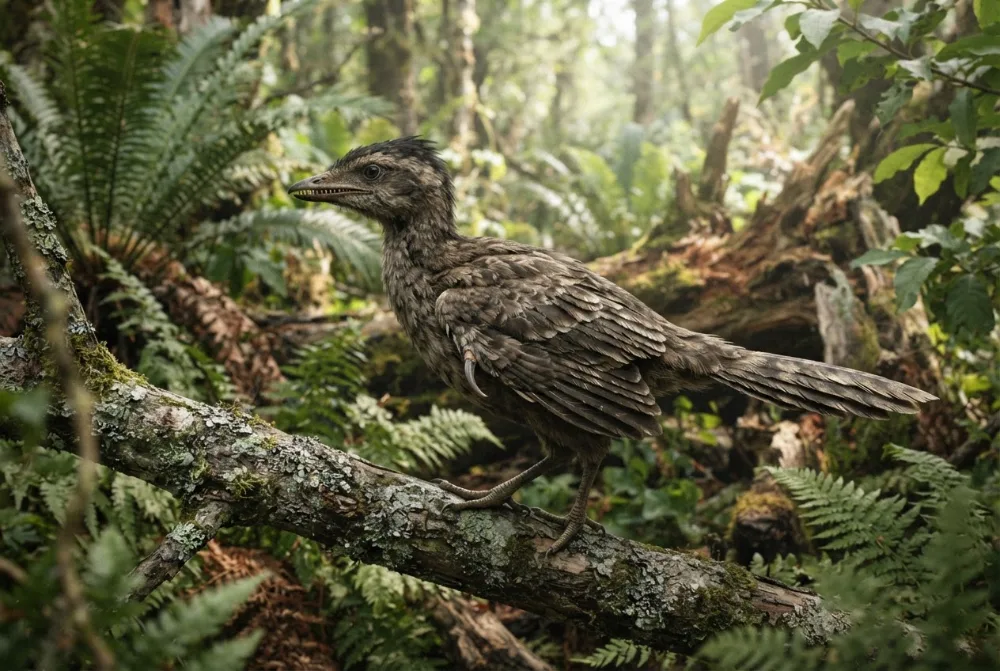
Gurilynia was a big, ancient bird that lived in Mongolia near the end of the Age of Dinosaurs. It was one of the largest birds of its time, about the size of a modern chicken but much heavier. It flew over dry plains and hunted for food.1
Yoom jiraate?
Hammam guddaa ture?
Hammam dheeraa ture?
Hammam ol-dheeraa ture?
Hammam ulfaataa ture?
 gara ulfaatina adurree manaa🍌akka muuzii 18 ulfaata🧱akka bilookii ijaarsaa taphaa 17 tarreen dheeraa🪑akka barcuma jala deemuu danda'utti xiqqaa⚽dirree kubbaa miilaa guutuu sekondii 11 keessatti balali'ee ce'uu danda'a
SI wajjin yoo wal bira qabamu, Gurilynia hammam guddaa ture?
Herrega qofa barbaadduu kee keessatti. Wanti tokkollee hin olkaa'amu, eessayyuu hin ergamu.
Hammam saffisaa ture?


Odeeffannoowwan bashannansiisoo
Gurilynia is known from only three partial bones: the top end of a right upper arm bone, the bottom end of a left upper arm bone, and the shoulder end of a left coracoid.1
It was the largest bird ever found from the Cretaceous period in Mongolia, weighing about 2.1 kilograms (4.6 pounds).1
The head of its upper arm bone was about 29 millimeters (1.1 inches) wide, much bigger than that of Pengornis, the largest Early Cretaceous enantiornithine.1
Gurilynia belonged to a group of ancient birds called enantiornithines, which had teeth and claws on their wings.1
It lived between 70 and 66 million years ago, right before the mass extinction that wiped out the non-avian dinosaurs.1
The fossils were found in the Nemegt Formation, which was a wet floodplain with rivers and forests during the Late Cretaceous.1
Ogeeyyii daayinootiif
- Maqaa saayinsii
- Gurilynia
- Kan maqaa baase
- Kurochkin 19993
- Garee
- Simbirroota jalqabaa
- Maatii / kilaadii
- Enantiornithidae3
- Ramaddii
- Theropoda > Avialae3
- Umurii dhagaawwanii
- waggaa miliyoona 72 hanga 66 (Maastrichtian)3
- Caasaawwan dhagaa
- Nemegt3
- Biyyoota
- Mongooliyaa3
- Galmee fosilii
- 1 The Paleobiology Database keessa3
- Argannoo
- Gurilynia was named by Russian paleontologist Evgeny Kurochkin in 1999, based on fossils collected from the Gurilyn Tsav locality in Mongolia. The species name nessovi honors a colleague.12
- Ammallee falmisiisaa
- Scientists are not sure exactly how big Gurilynia was because only a few bone fragments have been found. The size estimates might change if more complete fossils are discovered.1
Odeeffannoon eessaa dhufa
- Gurilynia (en.wikipedia.org)
- PBDB Taxon (paleobiodb.org)
- Gurilynia in The Paleobiology Database (CC BY 4.0): umurii, bakkeewwan, caasaawwan dhagaa, ramaddii.
Odeeffannoon fuula kana irra jiru hundi lakkoofsa madda isaa agarsiisu qaba. Yoo waa dogoggorre, dhiifama, nuti jaallattoota daayinoo malee joornaalii saayinsii miti. [email protected] irratti nutti himi, nus ni sirreessina.
 Rex beela'eera! Dino Wiki pirojektii abbaa tokkoo kan ilma isaa daayinoo jaallatuuf hojjetame, bilisa, beeksisa malee fi hordoftuu malee. Ga'eessonni akka inni interneetii irra turuuf Rexiif nyaata xiqqoo kennuu danda'u.Rex soori
 Archaeopteryx
 Hesperornis
 Ichthyornis
 Baptornis
 Jurapteryx
 Gobipteryx
 Tyrannosaurus
 Triceratops
 Velociraptor
 Spinosaurus
 Ankylosaurus
 Parasaurolophus