 Ati daayinoo kami? Qormaata
 Lola daayinoo
 Dorgommii daayinoo
 Taphoota daayinoo xixiqqoo
 Albamii istiikarii
 Tarreewwan TOP daayinoo
 Na dinqisiisi!
Yoom jiraate?

Hammam guddaa ture?
Hammam dheeraa ture?
Hammam ol-dheeraa ture?
tilmaama
Hammam ulfaataa ture?

 akka saree 2.5 funyaan hanga eegeetti dheeraa🍌akka muuzii 14 walitti hiriiran dheeraa🍉akka habxuu 6 ulfaata🏃meetira 100 sekondii 6.2 keessatti fiiguu danda'a (namni hunda caalaa saffisaan 9.6 barbaada)
SI wajjin yoo wal bira qabamu, Pelecanimimus hammam guddaa ture?
Herrega qofa barbaadduu kee keessatti. Wanti tokkollee hin olkaa'amu, eessayyuu hin ergamu.
Hammam saffisaa ture?


Odeeffannoowwan bashannansiisoo
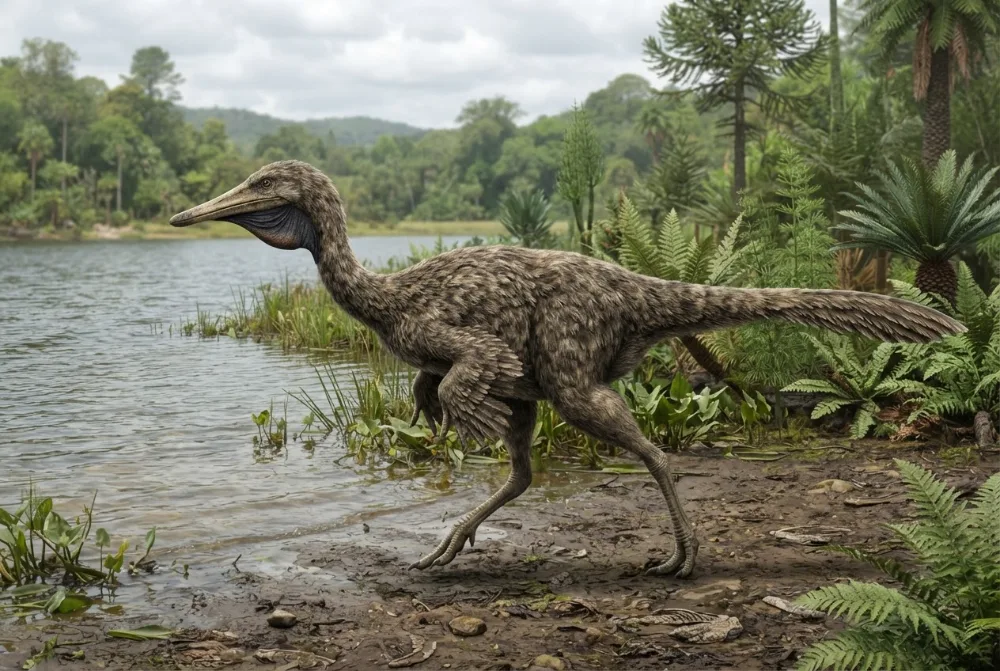
Pelecanimimus had about 220 tiny teeth in its mouth, more than any other meat-eating dinosaur.1
Its teeth were different shapes: front teeth were broad and D-shaped, while back teeth were blade-like.1
It also had a small crest on the back of its head, made of skin or keratin.1
Pelecanimimus lived about 125 million years ago during the Early Cretaceous in what is now Spain.13
Only the front half of one skeleton has been found, but it includes amazing details like skin impressions and throat bones.1
Gaaffiiwwan waa'ee Pelecanimimus baay'ee gaafataman
?How big was Pelecanimimus?
About 1.9 to 2.5 metres long and weighed 17 to 30 kilograms. That is about as long as a large bicycle.12
?What did Pelecanimimus eat?
It was carnivorous, meaning it ate meat. It probably waded in lakes or ponds to catch fish with its claws and many teeth, storing them in its throat pouch.12
?Did Pelecanimimus have feathers?
No, the preserved skin impressions show wrinkled skin that lacked scales or feathers. Some filament-like structures were once thought to be feathers, but they are now seen as muscle fibers.1
?When did Pelecanimimus live?
It lived during the Early Cretaceous period, about 127 to 121 million years ago.2
Seenaa sobaa diigaa
Seenaa sobaa: Some people think Pelecanimimus could fly because of its large chest bones.
Dhugaa: Scientists are not sure, but most think it was a ground dinosaur, not a flier.1
Ogeeyyii daayinootiif
- Maqaa saayinsii
- Pelecanimimus
- Kan maqaa baase
- Pérez-Moreno et al. 19943
- Garee
- Daayinoowwan guchii
- Maatii / kilaadii
- Ornithomimosauria3
- Ramaddii
- Theropoda > Ornithomimosauria3
- Umurii dhagaawwanii
- waggaa miliyoona 126 hanga 121 (Barremian)3
- Caasaawwan dhagaa
- La Huérguina3
- Biyyoota
- Ispeen3
- Galmee fosilii
- 1 The Paleobiology Database keessa3
- Argannoo
- Armando Díaz Romeral found the first skeleton in 1993 in Spain. Scientists named it Pelecanimimus polyodon in 1994.12
- Ammallee falmisiisaa
- Scientists still debate whether Pelecanimimus could fly or if its large chest muscles were for something else.1
Odeeffannoon eessaa dhufa
- Pelecanimimus (en.wikipedia.org)
- Pelecanimimus | Natural History Museum (nhm.ac.uk)
- Pelecanimimus in The Paleobiology Database (CC BY 4.0): umurii, bakkeewwan, caasaawwan dhagaa, ramaddii.
Odeeffannoon fuula kana irra jiru hundi lakkoofsa madda isaa agarsiisu qaba. Yoo waa dogoggorre, dhiifama, nuti jaallattoota daayinoo malee joornaalii saayinsii miti. [email protected] irratti nutti himi, nus ni sirreessina.
 Rex beela'eera! Dino Wiki pirojektii abbaa tokkoo kan ilma isaa daayinoo jaallatuuf hojjetame, bilisa, beeksisa malee fi hordoftuu malee. Ga'eessonni akka inni interneetii irra turuuf Rexiif nyaata xiqqoo kennuu danda'u.Rex soori
 Gallimimus
 Ornithomimus
 Struthiomimus
 Deinocheirus
 Dromiceiomimus
 Archaeornithomimus
 Stegosaurus
 Iguanodon
 Archaeopteryx
 Giganotosaurus
 Microraptor
 Deinonychus