 Ati daayinoo kami? Qormaata
 Lola daayinoo
 Dorgommii daayinoo
 Taphoota daayinoo xixiqqoo
 Albamii istiikarii
 Tarreewwan TOP daayinoo
 Na dinqisiisi!
Uragasaurus
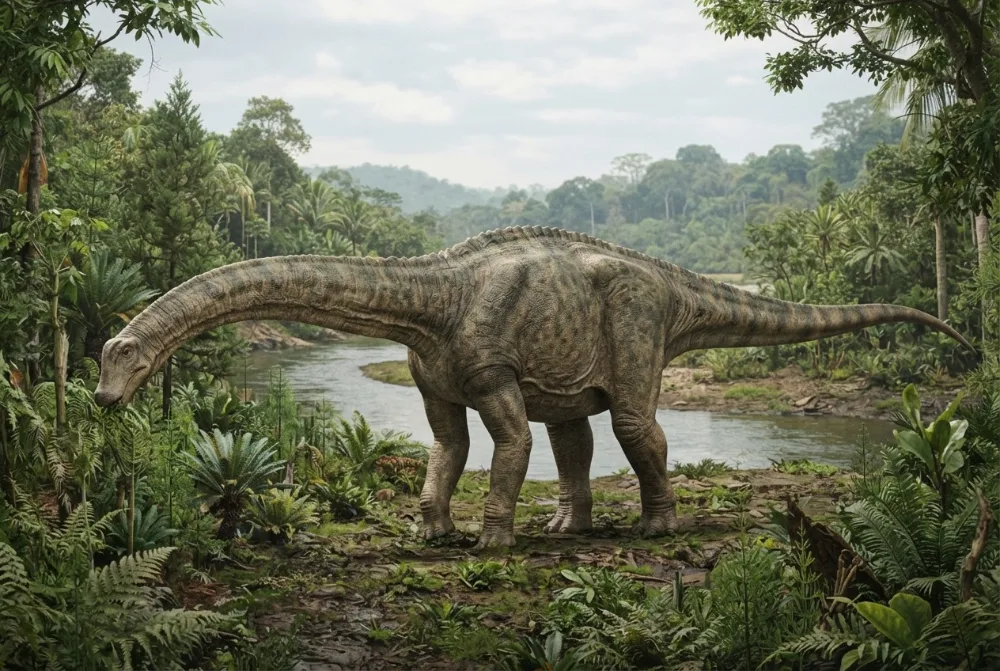
Uragasaurus was a long-necked plant-eater that lived in what is now Thailand. It had a snake-like neck and a backbone with air pockets that made it lighter. This dinosaur is one of the first of its family found in Southeast Asia.1
Yoom jiraate?
Hammam guddaa ture?
Hammam dheeraa ture?
Hammam ol-dheeraa ture?
tilmaama
 akka konkolaataa 4 tarreen dhaabatan dheeraa🍌akka muuzii 110 walitti hiriiran dheeraa🏢akka foddaa darbii 2 keessa ilaaluu danda'utti ol-dheeraa🏃meetira 100 sekondii 30 keessatti fiiguu danda'a (namni hunda caalaa saffisaan 9.6 barbaada)
SI wajjin yoo wal bira qabamu, Uragasaurus hammam guddaa ture?
Herrega qofa barbaadduu kee keessatti. Wanti tokkollee hin olkaa'amu, eessayyuu hin ergamu.
Hammam saffisaa ture?


Odeeffannoowwan bashannansiisoo
Uragasaurus is known from just one well-preserved backbone bone from the front of the back, called an anterior dorsal vertebra.1
The backbone had a Y-shaped pattern of bony ridges that is unique to this dinosaur.1
CT scans showed that the inside of the backbone was filled with tiny air spaces, a feature called camellate structure, which made the skeleton lighter.1
Uragasaurus lived during the latest Jurassic period, about 149 to 137 million years ago.4
It belongs to a group called Mamenchisauridae, which were famous for their extremely long necks.1
This dinosaur was discovered in the Phu Kradung Formation, a rock layer that also contains fossils of sharks, turtles, and other dinosaurs.1
Uragasaurus is the first officially named mamenchisaurid dinosaur from Thailand.1
Gaaffiiwwan waa'ee Uragasaurus baay'ee gaafataman
?How big was Uragasaurus?
Scientists do not know for sure because only one backbone bone has been found. Based on its relatives, it was probably a large, long-necked plant-eater.31
?What did Uragasaurus eat?
It was a plant-eater, like all sauropods. It probably ate ferns, cycads, and other plants that grew in its habitat.3
?When did Uragasaurus live?
It lived during the late Jurassic to early Cretaceous periods, about 150 to 130 million years ago.3
?Where was Uragasaurus found?
Its fossils were found in Kalasin Province, northeastern Thailand, in the Phu Kradung Formation.31
?Is Uragasaurus a dinosaur?
Yes, it is a dinosaur. It is a type of long-necked sauropod dinosaur called a mamenchisaurid.3
?Why is it called Uragasaurus?
The name means 'serpent lizard' in Sanskrit and Greek, because its family is famous for having very long, snake-like necks.3
Ogeeyyii daayinootiif
- Maqaa saayinsii
- Uragasaurus
- Kan maqaa baase
- Nilpanapan et al. 20264
- Garee
- Morma-dheertota
- Maatii / kilaadii
- Mamenchisauridae4
- Ramaddii
- Sauropodomorpha > Sauropoda4
- Umurii dhagaawwanii
- waggaa miliyoona 149 hanga 137 (Tithonian / Berriasian)4
- Caasaawwan dhagaa
- Phu Kradung4
- Biyyoota
- Taayilaandi4
- Galmee fosilii
- 1 The Paleobiology Database keessa4
- Argannoo
- Uragasaurus was named in 2026 by a team of scientists led by A. Nilpanapan. The fossil was found at the Phu Noi site in Kalasin Province, Thailand, and is kept at Mahasarakham University.14
- Ammallee falmisiisaa
- Scientists are not sure exactly how old the rocks are that contained Uragasaurus, so its age is estimated as latest Jurassic, possibly into the earliest Cretaceous.1
Odeeffannoon eessaa dhufa
- A new mamenchisaurid sauropod from the Lower Phu Kradung Formation, Upper Jurassic of northeastern Thailand | Scientific Reports (nature.com)
- Uragasaurus kalasinensis: New dinosaur discovered in Thailand - BBC News (bbc.co.uk)
- Uragasaurus (en.wikipedia.org)
- Uragasaurus in The Paleobiology Database (CC BY 4.0): umurii, bakkeewwan, caasaawwan dhagaa, ramaddii.
Odeeffannoon fuula kana irra jiru hundi lakkoofsa madda isaa agarsiisu qaba. Yoo waa dogoggorre, dhiifama, nuti jaallattoota daayinoo malee joornaalii saayinsii miti. [email protected] irratti nutti himi, nus ni sirreessina.
 Rex beela'eera! Dino Wiki pirojektii abbaa tokkoo kan ilma isaa daayinoo jaallatuuf hojjetame, bilisa, beeksisa malee fi hordoftuu malee. Ga'eessonni akka inni interneetii irra turuuf Rexiif nyaata xiqqoo kennuu danda'u.Rex soori
 Brachiosaurus
 Diplodocus
 Brontosaurus
 Argentinosaurus
 Camarasaurus
 Morosaurus
 Stegosaurus
 Iguanodon
 Archaeopteryx
 Giganotosaurus
 Microraptor
 Deinonychus