 Ati daayinoo kami? Qormaata
 Lola daayinoo
 Dorgommii daayinoo
 Taphoota daayinoo xixiqqoo
 Albamii istiikarii
 Tarreewwan TOP daayinoo
 Na dinqisiisi!
Yungavolucris
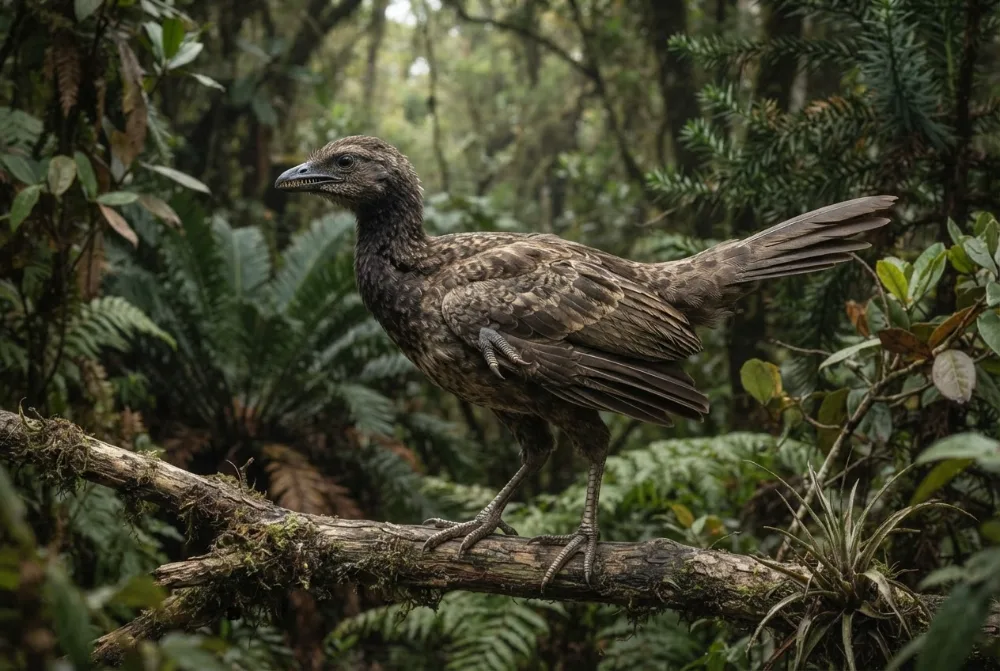
Yungavolucris was a small bird that lived about 70 to 66 million years ago, during the time of the dinosaurs. It had very short, wide feet, which made it look different from most other birds of its time.1
Yoom jiraate?
Hammam guddaa ture?
Hammam dheeraa ture?
Hammam ol-dheeraa ture?
Hammam ulfaataa ture?
SI wajjin yoo wal bira qabamu, Yungavolucris hammam guddaa ture?
Herrega qofa barbaadduu kee keessatti. Wanti tokkollee hin olkaa'amu, eessayyuu hin ergamu.
Hammam saffisaa ture?


Odeeffannoowwan bashannansiisoo
Yungavolucris is known only from a few foot bones, called tarsometatarsals. The most complete one is just over 4 centimeters (1.5 inches) long.1
Its foot bones were very wide, about twice as wide as those of its relatives Lectavis and Soroavisaurus, which lived at the same time and place.1
The outer toe bone (metatarsal IV) was very thin but as long as the middle toe bone, and the middle toe bone was bent outward, which is unusual.1
If its legs were short and wide, Yungavolucris might have been a slow, heavy bird that could not fly, about the size of a large chicken.1
Yungavolucris lived alongside other enantiornithean birds like Lectavis and Soroavisaurus, but it had much stouter feet than them.1
Gaaffiiwwan waa'ee Yungavolucris baay'ee gaafataman
?Was Yungavolucris a dinosaur?
Yes, Yungavolucris was a bird, and birds are a type of dinosaur called avialan dinosaurs. It lived about 70 to 66 million years ago.1
?How big was Yungavolucris?
Nobody knows for sure, but if its legs were short and wide, it might have been about 50 cm long, 25 cm tall at the hip, and weighed about 1.75 kg, about the size of a large chicken.1
?Could Yungavolucris fly?
Maybe not. If its legs were both short and wide, it might have been a heavy, sluggish bird that could not fly, like a large chicken.1
Seenaa sobaa diigaa
Seenaa sobaa: Some people think Yungavolucris was a dinosaur, but it was actually a bird.
Dhugaa: Yungavolucris was a type of enantiornithean, which is a group of ancient birds. Birds are related to dinosaurs, but they are not the same as non-avian dinosaurs.1
Ogeeyyii daayinootiif
- Maqaa saayinsii
- Yungavolucris
- Kan maqaa baase
- Chiappe 19933
- Garee
- Simbirroota jalqabaa
- Maatii / kilaadii
- Enantiornithes3
- Ramaddii
- Theropoda > Avialae3
- Umurii dhagaawwanii
- waggaa miliyoona 72 hanga 66 (Maastrichtian)3
- Caasaawwan dhagaa
- Lecho3
- Biyyoota
- Arjentiinaa3
- Galmee fosilii
- 1 The Paleobiology Database keessa3
- Argannoo
- Yungavolucris was named by Luis M. Chiappe in 1993. The fossils were found in the Lecho Formation in Argentina, at a site called Estancia El Brete.12
- Ammallee falmisiisaa
- Scientists are not sure how Yungavolucris is related to other enantiornithean birds. Some studies place it close to avisaurids, but others do not, and it might even be the same species as another bird from the same site.1
Odeeffannoon eessaa dhufa
- Yungavolucris (en.wikipedia.org)
- PBDB Taxon (paleobiodb.org)
- Yungavolucris in The Paleobiology Database (CC BY 4.0): umurii, bakkeewwan, caasaawwan dhagaa, ramaddii.
Odeeffannoon fuula kana irra jiru hundi lakkoofsa madda isaa agarsiisu qaba. Yoo waa dogoggorre, dhiifama, nuti jaallattoota daayinoo malee joornaalii saayinsii miti. [email protected] irratti nutti himi, nus ni sirreessina.
 Rex beela'eera! Dino Wiki pirojektii abbaa tokkoo kan ilma isaa daayinoo jaallatuuf hojjetame, bilisa, beeksisa malee fi hordoftuu malee. Ga'eessonni akka inni interneetii irra turuuf Rexiif nyaata xiqqoo kennuu danda'u.Rex soori
 Archaeopteryx
 Hesperornis
 Ichthyornis
 Baptornis
 Jurapteryx
 Gobipteryx
 Tyrannosaurus
 Triceratops
 Velociraptor
 Spinosaurus
 Ankylosaurus
 Parasaurolophus