 Uri dinozore iyihe? Umukino w'ibibazo
 Intambara ya dinozore
 Isiganwa rya dinozore
 Imikino mito ya dinozore
 Alubumu ya sitikeri
 Intonde za TOP za dinozore
 Ntungura!
Aetodactylus
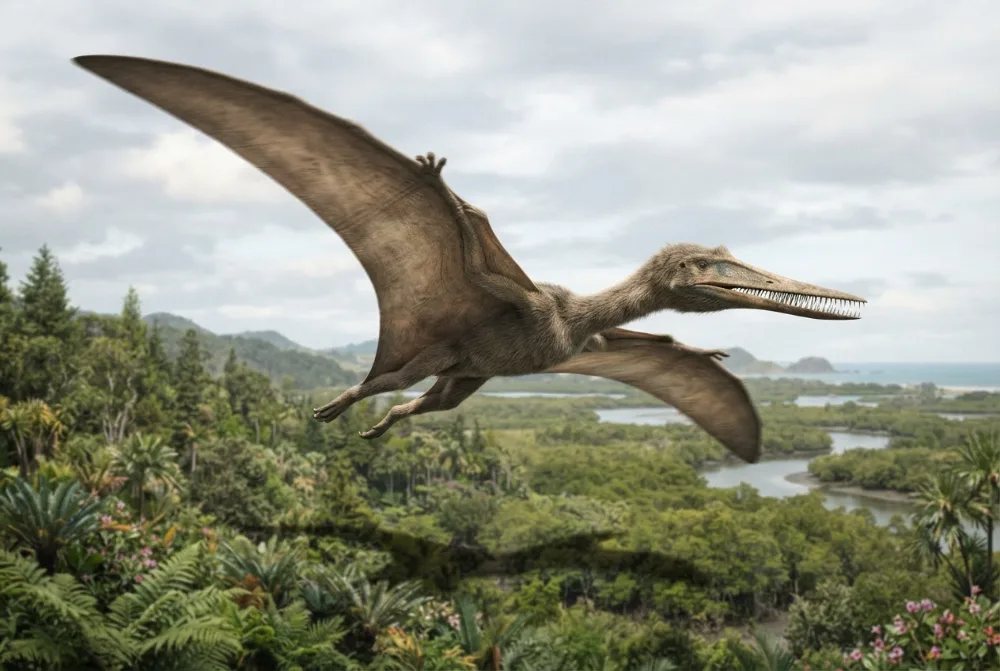
Aetodactylus was a flying reptile that lived near the sea about 97 million years ago. It had a long, slender jaw with many pointed teeth, perfect for catching fish. This pterosaur was one of the last of its kind before they disappeared.13
Yabayeho ryari?
Yanganaga ite?
Amababa yayo yari arambuye angana iki?
 amababa agari nk'amagare 1,5 akurikiranye⚽yashoboraga kuguruka ikambuka ikibuga cyose cy'umupira w'amaguru mu masegonda 6,8
Aetodactylus yanganaga ite ugereranyije NAWE?
Ni imibare gusa ibarirwa muri mushakisha yawe. Nta kintu kibikwa cyangwa cyoherezwa ahandi.
Yihutaga ite?


Utuntu dushimishije
Aetodactylus is known from only a single lower jaw, which is 38.4 centimeters (15.1 inches) long.1
The jaw has 27 pairs of tooth sockets, but only two teeth were preserved when it was found.1
Its teeth were pointed, curved slightly backward, and flattened from side to side, like little daggers.1
Unlike some other pterosaurs, Aetodactylus did not have a bony crest on its lower jaw.1
The tip of its jaw was slightly wider than the rest, and the first pair of teeth pointed forward.1
Aetodactylus lived during the Middle Cenomanian age, about 97 million years ago, in what is now Texas.13
Scientists think Aetodactylus was closely related to Cimoliopterus and belongs to a group called Targaryendraconia.1
Ibibazo bibazwa cyane kuri Aetodactylus
?Was Aetodactylus a dinosaur?
No, Aetodactylus was a pterosaur, a flying reptile, not a dinosaur. It belonged to a group of flying reptiles often called pterodactyls.2
Ku bazobereye muri dinozore
- Izina rya siyansi
- Aetodactylus
- Yiswe na
- Myers 20103
- Itsinda
- Ibikururanda biguruka
- Umuryango / ishami
- Ornithocheiridae3
- Ishyirwa mu byiciro
- Pterosauria > Pterodactyloidea3
- Imyaka y'amabuye
- imyaka miliyoni 100 kugeza 94 (Cenomanian)3
- Inzego z'amabuye
- Tarrant3
- Ibihugu
- Amerika3
- Ibisigazwa byanditswe
- 1 muri The Paleobiology Database3
- Ivumburwa
- The only known fossil of Aetodactylus was found in 2006 by Lance Hall near a construction site at Joe Pool Lake in Mansfield, Texas. It was named by Timothy S. Myers in 2010, and the species name halli honors the discoverer.13
- Biracyagibwaho impaka
- Scientists are not sure exactly how big Aetodactylus was, because only its lower jaw has been found.1
Aho amakuru yakuwe
- Aetodactylus (en.wikipedia.org)
- Rare 95-million-year-old flying reptile Aetodactylus halli is new pterosaur genus, species | EurekAlert! (eurekalert.org)
- Aetodactylus in The Paleobiology Database (CC BY 4.0): imyaka, ahantu, inzego z'amabuye, ishyirwa mu byiciro.
Buri kintu kiri kuri uru rupapuro gifite nimero yerekana aho cyakuwe. Niba hari icyo twibeshye, tubabarire, turi abakunzi ba dinozore, ntituri ikinyamakuru cya siyansi. Tubwire kuri [email protected] tuzagikosora.
 Rex arashonje! Dino Wiki ni umushinga wa papa umwe yakoreye umuhungu we ukunda dinozore, ni ubuntu, nta matangazo kandi nta bigukurikirana. Abantu bakuru bashobora guha Rex akantu ko kurya kugira ngo Dino Wiki ikomeze kuboneka kuri interineti.Gaburira Rex
 Pteranodon
 Quetzalcoatlus
 Dorygnathus
 Rhamphorhynchus
 Anhanguera
 Pterodactylus
 Tyrannosaurus
 Triceratops
 Velociraptor
 Spinosaurus
 Ankylosaurus
 Parasaurolophus