 Uri dinozore iyihe? Umukino w'ibibazo
 Intambara ya dinozore
 Isiganwa rya dinozore
 Imikino mito ya dinozore
 Alubumu ya sitikeri
 Intonde za TOP za dinozore
 Ntungura!
Dorygnathus
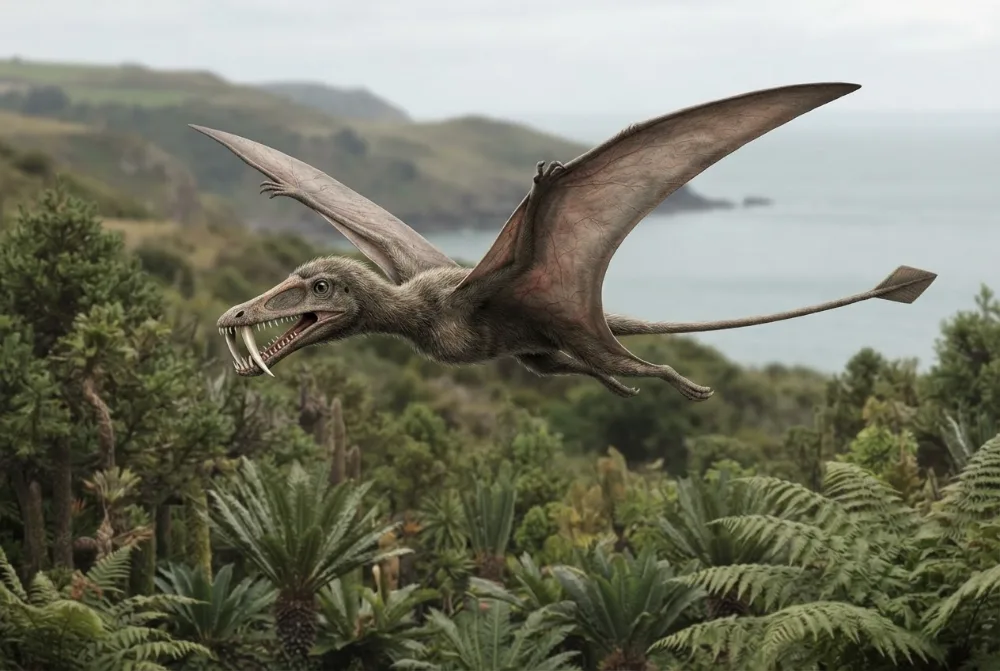
Dorygnathus was a flying reptile that lived during the Early Jurassic, about 180 million years ago. It had a short wingspan of around 1.5 metres (4.9 feet) and a long tail. Its most striking feature was its mouth full of large, curved fangs at the front and smaller teeth at the back.1
Yabayeho ryari?
Yanganaga ite?
Amababa yayo yari arambuye angana iki?
 ndende nk'injangwe 3 zo mu rugo zikurikiranye⚽yashoboraga kuguruka ikambuka ikibuga cyose cy'umupira w'amaguru mu masegonda 8,4
Dorygnathus yanganaga ite ugereranyije NAWE?
Ni imibare gusa ibarirwa muri mushakisha yawe. Nta kintu kibikwa cyangwa cyoherezwa ahandi.
Yihutaga ite?


Utuntu dushimishije
Dorygnathus had different kinds of teeth: four large fangs in the upper jaw and three or four in the lower jaw at the front, with smaller, straighter teeth behind. This is called heterodonty and is rare in modern reptiles.1
The fifth toe on its hind feet was unusually long and pointed sideways. Scientists think it may have supported a membrane, like the one on its wings.1
Dorygnathus was a close relative of the later pterosaur Rhamphorhynchus, and lived at the same time as another pterosaur called Campylognathoides in Germany.1
Over 50 specimens of Dorygnathus have been found, many in slate quarries. The best fossils are kept at the State Museum of Natural History Stuttgart in Germany.1
Some Dorygnathus teeth show wear from eating hard food like crustaceans or mollusks, not just fish.1
The smallest known Dorygnathus had a wingspan of 60 centimetres (2 feet). Scientists think very young juveniles could not fly far over the open sea.1
Ibibazo bibazwa cyane kuri Dorygnathus
?How big was Dorygnathus?
Dorygnathus had a wingspan of about 1.5 metres (4.9 feet), though some large individuals reached 1.7 metres (5.6 feet).12
?What did Dorygnathus eat?
Dorygnathus ate small fish, as shown by fossilised stomach contents. Some teeth also show wear from eating hard food like crustaceans or mollusks.13
?Could Dorygnathus fly?
Yes, Dorygnathus was a flying reptile. It had wings made of skin and other membranes, and its flight muscles attached to a small triangular breastbone.1
?Is Dorygnathus a dinosaur?
No, Dorygnathus was a pterosaur, a flying reptile that lived during the age of dinosaurs, but it was not a dinosaur.1
Ku bazobereye muri dinozore
- Izina rya siyansi
- Dorygnathus
- Yiswe na
- Wagner 18604
- Itsinda
- Ibikururanda biguruka
- Umuryango / ishami
- Rhamphorhynchidae4
- Ishyirwa mu byiciro
- Pterosauria > Rhamphorhynchidae4
- Imyaka y'amabuye
- imyaka miliyoni 184 kugeza 183 (Toarcian)4
- Inzego z'amabuye
- Posidonia Shale, Posidonienschiefer, Marne de Flize4
- Ibihugu
- Ubudage, Ubufaransa4
- Ibisigazwa byanditswe
- 37 muri The Paleobiology Database4
- Ivumburwa
- The first fossils of Dorygnathus were found near Banz, Bavaria, Germany, and were described in 1830 by Carl Theodori as Ornithocephalus banthensis. In 1860, Johann Andreas Wagner gave it the name Dorygnathus, meaning 'spear jaw'.1
- Biracyagibwaho impaka
- Scientists still debate whether Dorygnathus walked on two legs or four. Some think it could walk on two legs because of its long tail, but most now believe all pterosaurs walked on all fours.1
Aho amakuru yakuwe
- Dorygnathus (en.wikipedia.org)
- The Early Jurassic Pterosaur Dorygnathus Banthensis (Theodori, 1830) | The Palaeontological Association (palass.org)
- Press | State Museum of Natural History Stuttgart (naturkundemuseum-bw.de)
- Dorygnathus in The Paleobiology Database (CC BY 4.0): imyaka, ahantu, inzego z'amabuye, ishyirwa mu byiciro.
Buri kintu kiri kuri uru rupapuro gifite nimero yerekana aho cyakuwe. Niba hari icyo twibeshye, tubabarire, turi abakunzi ba dinozore, ntituri ikinyamakuru cya siyansi. Tubwire kuri [email protected] tuzagikosora.
 Rex arashonje! Dino Wiki ni umushinga wa papa umwe yakoreye umuhungu we ukunda dinozore, ni ubuntu, nta matangazo kandi nta bigukurikirana. Abantu bakuru bashobora guha Rex akantu ko kurya kugira ngo Dino Wiki ikomeze kuboneka kuri interineti.Gaburira Rex
 Pteranodon
 Quetzalcoatlus
 Rhamphorhynchus
 Anhanguera
 Pterodactylus
 Eudimorphodon
 Dilophosaurus
 Stenopterygius
 Lufengosaurus
 Scutellosaurus
 Yunnanosaurus
 Sinosaurus