 Uri dinozore iyihe? Umukino w'ibibazo
 Intambara ya dinozore
 Isiganwa rya dinozore
 Imikino mito ya dinozore
 Alubumu ya sitikeri
 Intonde za TOP za dinozore
 Ntungura!
Anabisetia
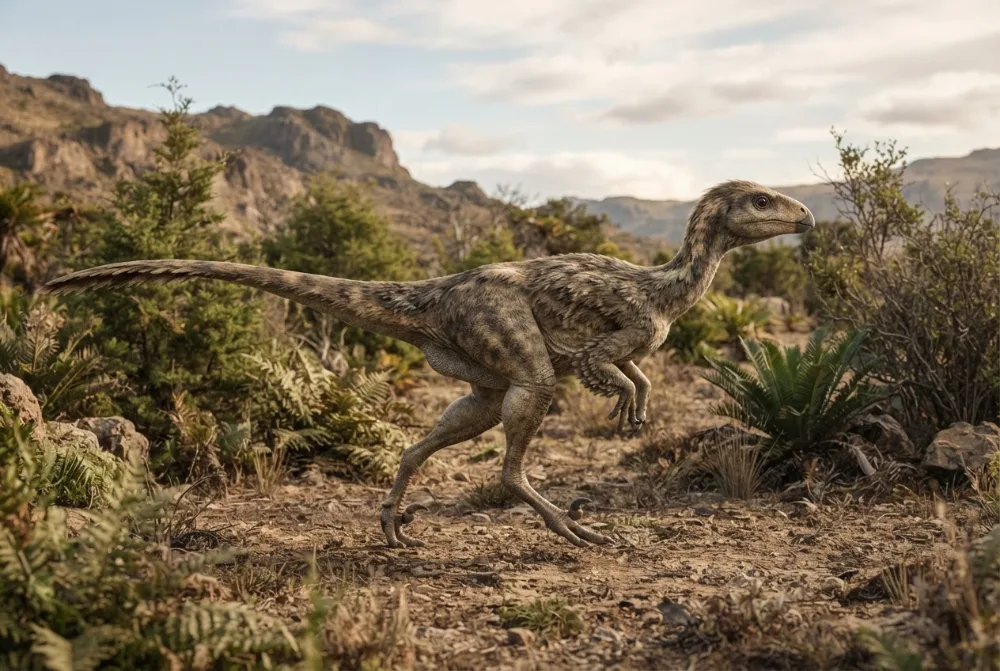
Anabisetia was a small, plant-eating dinosaur that walked on two legs. It lived in what is now Argentina, about 95 to 92 million years ago, during the Late Cretaceous Period.1
Yabayeho ryari?
Yanganaga ite?
Yari ndende ite?
Ubutumburuke bwayo bwanganaga iki?
Yari iremereye ite?
 ndende nk'injangwe 4 zo mu rugo zikurikiranye🍌ndende nk'imineke 11 ikurikiranye🍉iremereye nk'imbuto 4 za watermelon🏃yashoboraga kwiruka metero 100 mu masegonda 9,2 (umuntu wihuta kurusha abandi akenera 9,6)
Anabisetia yanganaga ite ugereranyije NAWE?
Ni imibare gusa ibarirwa muri mushakisha yawe. Nta kintu kibikwa cyangwa cyoherezwa ahandi.
Yihutaga ite?


Utuntu dushimishije
Anabisetia is known from four specimens, and together they show almost the whole skeleton except for the skull.1
The shoulder blade of Anabisetia had an extension called the acromial process that was the largest ever found in its group, the Euornithopoda.1
In its hand, the fifth metacarpal bone was flattened with straight edges, instead of being rounded like in most other dinosaurs.1
The hip bone, or ilium, had a front blade that made up more than half of the total ilium length and extended in front of the prepubis.1
At the back of the head, the connection with the neck, called the occipital condyle, pointed downwards.1
The fossils were found in rocks of the Cerro Lisandro Formation, which preserve a swamp that existed from about 95 to 92 million years ago.1
Ibibazo bibazwa cyane kuri Anabisetia
?How big was Anabisetia?
About 2 metres (6.6 feet) long and weighed around 20 kilograms (44 pounds).1
?What did Anabisetia eat?
It was a plant-eater, or herbivore, with teeth specialized for grinding vegetation.1
?When did Anabisetia live?
It lived about 95 to 92 million years ago, during the Late Cretaceous Period.1
?Where was Anabisetia found?
Its fossils were found in the Neuquén Province of Argentina, in South America.1
Ku bazobereye muri dinozore
- Izina rya siyansi
- Anabisetia
- Yiswe na
- Coria and Calvo 20024
- Itsinda
- Izirya ibimera zifite umunwa w'inyoni
- Umuryango / ishami
- Elasmaria4
- Ishyirwa mu byiciro
- Ornithischia > Ornithopoda > Iguanodontia4
- Imyaka y'amabuye
- imyaka miliyoni 94 kugeza 90 (Turonian)4
- Inzego z'amabuye
- Cerro Lisandro4
- Ibihugu
- Arijantine4
- Ibisigazwa byanditswe
- 2 muri The Paleobiology Database4
- Ivumburwa
- The fossils were discovered in 1985 by a local farmer named Roberto Saldivia Blanco, who brought them to scientists in 1993. Argentine paleontologists Rodolfo Coria and Jorge Orlando Calvo named Anabisetia in 2002.1
- Biracyagibwaho impaka
- Scientists are not sure exactly where Anabisetia fits in the dinosaur family tree. It may be closely related to Gasparinisaura, but the lack of skull material makes it hard to place with precision.1
Aho amakuru yakuwe
- Anabisetia (en.wikipedia.org)
- Dinosaurios del Neuquén - Dinosaurios del Neuquén – Anabisetia saldiviai → Más Neuquén (masneuquen.com)
- Anabisetia | Part of the Ornithopod Family of Dinosaurs (dinosaurmadness.com)
- Anabisetia in The Paleobiology Database (CC BY 4.0): imyaka, ahantu, inzego z'amabuye, ishyirwa mu byiciro.
Buri kintu kiri kuri uru rupapuro gifite nimero yerekana aho cyakuwe. Niba hari icyo twibeshye, tubabarire, turi abakunzi ba dinozore, ntituri ikinyamakuru cya siyansi. Tubwire kuri [email protected] tuzagikosora.
 Rex arashonje! Dino Wiki ni umushinga wa papa umwe yakoreye umuhungu we ukunda dinozore, ni ubuntu, nta matangazo kandi nta bigukurikirana. Abantu bakuru bashobora guha Rex akantu ko kurya kugira ngo Dino Wiki ikomeze kuboneka kuri interineti.Gaburira Rex
 Iguanodon
 Tenontosaurus
 Thescelosaurus
 Zalmoxes
 Camptosaurus
 Rhabdodon
 Tyrannosaurus
 Triceratops
 Velociraptor
 Spinosaurus
 Ankylosaurus
 Parasaurolophus