 Uri dinozore iyihe? Umukino w'ibibazo
 Intambara ya dinozore
 Isiganwa rya dinozore
 Imikino mito ya dinozore
 Alubumu ya sitikeri
 Intonde za TOP za dinozore
 Ntungura!
Yabayeho ryari?

Yanganaga ite?
Yari ndende ite?
Ubutumburuke bwayo bwanganaga iki?
igereranya
Yari iremereye ite?
 ndende nk'injangwe 4 zo mu rugo zikurikiranye🍌ndende nk'imineke 11 ikurikiranye🍉iremereye nk'imbuto 6 za watermelon🏃yashoboraga kwiruka metero 100 mu masegonda 9 (umuntu wihuta kurusha abandi akenera 9,6)
Aristosuchus yanganaga ite ugereranyije NAWE?
Ni imibare gusa ibarirwa muri mushakisha yawe. Nta kintu kibikwa cyangwa cyoherezwa ahandi.
Yihutaga ite?


Utuntu dushimishije
Aristosuchus was first thought to be a crocodile, but scientists later realized it was a dinosaur.1
The only known fossil of Aristosuchus is a set of bones from the hips and tail, found by a reverend named William D. Fox.1
Its name means 'best crocodile' in Greek, even though it was not a crocodile at all.1
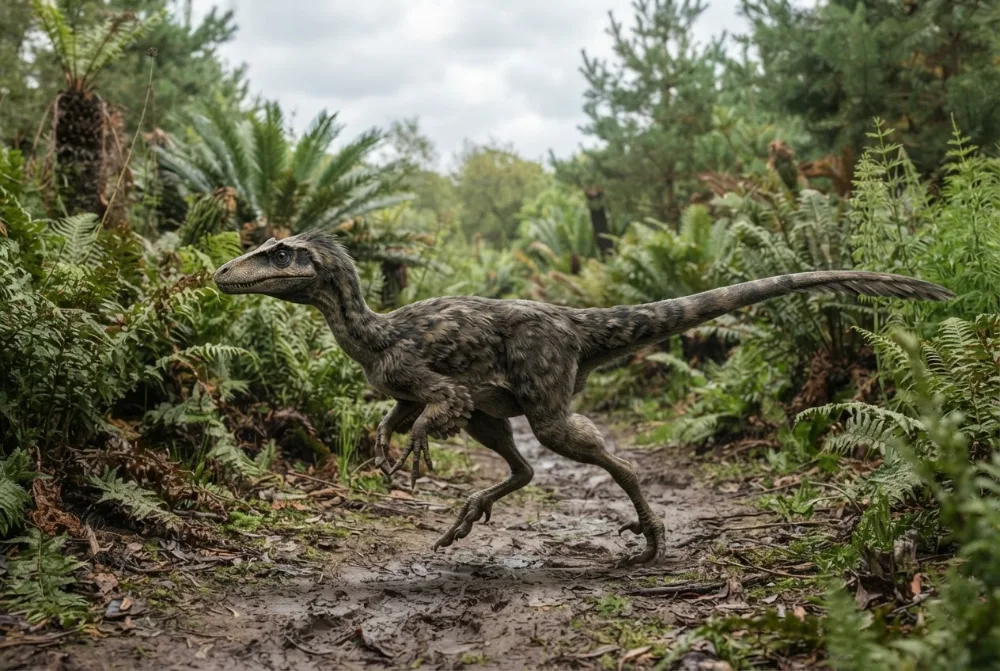
Aristosuchus was about the size of a large dog, around 2 metres (6.6 feet) long.1
It lived on the Isle of Wight, which at the time was a warm, swampy place full of dinosaurs.1
Scientists are not sure exactly how much Aristosuchus weighed; estimates range from 7 to 30 kilograms (15 to 66 pounds).1
Ibibazo bibazwa cyane kuri Aristosuchus
?How big was Aristosuchus?
About 2 metres (6.6 feet) long. Its weight is uncertain: estimates range from 7 to 30 kilograms (15 to 66 pounds).1
?What did Aristosuchus eat?
It was a meat-eater (carnivore) that hunted small animals in its environment.13
?Why is it called Aristosuchus?
Its name means 'best crocodile' in Greek, because scientists first thought it was a crocodile. Later they learned it was a dinosaur.1
?Where did Aristosuchus live?
It lived on the Isle of Wight in England, which was a warm, swampy floodplain with rivers and lakes during the Early Cretaceous.1
Gusenya ibinyoma
Ibivugwa: Aristosuchus was a crocodile.
Ukuri: Aristosuchus was actually a small theropod dinosaur, not a crocodile. Early scientists mistook it for a crocodile because of its name and some bone features.1
Ku bazobereye muri dinozore
- Izina rya siyansi
- Aristosuchus
- Yiswe na
- Seeley 18874
- Itsinda
- Dinozore zirya inyama
- Umuryango / ishami
- Compsognathidae4
- Ishyirwa mu byiciro
- Theropoda > Compsognathidae4
- Imyaka y'amabuye
- imyaka miliyoni 126 kugeza 120 (Barremian / Aptian)4
- Ibihugu
- Ubwongereza4
- Ibisigazwa byanditswe
- 1 muri The Paleobiology Database4
- Ivumburwa
- The fossils were discovered by Reverend William D. Fox on the Isle of Wight, England. Richard Owen first named them Poekilopleuron pusillus in 1876, but Harry Govier Seeley gave them the new name Aristosuchus in 1887.1
- Biracyagibwaho impaka
- Scientists still debate whether Aristosuchus is really a distinct species or if its fossils belong to another dinosaur.2
Aho amakuru yakuwe
- Aristosuchus (en.wikipedia.org)
- The historical taxonomy of the Lower Cretaceous theropods (Dinosauria) Calamospondylus and Aristosuchus from the Isle of Wight (darrennaish.wordpress.com)
- Aristosuchus, an Isle of Wight tyrannosauroid? - DinoWight (dinowight.org.uk)
- Aristosuchus in The Paleobiology Database (CC BY 4.0): imyaka, ahantu, inzego z'amabuye, ishyirwa mu byiciro.
Buri kintu kiri kuri uru rupapuro gifite nimero yerekana aho cyakuwe. Niba hari icyo twibeshye, tubabarire, turi abakunzi ba dinozore, ntituri ikinyamakuru cya siyansi. Tubwire kuri [email protected] tuzagikosora.
 Rex arashonje! Dino Wiki ni umushinga wa papa umwe yakoreye umuhungu we ukunda dinozore, ni ubuntu, nta matangazo kandi nta bigukurikirana. Abantu bakuru bashobora guha Rex akantu ko kurya kugira ngo Dino Wiki ikomeze kuboneka kuri interineti.Gaburira Rex
 Allosaurus
 Carnotaurus
 Dilophosaurus
 Giganotosaurus
 Compsognathus
 Paronychodon
 Stegosaurus
 Iguanodon
 Archaeopteryx
 Microraptor
 Deinonychus
 Baryonyx