 Uri dinozore iyihe? Umukino w'ibibazo
 Intambara ya dinozore
 Isiganwa rya dinozore
 Imikino mito ya dinozore
 Alubumu ya sitikeri
 Intonde za TOP za dinozore
 Ntungura!
Bannykus
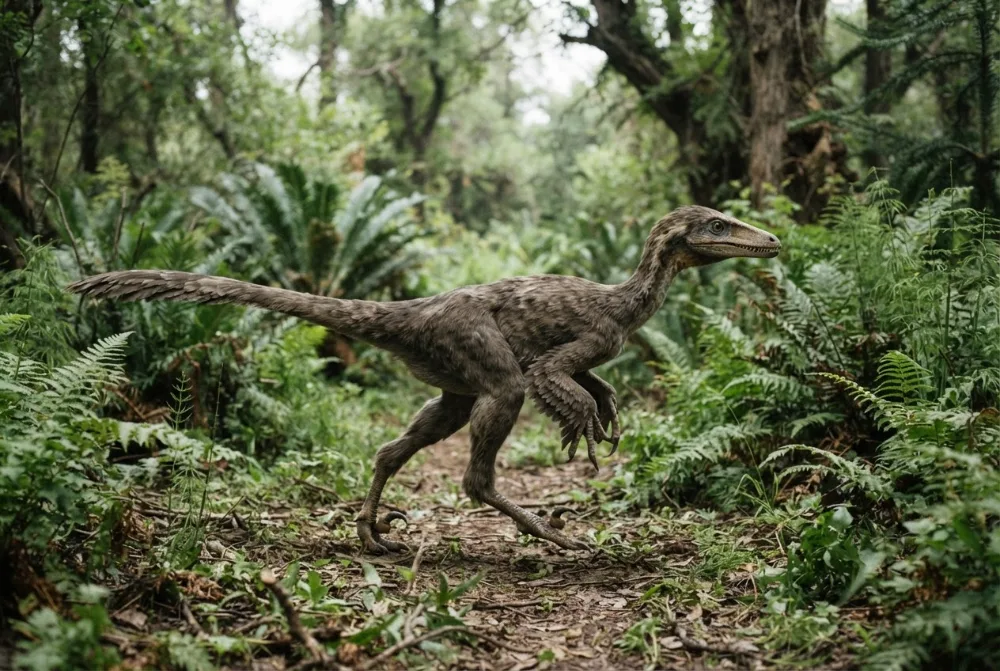
Bannykus was a meat-eating dinosaur about the size of a large dog. It lived during the Early Cretaceous period, around 125 to 113 million years ago, in what is now Inner Mongolia, China. Bannykus is special because its arms are halfway between those of earlier, longer-armed alvarezsaurians and later ones with very short arms.123
Yabayeho ryari?
Yanganaga ite?
Yari ndende ite?
Ubutumburuke bwayo bwanganaga iki?
igereranya
Yari iremereye ite?

 ndende nk'imbwa 3 zikurikiranye🍌ndende nk'imineke 15 ikurikiranye🍉iremereye nk'imbuto 6 za watermelon🏃yashoboraga kwiruka metero 100 mu masegonda 7,8 (umuntu wihuta kurusha abandi akenera 9,6)
Bannykus yanganaga ite ugereranyije NAWE?
Ni imibare gusa ibarirwa muri mushakisha yawe. Nta kintu kibikwa cyangwa cyoherezwa ahandi.
Yihutaga ite?


Utuntu dushimishije
Bannykus lived about 125 to 113 million years ago during the Aptian age of the Early Cretaceous.3
Its arm bones are halfway between the longer arms of older alvarezsaurian dinosaurs and the very short, strong arms of later ones like Shuvuuia.12
The only known Bannykus skeleton belonged to an 8-year-old sub-adult that still had some growing to do.1
Its thumb, or digit II, was much larger than its ring finger, or digit IV, but not as extreme as in later alvarezsaurids.1
Bannykus could move its arms in many directions and probably used them for different kinds of digging.2
Scientists found the fossil in 2009, and in 2012 it was displayed in Japan under the nickname 'Wulatesaurus' before getting its official name in 2018.2
Ibibazo bibazwa cyane kuri Bannykus
?What did Bannykus eat?
Bannykus probably ate meat. Scientists found bone fragments in its stomach, which suggests it was a carnivore.2
?How big was Bannykus?
Bannykus was about 2.77 metres (9.1 feet) long and weighed around 24 to 30 kilograms (53 to 66 pounds). That is about the size of a large dog.2
?Could Bannykus dig?
Yes, Bannykus could probably dig. Its arms were good for different kinds of digging motions, but not as specialized as later relatives.2
Ku bazobereye muri dinozore
- Izina rya siyansi
- Bannykus
- Yiswe na
- Xu et al. 20184
- Itsinda
- Dinozore zirya inyama
- Umuryango / ishami
- Alvarezsauroidea4
- Ishyirwa mu byiciro
- Theropoda4
- Imyaka y'amabuye
- imyaka miliyoni 121 kugeza 113 (Aptian)4
- Inzego z'amabuye
- Bayangobi4
- Ibihugu
- Ubushinwa4
- Ibisigazwa byanditswe
- 1 muri The Paleobiology Database4
- Ivumburwa
- Bannykus was named in 2018 by Xu Xing and colleagues. The holotype skeleton was found in 2009 at Chaoge, Inner Mongolia, China, and was displayed in Japan in 2012 under the informal name 'Wulatesaurus'.123
Aho amakuru yakuwe
- Two Early Cretaceous Fossils Document Transitional Stages in Alvarezsaurian Dinosaur Evolution: Current Biology (cell.com)
- Bannykus (en.wikipedia.org)
- PBDB Taxon (paleobiodb.org)
- Bannykus in The Paleobiology Database (CC BY 4.0): imyaka, ahantu, inzego z'amabuye, ishyirwa mu byiciro.
Buri kintu kiri kuri uru rupapuro gifite nimero yerekana aho cyakuwe. Niba hari icyo twibeshye, tubabarire, turi abakunzi ba dinozore, ntituri ikinyamakuru cya siyansi. Tubwire kuri [email protected] tuzagikosora.
 Rex arashonje! Dino Wiki ni umushinga wa papa umwe yakoreye umuhungu we ukunda dinozore, ni ubuntu, nta matangazo kandi nta bigukurikirana. Abantu bakuru bashobora guha Rex akantu ko kurya kugira ngo Dino Wiki ikomeze kuboneka kuri interineti.Gaburira Rex
 Allosaurus
 Carnotaurus
 Dilophosaurus
 Giganotosaurus
 Compsognathus
 Paronychodon
 Stegosaurus
 Iguanodon
 Archaeopteryx
 Microraptor
 Deinonychus
 Baryonyx