 Uri dinozore iyihe? Umukino w'ibibazo
 Intambara ya dinozore
 Isiganwa rya dinozore
 Imikino mito ya dinozore
 Alubumu ya sitikeri
 Intonde za TOP za dinozore
 Ntungura!
Calvarius
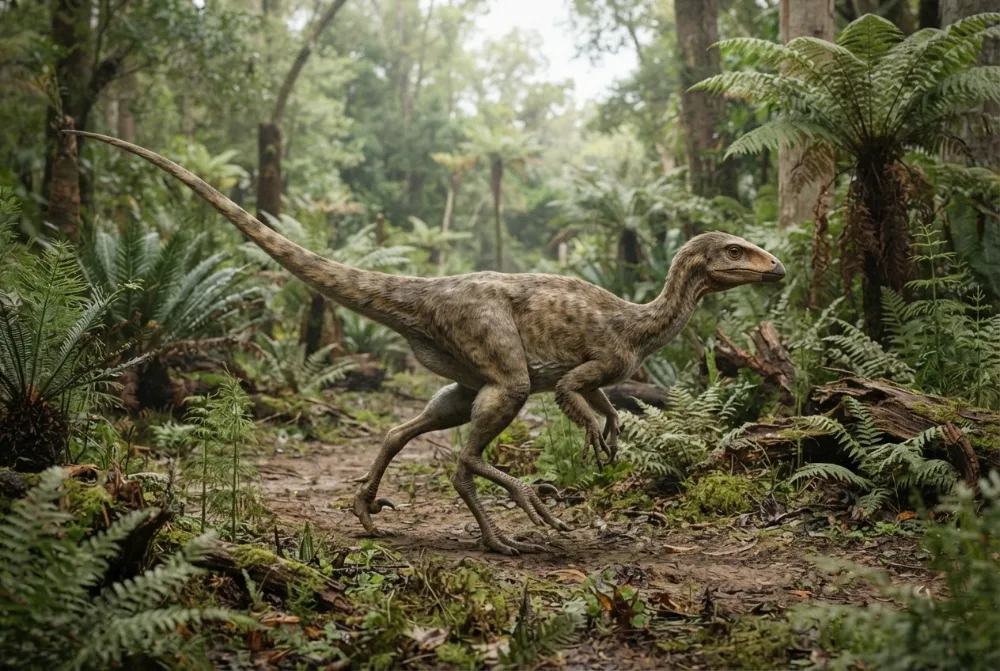
Calvarius was a small, speedy plant-eating dinosaur that lived near the very end of the Age of Dinosaurs. It was one of the last dinosaurs to walk on Earth before the big asteroid hit.2
Yabayeho ryari?
Yanganaga ite?
Yari ndende ite?
Ubutumburuke bwayo bwanganaga iki?
igereranya
 ndende nk'injangwe 4 zo mu rugo zikurikiranye🍌ndende nk'imineke 11 ikurikiranye🏃yashoboraga kwiruka metero 100 mu masegonda 8,8 (umuntu wihuta kurusha abandi akenera 9,6)
Calvarius yanganaga ite ugereranyije NAWE?
Ni imibare gusa ibarirwa muri mushakisha yawe. Nta kintu kibikwa cyangwa cyoherezwa ahandi.
Yihutaga ite?


Utuntu dushimishije
Calvarius is known from just one foot bone, a left metatarsal IV, which was about 15 centimeters long.2
It was probably a fast runner. Its long foot bone and light build suggest it could sprint quickly, unlike most other styracostern dinosaurs.1
Calvarius lived on a large island called Ibero-Armorica, which is now northern Spain and southern France. On islands, animals sometimes evolve to be smaller because food is limited.2
It was one of the last dinosaurs ever. Its fossils were found just 25 meters below the layer that marks the asteroid impact that killed the non-bird dinosaurs.1
The fossil was discovered in 2019 by paleontologists from the Institut Català de Paleontologia Miquel Crusafont and the Museu de la Conca Dellà.2
Calvarius is the smallest known styracostern dinosaur. Some of its relatives grew over 10 meters long, but Calvarius was less than 2 meters.2
Ibibazo bibazwa cyane kuri Calvarius
?How big was Calvarius?
Calvarius was no more than 2 metres (6.6 feet) long, making it one of the smallest known styracostern dinosaurs.2
?What did Calvarius eat?
Calvarius was a plant-eater. It was an ornithopod, a group of herbivorous dinosaurs.2
?When did Calvarius live?
Calvarius lived about 66 million years ago, right at the end of the Cretaceous period. It was one of the last dinosaurs before the asteroid hit.2
Ku bazobereye muri dinozore
- Izina rya siyansi
- Calvarius
- Yiswe na
- Prieto-Márquez and Sellés 20233
- Itsinda
- Izirya ibimera zifite umunwa w'inyoni
- Umuryango / ishami
- Styracosterna3
- Ishyirwa mu byiciro
- Ornithischia > Ornithopoda > Iguanodontia3
- Imyaka y'amabuye
- imyaka miliyoni 72 kugeza 66 (Maastrichtian)3
- Inzego z'amabuye
- Talarn3
- Ibihugu
- Esipanye3
- Ibisigazwa byanditswe
- 1 muri The Paleobiology Database3
- Ivumburwa
- The fossil was found in 2019 at the Masia de Ramón site in Spain by a team from the MCD and ICP. Albert Prieto-Márquez and Albert Sellés named it Calvarius rapidus in 2023.23
- Biracyagibwaho impaka
- Scientists are not sure exactly how big Calvarius was because only one foot bone has been found. They estimate it was less than 2 meters long, but it could have been different.2
Aho amakuru yakuwe
- Evolutionary convergence in a small cursorial styracosternan ornithopod dinosaur from western Europe (dinodata.de)
- Calvarius rapidus, the new dinosaur species that almost saw the asteroid falling (icp.cat)
- Calvarius in The Paleobiology Database (CC BY 4.0): imyaka, ahantu, inzego z'amabuye, ishyirwa mu byiciro.
Buri kintu kiri kuri uru rupapuro gifite nimero yerekana aho cyakuwe. Niba hari icyo twibeshye, tubabarire, turi abakunzi ba dinozore, ntituri ikinyamakuru cya siyansi. Tubwire kuri [email protected] tuzagikosora.
 Rex arashonje! Dino Wiki ni umushinga wa papa umwe yakoreye umuhungu we ukunda dinozore, ni ubuntu, nta matangazo kandi nta bigukurikirana. Abantu bakuru bashobora guha Rex akantu ko kurya kugira ngo Dino Wiki ikomeze kuboneka kuri interineti.Gaburira Rex
 Iguanodon
 Tenontosaurus
 Thescelosaurus
 Zalmoxes
 Camptosaurus
 Rhabdodon
 Tyrannosaurus
 Triceratops
 Velociraptor
 Spinosaurus
 Ankylosaurus
 Parasaurolophus