 Uri dinozore iyihe? Umukino w'ibibazo
 Intambara ya dinozore
 Isiganwa rya dinozore
 Imikino mito ya dinozore
 Alubumu ya sitikeri
 Intonde za TOP za dinozore
 Ntungura!
Campananeyen
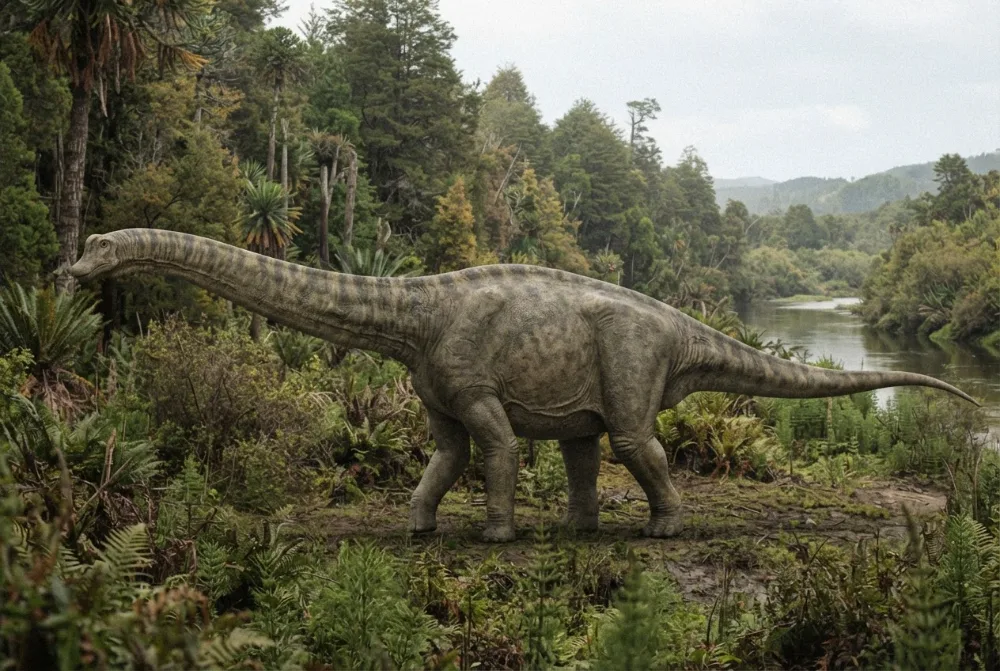
Campananeyen was a long-necked sauropod that lived in a huge desert in what is now Argentina. Its bones were so full of air pockets that scientists named it after the Mapuche word for 'air'. This dinosaur had a very thin and fragile hip bone, which is why its species name means 'the most fragile'.1
Yabayeho ryari?
Yanganaga ite?
Yari ndende ite?
Ubutumburuke bwayo bwanganaga iki?
igereranya
Yari iremereye ite?
 ndende nk'imodoka 2,5 ziparitse ku murongo🍌ndende nk'imineke 58 ikurikiranye
 iremereye nk'imbwa 120🍉iremereye nk'imbuto 500 za watermelon🎒iremereye nk'ibyumba 3 by'amashuri byuzuye abana🐻❄️iremereye nk'idubu 6 zo mu rubura🏃yashoboraga kwiruka metero 100 mu masegonda 16 (umuntu wihuta kurusha abandi akenera 9,6)
Campananeyen yanganaga ite ugereranyije NAWE?
Ni imibare gusa ibarirwa muri mushakisha yawe. Nta kintu kibikwa cyangwa cyoherezwa ahandi.
Yihutaga ite?


Utuntu dushimishije
Campananeyen had a very thin and fragile ilium (hip bone), so thin that scientists gave it the species name fragilissimus, meaning 'the most fragile'.1
Its bones were extremely pneumatized, meaning they were filled with air pockets, which made the skeleton lighter. The name Campananeyen comes from the Mapuche word for 'air'.1
The quadrate fossa, a large pit on the back of the skull's cheek bone, was 30 to 70 percent larger in Campananeyen than in any other known rebbachisaurid.1
Unlike most rebbachisaurids, Campananeyen had hyposphene-hypantrum joints between its vertebrae, which helped lock the backbone together. Its hyposphene was hollow and ovoid, like in Nigersaurus.1
The sacral ribs of Campananeyen had a unique 'dorsal alar arm' that helped support the leg muscles, especially the muscle that pulls the thigh forward.1
Campananeyen lived in the Kokorkom Desert, a huge sandy desert with some oases, alongside other dinosaurs like the giant predator Giganotosaurus and the long-necked Limaysaurus.1
The first fossils of Campananeyen were found in 2016 but were not named until 2024, when scientists realized they belonged to a new species.1
Ibibazo bibazwa cyane kuri Campananeyen
?What did Campananeyen eat?
Campananeyen was a herbivore, meaning it ate plants. It likely used its many closely aligned teeth to eat leaves and other vegetation.4
?How big was Campananeyen?
Scientists do not know exactly how big Campananeyen was because only a fragmentary skeleton has been found. It was a sauropod, so it had a long neck, a large body, and strong limbs.14
?When did Campananeyen live?
Campananeyen lived during the Early Cretaceous Period, about 111 to 106 million years ago. It lived in a desert environment in what is now Argentina.1
?Why is Campananeyen called 'the most fragile'?
Its species name, fragilissimus, means 'the most fragile' in Latin. This is because its hip bone (ilium) was very thin and delicate, filled with air pockets.1
Ku bazobereye muri dinozore
- Izina rya siyansi
- Campananeyen
- Yiswe na
- Lerzo et al. 20245
- Itsinda
- Izifite amajosi maremare
- Umuryango / ishami
- Rebbachisauridae5
- Ishyirwa mu byiciro
- Sauropodomorpha > Sauropoda > Diplodocoidea5
- Imyaka y'amabuye
- imyaka miliyoni 113 kugeza 110 (Albian)5
- Inzego z'amabuye
- Candeleros5
- Ibihugu
- Arijantine5
- Ibisigazwa byanditswe
- 1 muri The Paleobiology Database5
- Ivumburwa
- The Campananeyen holotype specimen was discovered in the Candeleros Formation near Villa El Chocón, Neuquén Province, Argentina. It was first described in 2016 but left unnamed, and then in 2024 scientists Lerzo et al. named it Campananeyen fragilissimus.1
- Biracyagibwaho impaka
- Scientists are still debating exactly how Campananeyen is related to other rebbachisaurids, because its fossils are fragmentary and incomplete.2
Aho amakuru yakuwe
- Campananeyen (en.wikipedia.org)
- They all floated in the cretaceous: new rebbachisaurid (Sauropoda, Diplodocoidea) with a highly pneumatized skeleton from the Upper Cretaceous (lower Cenomanian) of Patagonia, Argentina: Historical Biology: Vol 37 , No 8 - Get Access (tandfonline.com)
- Campananeyen fragilissimus | Dinosaur Database by DinoAnimals.com (dinoanimals.com)
- Campananeyen | The Lightweight Sauropod of Late Cretaceous (thedinosaurs.org)
- Campananeyen in The Paleobiology Database (CC BY 4.0): imyaka, ahantu, inzego z'amabuye, ishyirwa mu byiciro.
Buri kintu kiri kuri uru rupapuro gifite nimero yerekana aho cyakuwe. Niba hari icyo twibeshye, tubabarire, turi abakunzi ba dinozore, ntituri ikinyamakuru cya siyansi. Tubwire kuri [email protected] tuzagikosora.
 Rex arashonje! Dino Wiki ni umushinga wa papa umwe yakoreye umuhungu we ukunda dinozore, ni ubuntu, nta matangazo kandi nta bigukurikirana. Abantu bakuru bashobora guha Rex akantu ko kurya kugira ngo Dino Wiki ikomeze kuboneka kuri interineti.Gaburira Rex
 Brachiosaurus
 Diplodocus
 Brontosaurus
 Argentinosaurus
 Camarasaurus
 Morosaurus
 Stegosaurus
 Iguanodon
 Archaeopteryx
 Giganotosaurus
 Microraptor
 Deinonychus