 Uri dinozore iyihe? Umukino w'ibibazo
 Intambara ya dinozore
 Isiganwa rya dinozore
 Imikino mito ya dinozore
 Alubumu ya sitikeri
 Intonde za TOP za dinozore
 Ntungura!
Changzhousaurus
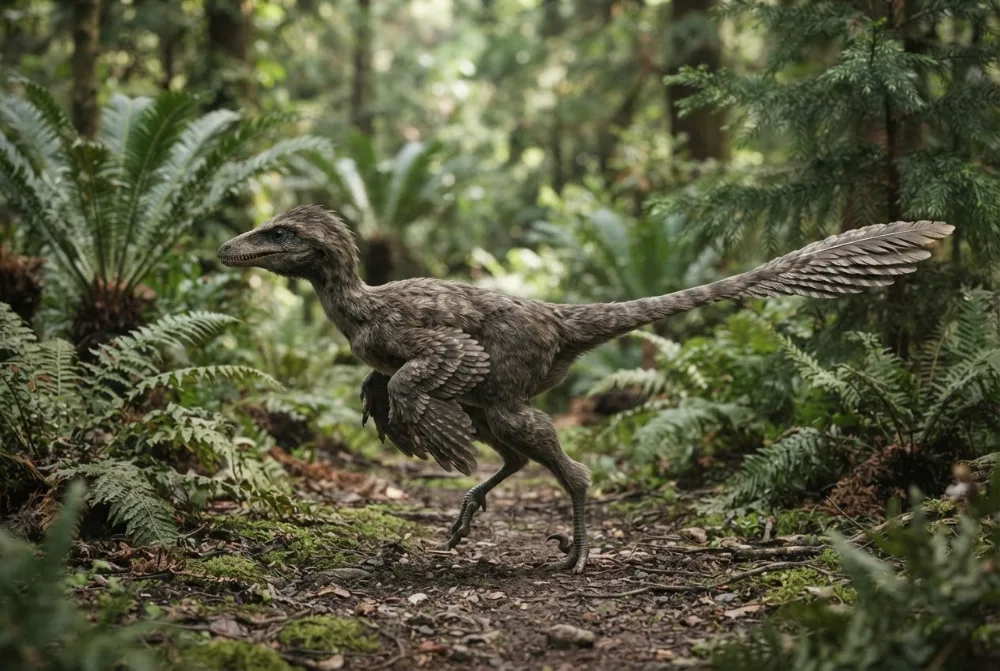
Changzhousaurus was a tiny, feathered dinosaur that lived about 120 million years ago in what is now China. It had big wings on its arms, smaller wings on its legs, and a fan of long tail feathers, kind of like a peacock. This little hunter is a close cousin of Velociraptor and Microraptor.12
Yabayeho ryari?
Yanganaga ite?
Yari ndende ite?
Ubutumburuke bwayo bwanganaga iki?
igereranya
Changzhousaurus yanganaga ite ugereranyije NAWE?
Ni imibare gusa ibarirwa muri mushakisha yawe. Nta kintu kibikwa cyangwa cyoherezwa ahandi.
Yihutaga ite?


Utuntu dushimishije
Changzhousaurus is the only known early bird relative that had both large foot feathers and very long tail feathers at the same time.32
It had about 16 long tail feathers, which were about four times as long as its thigh bone, and they fanned out like a peacock's tail.32
Even though its arm bones were short, its wing feathers were the largest ever seen on a dinosaur that wasn't a bird, compared to its body size.3
The fossil is so well preserved that you can see clear imprints of feathers all around its skeleton.2
Ibibazo bibazwa cyane kuri Changzhousaurus
?How big was Changzhousaurus?
It was very small, about 34 centimeters (13 inches) long from snout to tail tip. That is about the size of a crow.1
?Did Changzhousaurus have feathers?
Yes, it had feathers all over its body. It had large wing feathers on its arms, smaller wing feathers on its legs, and a fan of long tail feathers similar to a peacock.1
?What did Changzhousaurus eat?
It was a meat-eating theropod dinosaur. It had sharp, curved claws and teeth with serrations on some of them to help catch and eat small prey.1
?Could Changzhousaurus fly?
Scientists are not sure. It had large feathered wings, but its arm bones were short, so it may have glided or used its wings for other purposes like display.4
?When did Changzhousaurus live?
It lived about 120 million years ago during the Early Cretaceous period. Its fossils were found in the Jiufotang Formation in China.1
Gusenya ibinyoma
Ibivugwa: Some people think Changzhousaurus could fly like a modern bird because of its big wings.
Ukuri: Scientists think it was a four-winged dinosaur that likely glided or parachuted from trees, not a true flier. Its exact flying ability is still being studied.3
Ku bazobereye muri dinozore
- Izina rya siyansi
- Changzhousaurus
- Yiswe na
- Xu 20265
- Itsinda
- Dinozore zirya inyama
- Umuryango / ishami
- Paraves5
- Ishyirwa mu byiciro
- Theropoda5
- Imyaka y'amabuye
- imyaka miliyoni 121 kugeza 113 (Aptian)5
- Inzego z'amabuye
- Jiufotang5
- Ibihugu
- Ubushinwa5
- Ibisigazwa byanditswe
- 1 muri The Paleobiology Database5
- Ivumburwa
- The fossil was found in the Jiufotang Formation in Liaoning, China, and was named by Xu Xing in 2026. The name honors the city of Changzhou and China, where it was found.12
- Biracyagibwaho impaka
- Scientists are still debating exactly where Changzhousaurus fits in the dinosaur family tree, because it has features of several different groups like troodontids, dromaeosaurids, and early birds.1
Aho amakuru yakuwe
- Changzhousaurus (en.wikipedia.org)
- Chinese Scientists Discover New Feathered Dinosaur Species----Chinese Academy of Sciences (english.cas.cn)
- Advanced online publication (dinosaurier-info.de)
- Advanced online publication - Dinodata.de (dinodata.de)
- Changzhousaurus in The Paleobiology Database (CC BY 4.0): imyaka, ahantu, inzego z'amabuye, ishyirwa mu byiciro.
Buri kintu kiri kuri uru rupapuro gifite nimero yerekana aho cyakuwe. Niba hari icyo twibeshye, tubabarire, turi abakunzi ba dinozore, ntituri ikinyamakuru cya siyansi. Tubwire kuri [email protected] tuzagikosora.
 Rex arashonje! Dino Wiki ni umushinga wa papa umwe yakoreye umuhungu we ukunda dinozore, ni ubuntu, nta matangazo kandi nta bigukurikirana. Abantu bakuru bashobora guha Rex akantu ko kurya kugira ngo Dino Wiki ikomeze kuboneka kuri interineti.Gaburira Rex
 Allosaurus
 Carnotaurus
 Dilophosaurus
 Giganotosaurus
 Compsognathus
 Paronychodon
 Stegosaurus
 Iguanodon
 Archaeopteryx
 Microraptor
 Deinonychus
 Baryonyx