 Uri dinozore iyihe? Umukino w'ibibazo
 Intambara ya dinozore
 Isiganwa rya dinozore
 Imikino mito ya dinozore
 Alubumu ya sitikeri
 Intonde za TOP za dinozore
 Ntungura!
Duriavenator
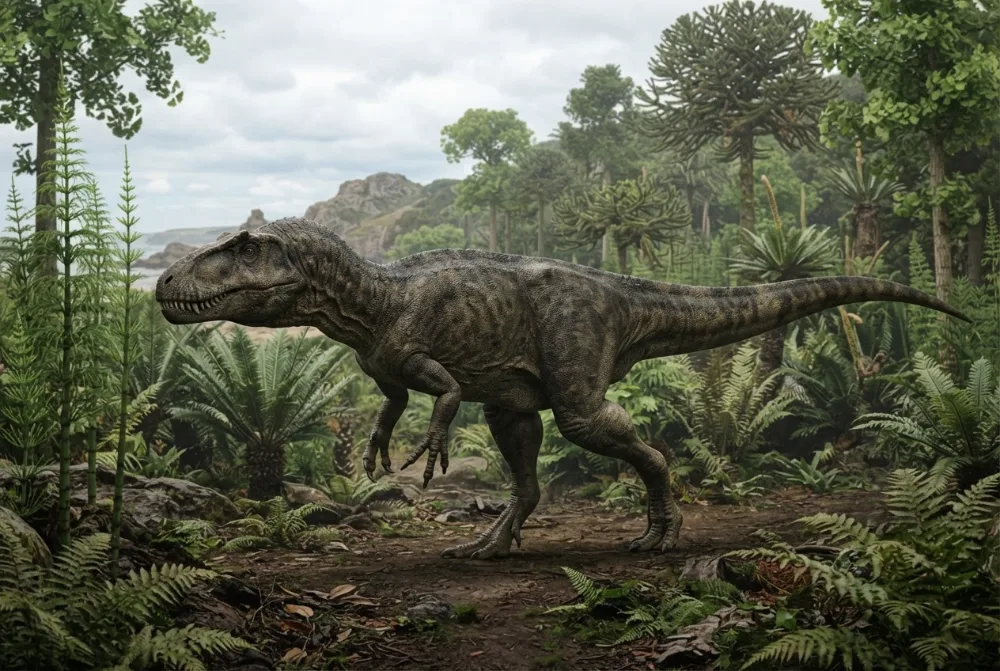
Duriavenator was a meat-eating dinosaur that lived in what is now England about 168 million years ago. It was a medium-sized predator with a big head and strong arms. Scientists think it hunted other dinosaurs like a sneaky ambush predator.1
Yabayeho ryari?
Yanganaga ite?
Yari ndende ite?
Ubutumburuke bwayo bwanganaga iki?
igereranya
Yari iremereye ite?
 ndende nk'imbwa 7 zikurikiranye🍌ndende nk'imineke 39 ikurikiranye🍉iremereye nk'imbuto 200 za watermelon🧸iremereye nk'abana 53 bo mu ishuri ry'incuke🎒iremereye nk'abanyeshuri 31🐻❄️iremereye nk'idubu 2 zo mu rubura🏃yashoboraga kwiruka metero 100 mu masegonda 10 (umuntu wihuta kurusha abandi akenera 9,6)
Duriavenator yanganaga ite ugereranyije NAWE?
Ni imibare gusa ibarirwa muri mushakisha yawe. Nta kintu kibikwa cyangwa cyoherezwa ahandi.
Yihutaga ite?


Utuntu dushimishije
Duriavenator was first thought to be a Megalosaurus, but scientists later gave it its own name in 2008.1
The only known fossils of Duriavenator are parts of its skull and jaws, found in a quarry in 1882.1
Duriavenator had a deep groove on its upper jaw bone with many air-filled holes, which is a unique feature.1
It had about 4 teeth in the front of its upper jaw, 14 to 16 in the back of the upper jaw, and 14 to 15 in the lower jaw.1
The front teeth of Duriavenator were longer and pointed forward, which may have helped it grab food.1
Duriavenator lived during the Middle Jurassic period, about 168 million years ago, making it one of the oldest known tetanuran theropods.1
Ibibazo bibazwa cyane kuri Duriavenator
?How big was Duriavenator?
It was about 5 to 7 metres long (16 to 23 feet) and weighed around 1 tonne (2,200 pounds). That is about as heavy as a small car.1
?What did Duriavenator eat?
It was a meat-eater that probably hunted other dinosaurs, like sauropods and stegosaurs. Scientists think it was an ambush predator.1
?When did Duriavenator live?
It lived about 168 million years ago, during the Middle Jurassic period. That is long before T. rex appeared.1
?Where was Duriavenator found?
Its only known fossils were discovered in a quarry near Sherborne in Dorset, England, in 1882. They are now at the Natural History Museum in London.1
Ku bazobereye muri dinozore
- Izina rya siyansi
- Duriavenator
- Yiswe na
- Benson 20082
- Itsinda
- Dinozore zirya inyama
- Umuryango / ishami
- Megalosauridae2
- Ishyirwa mu byiciro
- Theropoda2
- Imyaka y'amabuye
- imyaka miliyoni 169 kugeza 168 (Bajocian)2
- Inzego z'amabuye
- Upper Inferior Oolite2
- Ibihugu
- Ubwongereza2
- Ibisigazwa byanditswe
- 1 muri The Paleobiology Database2
- Ivumburwa
- In 1882, Edward Cleminshaw found skull bones near Sherborne, England. The fossils were first called Megalosaurus, but in 2008 Roger Benson renamed them Duriavenator.1
- Biracyagibwaho impaka
- Scientists are not sure exactly how big Duriavenator was because only a few skull bones have been found. The size estimates are based on related dinosaurs.1
Aho amakuru yakuwe
- Duriavenator (en.wikipedia.org)
- Duriavenator in The Paleobiology Database (CC BY 4.0): imyaka, ahantu, inzego z'amabuye, ishyirwa mu byiciro.
Buri kintu kiri kuri uru rupapuro gifite nimero yerekana aho cyakuwe. Niba hari icyo twibeshye, tubabarire, turi abakunzi ba dinozore, ntituri ikinyamakuru cya siyansi. Tubwire kuri [email protected] tuzagikosora.
 Rex arashonje! Dino Wiki ni umushinga wa papa umwe yakoreye umuhungu we ukunda dinozore, ni ubuntu, nta matangazo kandi nta bigukurikirana. Abantu bakuru bashobora guha Rex akantu ko kurya kugira ngo Dino Wiki ikomeze kuboneka kuri interineti.Gaburira Rex
 Allosaurus
 Carnotaurus
 Dilophosaurus
 Giganotosaurus
 Compsognathus
 Paronychodon
 Ichthyosaurus
 Khudiakovia
 Ophthalmosaurus
 Pterodactylus
 Peloneustes
 Rhamphocephalus