 Uri dinozore iyihe? Umukino w'ibibazo
 Intambara ya dinozore
 Isiganwa rya dinozore
 Imikino mito ya dinozore
 Alubumu ya sitikeri
 Intonde za TOP za dinozore
 Ntungura!
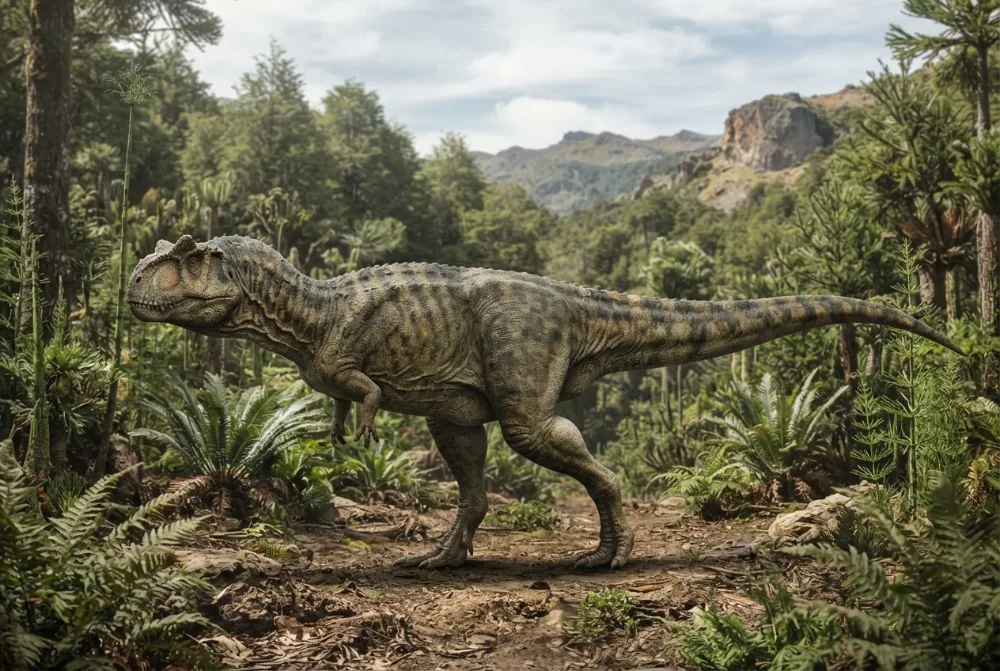
Ekrixinatosaurus
Ekrixinatosaurus was a big, meat-eating dinosaur with a boxy head and strong legs. It lived in what is now Argentina during the Early Cretaceous period. Its fossils were found when workers were building a gas pipeline and used dynamite, which is how it got its name!1
Yabayeho ryari?
Yanganaga ite?
Yari ndende ite?
Ubutumburuke bwayo bwanganaga iki?
igereranya
Yari iremereye ite?
 ndende nk'imbwa 8 zikurikiranye🍌ndende nk'imineke 44 ikurikiranye🍉iremereye nk'imbuto 160 za watermelon🧸iremereye nk'abana 42 bo mu ishuri ry'incuke🎒iremereye nk'abanyeshuri 25🏃yashoboraga kwiruka metero 100 mu masegonda 9,5 (umuntu wihuta kurusha abandi akenera 9,6)
Ekrixinatosaurus yanganaga ite ugereranyije NAWE?
Ni imibare gusa ibarirwa muri mushakisha yawe. Nta kintu kibikwa cyangwa cyoherezwa ahandi.
Yihutaga ite?


Utuntu dushimishije
Ekrixinatosaurus was an abelisaurid, a family of theropod dinosaurs with short, deep skulls and tiny arms. Its skull was about 83 centimetres long.1
The only known skeleton of Ekrixinatosaurus was found scattered over an area of 15 square metres. It included parts of the skull, backbone, hips, legs and feet.1
Ekrixinatosaurus lived alongside the giant meat-eater Giganotosaurus and the long-necked sauropods Andesaurus and Limaysaurus. Scientists think they may have competed for food.1
The bones of Ekrixinatosaurus were discovered because of a gas pipeline project. Workers used dynamite to blast through the rock, which is why the dinosaur was named 'explosion-born reptile'.1
Ekrixinatosaurus had a boxy skull with a bump above its eye and a jaw that curved upward. Its face bones were covered in small holes and spikes, which may have supported a tough, wrinkly skin.1
Some scientists once thought Ekrixinatosaurus was the largest abelisaurid, bigger than Carnotaurus. But later studies showed that Carnotaurus was actually larger, just with a smaller head.1
Ibibazo bibazwa cyane kuri Ekrixinatosaurus
?How big was Ekrixinatosaurus?
It was about 6.5 to 8 metres long (21 to 26 feet) and weighed around 800 kilograms (1,800 pounds). Some scientists once thought it was bigger, but later studies showed it was smaller than Carnotaurus.1
?What did Ekrixinatosaurus eat?
It was a meat-eater that probably hunted smaller dinosaurs and animals. It lived alongside giant plant-eaters like Andesaurus and may have competed with the huge predator Giganotosaurus for food.1
?When did Ekrixinatosaurus live?
It lived during the Early Cretaceous period, about 111 to 106 million years ago.1
?Where was Ekrixinatosaurus found?
Its fossils were found in Argentina, in a place called the Candeleros Formation. Workers building a gas pipeline blasted the rock with dynamite, which is how the dinosaur got its name 'explosion-born reptile'.1
?Was Ekrixinatosaurus bigger than Carnotaurus?
No, Carnotaurus was actually larger. Some scientists once thought Ekrixinatosaurus was bigger because of its large skull, but comparing the leg bones shows Carnotaurus was the bigger dinosaur.1
?Did Ekrixinatosaurus have feathers?
The sources do not say whether it had feathers. Its face bones had small holes and spikes that may have supported tough, wrinkly skin, but no information about feathers is given.1
Ku bazobereye muri dinozore
- Izina rya siyansi
- Ekrixinatosaurus
- Yiswe na
- Calvo et al. 20042
- Itsinda
- Dinozore zirya inyama
- Umuryango / ishami
- Abelisauridae2
- Ishyirwa mu byiciro
- Theropoda > Ceratosauria > Abelisauridae2
- Imyaka y'amabuye
- imyaka miliyoni 113 kugeza 110 (Albian)2
- Inzego z'amabuye
- Candeleros2
- Ibihugu
- Arijantine2
- Ibisigazwa byanditswe
- 1 muri The Paleobiology Database2
- Ivumburwa
- Ekrixinatosaurus was named in 2004 by paleontologists Jorge Calvo, David Rubilar-Rogers and Karen Moreno. The fossils were found in the Candeleros Formation of Argentina during construction of a gas pipeline.12
- Biracyagibwaho impaka
- Scientists are not sure exactly how big Ekrixinatosaurus was. Some think it was 6.5 to 8 metres long, while others estimate it could have been 10 to 11 metres based on its skull size.1
Aho amakuru yakuwe
- Ekrixinatosaurus (en.wikipedia.org)
- Ekrixinatosaurus in The Paleobiology Database (CC BY 4.0): imyaka, ahantu, inzego z'amabuye, ishyirwa mu byiciro.
Buri kintu kiri kuri uru rupapuro gifite nimero yerekana aho cyakuwe. Niba hari icyo twibeshye, tubabarire, turi abakunzi ba dinozore, ntituri ikinyamakuru cya siyansi. Tubwire kuri [email protected] tuzagikosora.
 Rex arashonje! Dino Wiki ni umushinga wa papa umwe yakoreye umuhungu we ukunda dinozore, ni ubuntu, nta matangazo kandi nta bigukurikirana. Abantu bakuru bashobora guha Rex akantu ko kurya kugira ngo Dino Wiki ikomeze kuboneka kuri interineti.Gaburira Rex
 Allosaurus
 Carnotaurus
 Dilophosaurus
 Giganotosaurus
 Compsognathus
 Paronychodon
 Stegosaurus
 Iguanodon
 Archaeopteryx
 Microraptor
 Deinonychus
 Baryonyx