 Uri dinozore iyihe? Umukino w'ibibazo
 Intambara ya dinozore
 Isiganwa rya dinozore
 Imikino mito ya dinozore
 Alubumu ya sitikeri
 Intonde za TOP za dinozore
 Ntungura!
Yabayeho ryari?

Yanganaga ite?
Yari iremereye ite?
Eopengornis yanganaga ite ugereranyije NAWE?
Ni imibare gusa ibarirwa muri mushakisha yawe. Nta kintu kibikwa cyangwa cyoherezwa ahandi.
Yihutaga ite?


Utuntu dushimishije
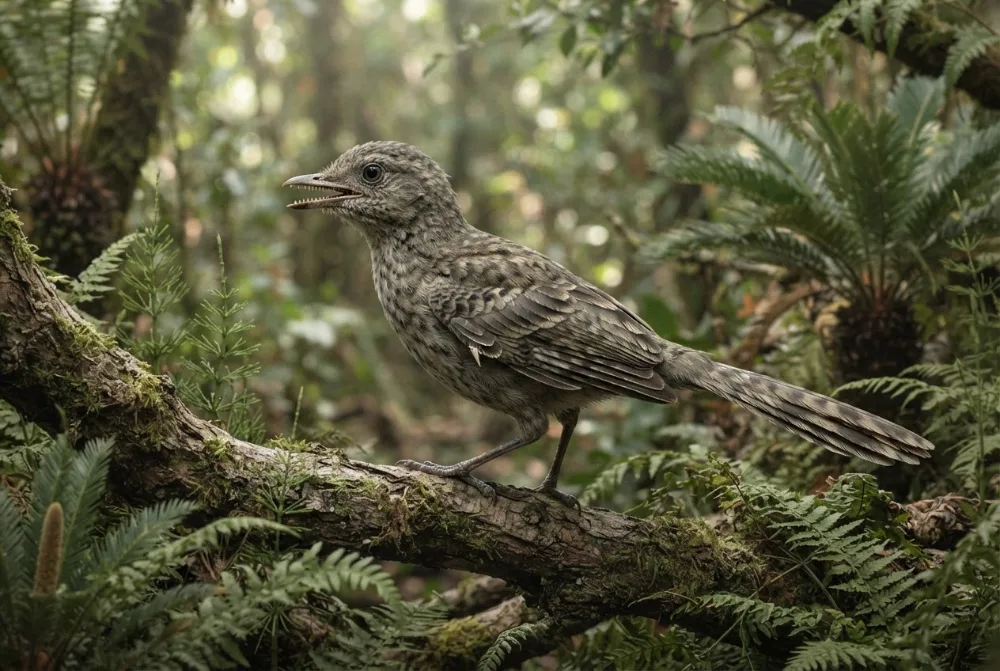
Eopengornis had special tail feathers with a strong central shaft, called a rachis, which helped it fly and show off.12
It belonged to a group of early birds called enantiornithes, which were very common during the time of dinosaurs.1
The only known species is called Eopengornis martini.1
Its fossils were found in rocks that are about 132 to 125 million years old, from a time called the Hauterivian.5
Eopengornis is part of the pengornithid family, a group of early birds that lived in Asia.1
Ku bazobereye muri dinozore
- Izina rya siyansi
- Eopengornis
- Yiswe na
- Wang et al. 20145
- Itsinda
- Inyoni za mbere
- Umuryango / ishami
- Pengornithidae5
- Ishyirwa mu byiciro
- Theropoda > Avialae5
- Imyaka y'amabuye
- imyaka miliyoni 133 kugeza 126 (Hauterivian)5
- Inzego z'amabuye
- Huajiying5
- Ibihugu
- Ubushinwa5
- Ibisigazwa byanditswe
- 1 muri The Paleobiology Database5
- Ivumburwa
- Eopengornis was named and described by scientists Wang, O'Connor, Zheng, Wang, Hu, and Zhou in 2014, based on a fossil found in China.15
- Biracyagibwaho impaka
- Scientists are still studying exactly how Eopengornis used its strong tail feathers for flight and display.12
Aho amakuru yakuwe
- Eopengornis (en.wikipedia.org)
- Insights into the evolution of rachis dominated tail feathers from a new basal enantiornithine (Aves: Ornithothoraces) (bionames.org)
- Quantitative investigation of pengornithid enantiornithine diet reveals macrocarnivorous ecology evolved in birds by Early Cretaceous (pmc.ncbi.nlm.nih.gov)
- Quantitative investigation of pengornithid enantiornithine diet reveals macrocarnivorous ecology evolved in birds by Early Cretaceous: iScience (cell.com)
- Eopengornis in The Paleobiology Database (CC BY 4.0): imyaka, ahantu, inzego z'amabuye, ishyirwa mu byiciro.
Buri kintu kiri kuri uru rupapuro gifite nimero yerekana aho cyakuwe. Niba hari icyo twibeshye, tubabarire, turi abakunzi ba dinozore, ntituri ikinyamakuru cya siyansi. Tubwire kuri [email protected] tuzagikosora.
 Rex arashonje! Dino Wiki ni umushinga wa papa umwe yakoreye umuhungu we ukunda dinozore, ni ubuntu, nta matangazo kandi nta bigukurikirana. Abantu bakuru bashobora guha Rex akantu ko kurya kugira ngo Dino Wiki ikomeze kuboneka kuri interineti.Gaburira Rex
 Archaeopteryx
 Hesperornis
 Ichthyornis
 Baptornis
 Jurapteryx
 Gobipteryx
 Stegosaurus
 Iguanodon
 Giganotosaurus
 Microraptor
 Deinonychus
 Baryonyx