 Uri dinozore iyihe? Umukino w'ibibazo
 Intambara ya dinozore
 Isiganwa rya dinozore
 Imikino mito ya dinozore
 Alubumu ya sitikeri
 Intonde za TOP za dinozore
 Ntungura!
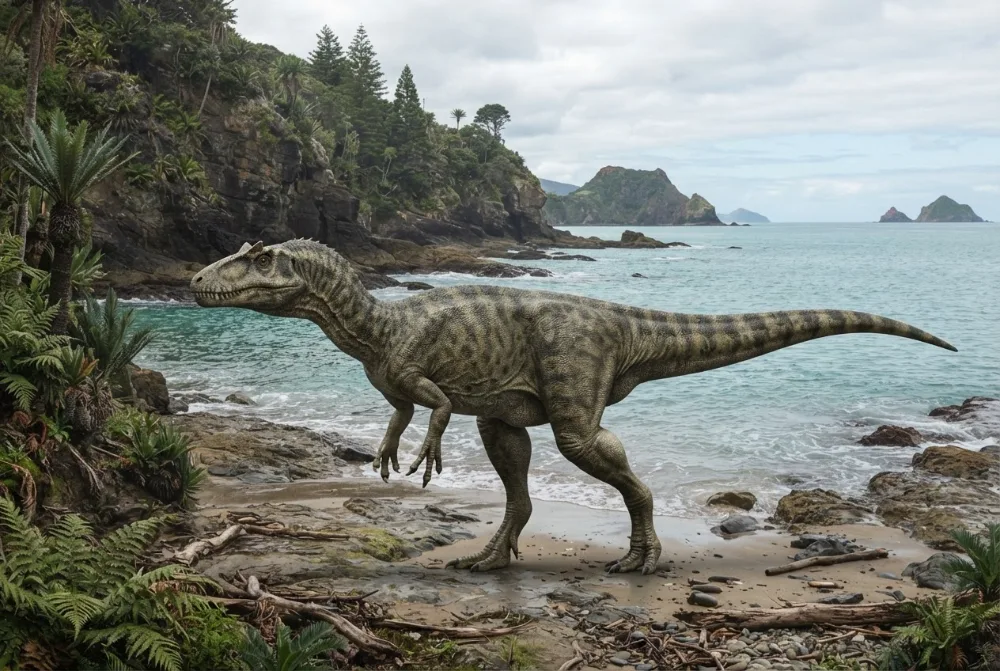
Eustreptospondylus
Eustreptospondylus was a meat-eating dinosaur that lived on islands in the Jurassic sea. It was about as long as a small car and probably hunted small animals or ate dead ones washed up on the beach.1
Yabayeho ryari?
Yanganaga ite?
Yari ndende ite?
Ubutumburuke bwayo bwanganaga iki?
Yari iremereye ite?
 ndende nk'imbwa 6 zikurikiranye🍌ndende nk'imineke 33 ikurikiranye🍉iremereye nk'imbuto 100 za watermelon🧸iremereye nk'abana 26 bo mu ishuri ry'incuke🎒iremereye nk'abanyeshuri 16🏃yashoboraga kwiruka metero 100 mu masegonda 8 (umuntu wihuta kurusha abandi akenera 9,6)
Eustreptospondylus yanganaga ite ugereranyije NAWE?
Ni imibare gusa ibarirwa muri mushakisha yawe. Nta kintu kibikwa cyangwa cyoherezwa ahandi.
Yihutaga ite?


Utuntu dushimishije
The first skeleton found was the most complete large meat-eating dinosaur skeleton known at the time, and it is still the most complete large Jurassic European theropod.1
It lived on islands, because Europe was a group of islands back then. Some scientists think it could swim short distances between islands, like a Komodo dragon.1
Its skull had a pointed snout and a large horizontal nostril. It did not have a horn on its face.1
Grooves in its jaw joints let it open its mouth extra wide when it lowered its lower jaws.1
No teeth were found with the skeleton, but the size of the tooth sockets shows that the third tooth in the lower jaw was extra big.1
The known fossil was found in a marine layer, which means it ended up in the sea. That is why some scientists think it could swim, but others think it just washed out to sea after dying.1
Ibibazo bibazwa cyane kuri Eustreptospondylus
?How big was Eustreptospondylus?
The known skeleton was from a subadult about 4.63 metres (15.2 ft) long and weighed about 218 kilograms (481 lb). A full-grown adult may have reached around 6 metres (20 ft) and weighed 0.5 tonnes.1
?What did Eustreptospondylus eat?
It was a carnivore that ate smaller dinosaurs and pterosaurs, and may have scavenged dead fish, marine reptiles, and other dinosaurs.1
?Could Eustreptospondylus swim?
Some scientists think it could swim short distances between islands, like a Komodo dragon, because its fossil was found on what was an island. Others think it just washed out to sea after dying.1
?When did Eustreptospondylus live?
It lived during the Middle to Late Jurassic period, about 166 to 154 million years ago.1
?Where was Eustreptospondylus found?
Its fossils were found in southern England, near Oxford, in a marine clay layer.1
?Is Eustreptospondylus a dinosaur?
Yes, it is a theropod dinosaur, a meat-eating dinosaur that walked on two legs.1
Gusenya ibinyoma
Ibivugwa: Eustreptospondylus was a slow, clumsy scavenger that only ate dead animals.
Ukuri: It was a meat-eater that probably hunted small animals and also scavenged. Its body shows it was an active predator, and it may have foraged on shorelines.1
Ku bazobereye muri dinozore
- Izina rya siyansi
- Eustreptospondylus
- Yiswe na
- Walker 19643
- Itsinda
- Dinozore zirya inyama
- Umuryango / ishami
- Megalosauridae3
- Ishyirwa mu byiciro
- Theropoda3
- Imyaka y'amabuye
- imyaka miliyoni 165 kugeza 162 (Callovian)3
- Inzego z'amabuye
- Oxford Clay3
- Ibihugu
- Ubwongereza3
- Ibisigazwa byanditswe
- 1 muri The Paleobiology Database3
- Ivumburwa
- Workers found the skeleton in 1870 at Summertown Brick Pit near Oxford, England. It was described in 1871 by John Phillips, but it got its own name, Eustreptospondylus oxoniensis, from Alick Walker in 1964.1
- Biracyagibwaho impaka
- Scientists still debate whether Eustreptospondylus could swim between islands or if its body just washed out to sea after death.1
Aho amakuru yakuwe
- Eustreptospondylus (en.wikipedia.org)
- enchantedlearning.com (enchantedlearning.com)
- Eustreptospondylus in The Paleobiology Database (CC BY 4.0): imyaka, ahantu, inzego z'amabuye, ishyirwa mu byiciro.
Buri kintu kiri kuri uru rupapuro gifite nimero yerekana aho cyakuwe. Niba hari icyo twibeshye, tubabarire, turi abakunzi ba dinozore, ntituri ikinyamakuru cya siyansi. Tubwire kuri [email protected] tuzagikosora.
 Rex arashonje! Dino Wiki ni umushinga wa papa umwe yakoreye umuhungu we ukunda dinozore, ni ubuntu, nta matangazo kandi nta bigukurikirana. Abantu bakuru bashobora guha Rex akantu ko kurya kugira ngo Dino Wiki ikomeze kuboneka kuri interineti.Gaburira Rex
 Allosaurus
 Carnotaurus
 Dilophosaurus
 Giganotosaurus
 Compsognathus
 Paronychodon
 Ichthyosaurus
 Khudiakovia
 Ophthalmosaurus
 Pterodactylus
 Peloneustes
 Rhamphocephalus