 Uri dinozore iyihe? Umukino w'ibibazo
 Intambara ya dinozore
 Isiganwa rya dinozore
 Imikino mito ya dinozore
 Alubumu ya sitikeri
 Intonde za TOP za dinozore
 Ntungura!
Feitianius
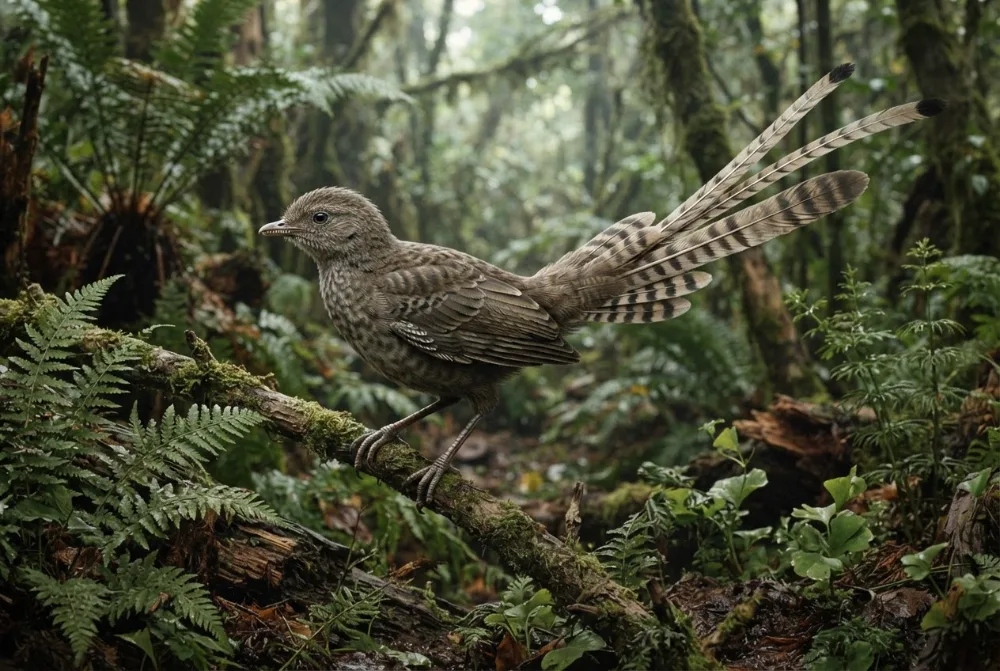
Feitianius was a small bird that lived during the Early Cretaceous in what is now China. It had a fancy tail with three different kinds of feathers, which it probably used to show off to other birds.1
Yabayeho ryari?
Yihutaga ite?


Utuntu dushimishije
Feitianius had a tail with three different types of feathers, while most other early birds had only one type.1
The longest tail feathers were probably used for display, like the fancy tails of modern birds-of-paradise.1
Scientists think the fossil is a male because male birds today often have more colorful or elaborate tails.1
Feitianius lived about 121 to 113 million years ago, during the Aptian stage of the Early Cretaceous.2
Its thighbone was only 27 millimeters long, so it was a very small bird.1
The fossil was found in the Xiagou Formation in Gansu, China.1
Ibibazo bibazwa cyane kuri Feitianius
?How big was Feitianius?
Feitianius was very small. Its thighbone was only 27 millimetres long, so the whole bird was probably about the size of a modern sparrow.1
?Did Feitianius have feathers?
Yes, Feitianius had feathers. Its fossil preserves extensive soft tissues including plumage, and its tail had three different types of feathers.1
?What did Feitianius eat?
The sources do not say what Feitianius ate. Since it was a small bird, it probably ate insects or small plants, but no one knows for sure.1
Ku bazobereye muri dinozore
- Izina rya siyansi
- Feitianius
- Yiswe na
- O'Connor et al. 20163
- Itsinda
- Inyoni za mbere
- Umuryango / ishami
- Enantiornithes3
- Ishyirwa mu byiciro
- Theropoda > Avialae3
- Imyaka y'amabuye
- imyaka miliyoni 121 kugeza 113 (Aptian)3
- Inzego z'amabuye
- Xiagou3
- Ibihugu
- Ubushinwa3
- Ibisigazwa byanditswe
- 1 muri The Paleobiology Database3
- Ivumburwa
- Feitianius was named in 2015 by Jingmai O'Connor and colleagues. The fossil was found in 2005 near Changma, Gansu, China.1
- Biracyagibwaho impaka
- Scientists are not sure exactly how Feitianius is related to other enantiornithine birds, because its skeleton is incomplete.1
Aho amakuru yakuwe
- Feitianius (en.wikipedia.org)
- PBDB Taxon (paleobiodb.org)
- Feitianius in The Paleobiology Database (CC BY 4.0): imyaka, ahantu, inzego z'amabuye, ishyirwa mu byiciro.
Buri kintu kiri kuri uru rupapuro gifite nimero yerekana aho cyakuwe. Niba hari icyo twibeshye, tubabarire, turi abakunzi ba dinozore, ntituri ikinyamakuru cya siyansi. Tubwire kuri [email protected] tuzagikosora.
 Rex arashonje! Dino Wiki ni umushinga wa papa umwe yakoreye umuhungu we ukunda dinozore, ni ubuntu, nta matangazo kandi nta bigukurikirana. Abantu bakuru bashobora guha Rex akantu ko kurya kugira ngo Dino Wiki ikomeze kuboneka kuri interineti.Gaburira Rex
 Archaeopteryx
 Hesperornis
 Ichthyornis
 Baptornis
 Jurapteryx
 Gobipteryx
 Stegosaurus
 Iguanodon
 Giganotosaurus
 Microraptor
 Deinonychus
 Baryonyx