 Uri dinozore iyihe? Umukino w'ibibazo
 Intambara ya dinozore
 Isiganwa rya dinozore
 Imikino mito ya dinozore
 Alubumu ya sitikeri
 Intonde za TOP za dinozore
 Ntungura!
Fona
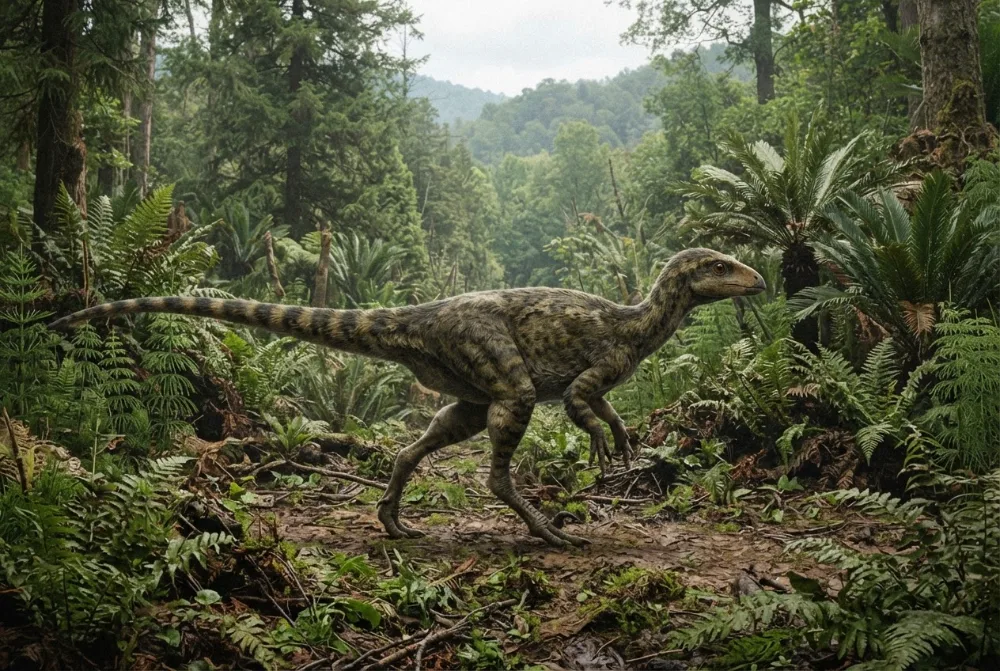
Fona was a small, plant-eating dinosaur that lived about 99 million years ago in what is now Utah. It was about the size of a large dog and spent much of its time digging and living in underground burrows. Fona's fossils are surprisingly common because it often buried itself before it died.12
Yabayeho ryari?
Yanganaga ite?
Yari ndende ite?
Ubutumburuke bwayo bwanganaga iki?
igereranya
Yari iremereye ite?
 ndende nk'injangwe 4 zo mu rugo zikurikiranye🍌ndende nk'imineke 12 ikurikiranye🍉iremereye nk'imbuto 5 za watermelon🏃yashoboraga kwiruka metero 100 mu masegonda 9,2 (umuntu wihuta kurusha abandi akenera 9,6)
Fona yanganaga ite ugereranyije NAWE?
Ni imibare gusa ibarirwa muri mushakisha yawe. Nta kintu kibikwa cyangwa cyoherezwa ahandi.
Yihutaga ite?


Utuntu dushimishije
Fona had strong arm and hip muscles, fused pelvic bones, and large hind legs that helped it dig burrows.12
Scientists think Fona may have dug like a springhare: scratching soil loose with its front claws and kicking it away with its back legs.2
Fona's closest relative, Oryctodromeus, also burrowed, and its burrows have been found in Idaho and Montana.1
Fona skeletons are often found complete, lying chest-down with legs spread, as if they died in their burrows.1
At least two Fona skeletons have been found intertwined, which matches the idea that they shared burrows.2
Fona lived in a warm, wet floodplain with many rivers, between a huge inland sea to the east and volcanoes to the west.1
The species name herzogae honors Lisa Herzog, the paleontology operations manager at the North Carolina Museum of Natural Sciences.1
Ibibazo bibazwa cyane kuri Fona
?How big was Fona?
About the size of a large dog.1
?Did Fona live in burrows?
Yes, scientists think Fona spent at least part of its time underground in burrows, based on its anatomy and fossils.15
?What did Fona eat?
Fona was a plant-eating dinosaur.1
?When did Fona live?
Fona lived about 99 million years ago, during the mid-Cretaceous period.1
Ku bazobereye muri dinozore
- Izina rya siyansi
- Fona
- Yiswe na
- Avrahami et al. 20246
- Itsinda
- Izirya ibimera zifite umunwa w'inyoni
- Umuryango / ishami
- Thescelosauridae6
- Ishyirwa mu byiciro
- Ornithischia6
- Imyaka y'amabuye
- imyaka miliyoni 100 kugeza 94 (Cenomanian)6
- Inzego z'amabuye
- Cedar Mountain6
- Ibihugu
- Amerika6
- Ibisigazwa byanditswe
- 3 muri The Paleobiology Database6
- Ivumburwa
- Fona was named in 2024 by paleontologists Haviv Avrahami, Lindsay Zanno, and colleagues from North Carolina State University and the North Carolina Museum of Natural Sciences. The first fossils were found starting in 2013 in the Mussentuchit Member of the Cedar Mountain Formation in Utah.13
- Biracyagibwaho impaka
- Scientists have not yet found the actual burrows of Fona, only the skeletons that suggest it lived underground.1
Aho amakuru yakuwe
- Life Underground Suited New Dinosaur Fine | NC State News (news.ncsu.edu)
- This dinosaur dug its own grave | National Geographic (nationalgeographic.com)
- PBDB Taxon (paleobiodb.org)
- The First ‘Burrowing Dinosaur’ Was Discovered In 2007—And 17 Years Later, We’ve Discovered The Second (forbes.com)
- A new semi-fossorial thescelosaurine dinosaur from the Cenomanian-age Mussentuchit Member of the Cedar Mountain Formation, Utah - PubMed (pubmed.ncbi.nlm.nih.gov)
- Fona in The Paleobiology Database (CC BY 4.0): imyaka, ahantu, inzego z'amabuye, ishyirwa mu byiciro.
Buri kintu kiri kuri uru rupapuro gifite nimero yerekana aho cyakuwe. Niba hari icyo twibeshye, tubabarire, turi abakunzi ba dinozore, ntituri ikinyamakuru cya siyansi. Tubwire kuri [email protected] tuzagikosora.
 Rex arashonje! Dino Wiki ni umushinga wa papa umwe yakoreye umuhungu we ukunda dinozore, ni ubuntu, nta matangazo kandi nta bigukurikirana. Abantu bakuru bashobora guha Rex akantu ko kurya kugira ngo Dino Wiki ikomeze kuboneka kuri interineti.Gaburira Rex
 Iguanodon
 Tenontosaurus
 Thescelosaurus
 Zalmoxes
 Camptosaurus
 Rhabdodon
 Tyrannosaurus
 Triceratops
 Velociraptor
 Spinosaurus
 Ankylosaurus
 Parasaurolophus