 Uri dinozore iyihe? Umukino w'ibibazo
 Intambara ya dinozore
 Isiganwa rya dinozore
 Imikino mito ya dinozore
 Alubumu ya sitikeri
 Intonde za TOP za dinozore
 Ntungura!
Gobisaurus
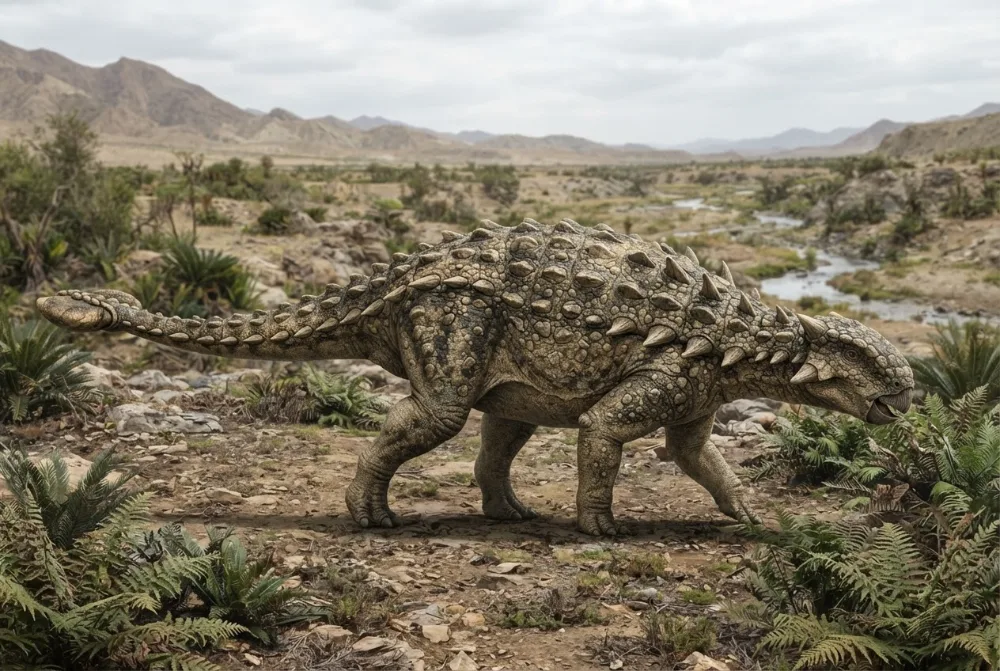
Gobisaurus was a big, armoured dinosaur that munched on plants. It had a wide, bony skull and a tail that could be stiff at the end, like a handle. It lived in what is now China during the Early Cretaceous period.13
Yabayeho ryari?
Yanganaga ite?
Yari ndende ite?
Ubutumburuke bwayo bwanganaga iki?
igereranya
 ndende nk'imbwa 5 zikurikiranye🍌ndende nk'imineke 28 ikurikiranye🏃yashoboraga kwiruka metero 100 mu masegonda 21 (umuntu wihuta kurusha abandi akenera 9,6)
Gobisaurus yanganaga ite ugereranyije NAWE?
Ni imibare gusa ibarirwa muri mushakisha yawe. Nta kintu kibikwa cyangwa cyoherezwa ahandi.
Yihutaga ite?


Utuntu dushimishije
Gobisaurus had a skull that was 46 centimetres (18 inches) long and almost as wide, giving it a very broad, kite-shaped head.1
Its fossils were first discovered during a joint Soviet-Chinese expedition in the 1950s, but the skull was not studied until the 1990s.1
Gobisaurus is closely related to another ankylosaur called Shamosaurus, and they share many skull features like large oval eye sockets and nostrils.1
Some scientists think that another dinosaur named Zhongyuansaurus might actually be the same species as Gobisaurus.1
Unlike many later ankylosaurs, Gobisaurus did not have a bony club at the tip of its tail, but its tail vertebrae did lock together near the end.1
Ibibazo bibazwa cyane kuri Gobisaurus
?How big was Gobisaurus?
About 5 metres (16 feet) long. That is based on the size of its skull, which was 46 centimetres (18 inches) long and almost as wide.21
?What did Gobisaurus eat?
It ate plants. Gobisaurus was an herbivorous dinosaur that munched on vegetation.21
?Did Gobisaurus have a tail club?
No, it did not have a bony club at the tip of its tail. Its tail vertebrae did lock together near the end, making it stiff, but there was no club knob.1
?When did Gobisaurus live?
It lived during the Early Cretaceous period, about 121 to 99 million years ago.21
?Is Gobisaurus a dinosaur?
Yes, it is a dinosaur. It belongs to the group Ankylosauria, which are armoured dinosaurs.21
?How did Gobisaurus get its name?
Its name means 'Gobi lizard', because it was found in the Gobi Desert. The species name 'domoculus' means 'hidden from view' in Latin, because its fossils were overlooked for 30 years.1
?Was Gobisaurus bigger than a person?
Yes, it was about 5 metres (16 feet) long, which is much longer than a person is tall.2
Ku bazobereye muri dinozore
- Izina rya siyansi
- Gobisaurus
- Yiswe na
- Vickaryous et al. 20013
- Itsinda
- Dinozore zifite igikingira
- Umuryango / ishami
- Ankylosauridae3
- Ishyirwa mu byiciro
- Ornithischia > Ankylosauria > Ankylosauridae > Thyreophora3
- Imyaka y'amabuye
- imyaka miliyoni 121 kugeza 100 (Aptian / Albian)3
- Inzego z'amabuye
- Miaogou, Haoling3
- Ibihugu
- Ubushinwa3
- Ibisigazwa byanditswe
- 2 muri The Paleobiology Database3
- Izwi kandi ku izina rya
- Zhongyuansaurus (amazina ya kera ubu abarwa nk'inyamaswa imwe)3
- Ivumburwa
- Gobisaurus was named in 2001 by Matthew Vickaryous, Anthony Russell, Philip Currie and Zhao Xijin. The skull was found in the Gobi Desert of Inner Mongolia and had been overlooked for decades.1
- Biracyagibwaho impaka
- Scientists are not sure exactly how old the Gobisaurus fossils are. Some studies suggest they are from the Barremian to Albian stages (about 125 to 100 million years ago), while others think they might be from the Turonian stage (about 90 million years ago).1
Aho amakuru yakuwe
- Gobisaurus (en.wikipedia.org)
- Gobisaurus | Natural History Museum (nhm.ac.uk)
- Gobisaurus in The Paleobiology Database (CC BY 4.0): imyaka, ahantu, inzego z'amabuye, ishyirwa mu byiciro.
Buri kintu kiri kuri uru rupapuro gifite nimero yerekana aho cyakuwe. Niba hari icyo twibeshye, tubabarire, turi abakunzi ba dinozore, ntituri ikinyamakuru cya siyansi. Tubwire kuri [email protected] tuzagikosora.
 Rex arashonje! Dino Wiki ni umushinga wa papa umwe yakoreye umuhungu we ukunda dinozore, ni ubuntu, nta matangazo kandi nta bigukurikirana. Abantu bakuru bashobora guha Rex akantu ko kurya kugira ngo Dino Wiki ikomeze kuboneka kuri interineti.Gaburira Rex
 Ankylosaurus
 Sauropelta
 Pinacosaurus
 Scutellosaurus
 Struthiosaurus
 Euoplocephalus
 Stegosaurus
 Iguanodon
 Archaeopteryx
 Giganotosaurus
 Microraptor
 Deinonychus