 Uri dinozore iyihe? Umukino w'ibibazo
 Intambara ya dinozore
 Isiganwa rya dinozore
 Imikino mito ya dinozore
 Alubumu ya sitikeri
 Intonde za TOP za dinozore
 Ntungura!
Harpymimus
Harpymimus was an early, ostrich-like dinosaur that ran on two long legs. Unlike its later relatives, it still had small teeth in its lower jaw to grab food. It lived in what is now Mongolia during the Early Cretaceous.21
Yabayeho ryari?
Yanganaga ite?
Yari ndende ite?
Ubutumburuke bwayo bwanganaga iki?
igereranya
Yari iremereye ite?

 ndende nk'injangwe 4 zo mu rugo zikurikiranye🍌ndende nk'imineke 11 ikurikiranye🍉iremereye nk'imbuto 29 za watermelon🧸iremereye nk'abana 8 bo mu ishuri ry'incuke🎒iremereye nk'abanyeshuri 5🏃yashoboraga kwiruka metero 100 mu masegonda 5,5 (umuntu wihuta kurusha abandi akenera 9,6)
Harpymimus yanganaga ite ugereranyije NAWE?
Ni imibare gusa ibarirwa muri mushakisha yawe. Nta kintu kibikwa cyangwa cyoherezwa ahandi.
Yihutaga ite?


Utuntu dushimishije
Harpymimus had about 11 small, blunt teeth only in its lower jaw, unlike later ostrich dinosaurs which had no teeth at all.2
Its name comes from the Harpies, scary bird monsters from Greek myths, and the Greek word for mimic.2
The only known skeleton is almost complete but was crushed flat, making some details hard to see.2
Harpymimus had a long neck, long arms with sharp claws, and long legs built for running.2
It lived alongside the horned dinosaur Psittacosaurus in the same region of Mongolia.2
Scientists think Harpymimus was an early member of the group that includes the giant-clawed Deinocheirus.2
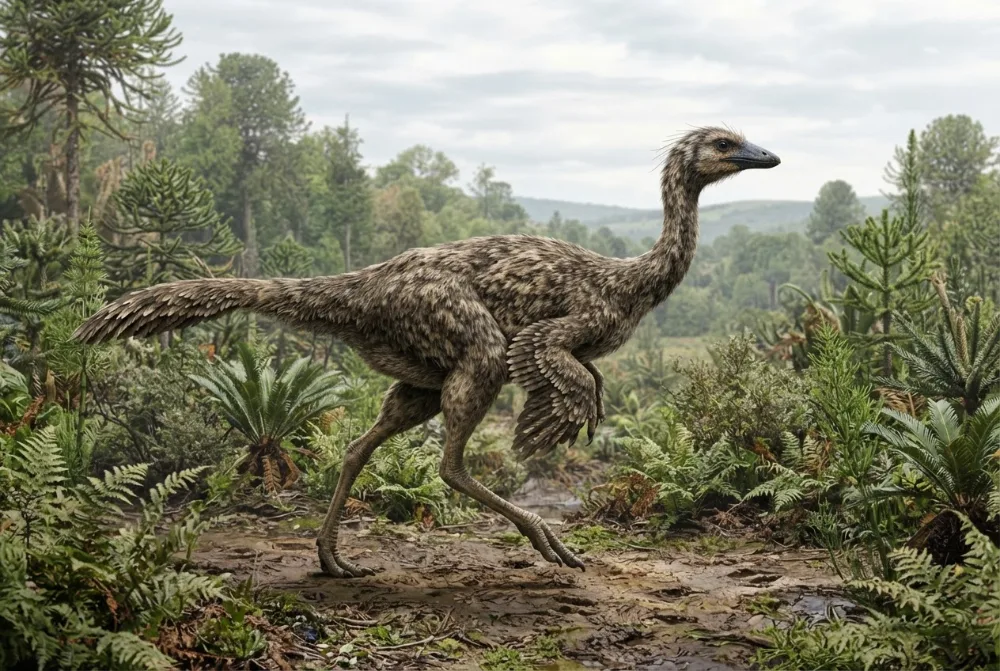
Ibibazo bibazwa cyane kuri Harpymimus
?How big was Harpymimus?
About 2 metres (6.6 feet) long and weighed over 146.5 kilograms (323 pounds).12
?What did Harpymimus eat?
It was omnivorous. Its small, blunt teeth and beak were used for grabbing and holding food, not cutting or piercing.12
?Did Harpymimus have feathers?
The sources do not mention feathers, but as a theropod dinosaur related to birds, it may have had simple feathers. No direct evidence has been found.2
?When did Harpymimus live?
It lived during the Early Cretaceous Period, about 121 to 99 million years ago.1
Ku bazobereye muri dinozore
- Izina rya siyansi
- Harpymimus
- Yiswe na
- Barsbold and Perle 19843
- Itsinda
- Dinozore zisa n'imbuni
- Umuryango / ishami
- Deinocheiridae3
- Ishyirwa mu byiciro
- Theropoda > Ornithomimosauria3
- Imyaka y'amabuye
- imyaka miliyoni 110 kugeza 100 (Albian)3
- Inzego z'amabuye
- Khuren Dukh3
- Ibihugu
- Mongoliya3
- Ibisigazwa byanditswe
- 1 muri The Paleobiology Database3
- Ivumburwa
- A Soviet-Mongolian expedition found the skeleton in the Gobi Desert in 1981. In 1984, paleontologists Rinchen Barsbold and Altangerel Perle named it Harpymimus okladnikovi after the archaeologist Alexey Okladnikov.2
- Biracyagibwaho impaka
- Scientists are not sure exactly how Harpymimus used its small teeth, since they were too blunt for cutting meat or plants.2
Aho amakuru yakuwe
- Harpymimus | Natural History Museum (nhm.ac.uk)
- Harpymimus (en.wikipedia.org)
- Harpymimus in The Paleobiology Database (CC BY 4.0): imyaka, ahantu, inzego z'amabuye, ishyirwa mu byiciro.
Buri kintu kiri kuri uru rupapuro gifite nimero yerekana aho cyakuwe. Niba hari icyo twibeshye, tubabarire, turi abakunzi ba dinozore, ntituri ikinyamakuru cya siyansi. Tubwire kuri [email protected] tuzagikosora.
 Rex arashonje! Dino Wiki ni umushinga wa papa umwe yakoreye umuhungu we ukunda dinozore, ni ubuntu, nta matangazo kandi nta bigukurikirana. Abantu bakuru bashobora guha Rex akantu ko kurya kugira ngo Dino Wiki ikomeze kuboneka kuri interineti.Gaburira Rex
 Gallimimus
 Ornithomimus
 Struthiomimus
 Deinocheirus
 Dromiceiomimus
 Archaeornithomimus
 Stegosaurus
 Iguanodon
 Archaeopteryx
 Giganotosaurus
 Microraptor
 Deinonychus