 Uri dinozore iyihe? Umukino w'ibibazo
 Intambara ya dinozore
 Isiganwa rya dinozore
 Imikino mito ya dinozore
 Alubumu ya sitikeri
 Intonde za TOP za dinozore
 Ntungura!
Himeoolithus
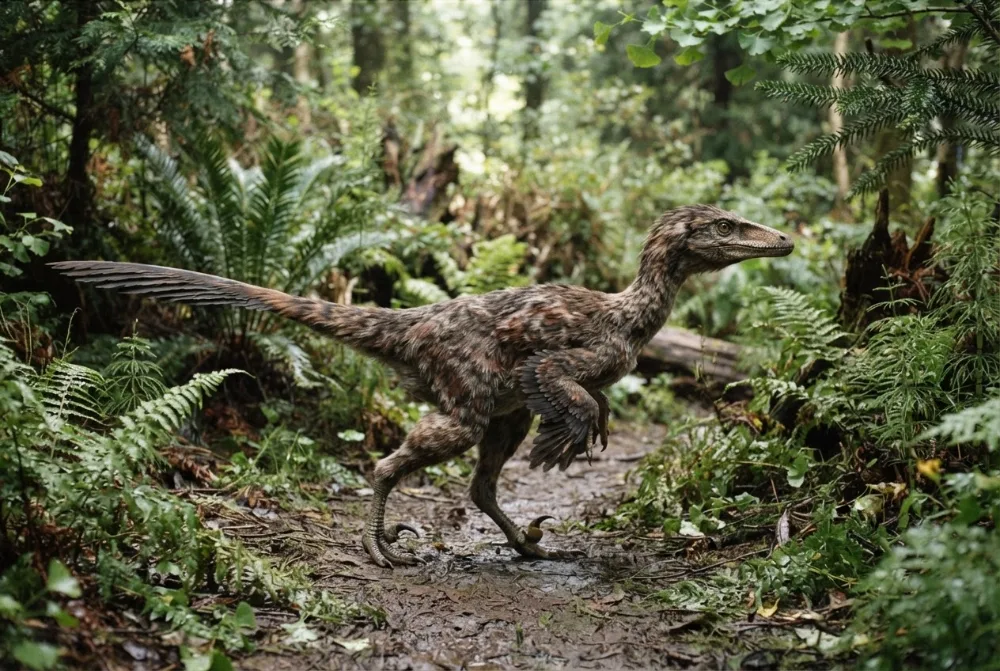
Himeoolithus was a tiny meat-eating dinosaur that lived in what is now Japan about 110 million years ago. It is known from its eggs, which are some of the smallest theropod eggs ever found, about the size of a quail egg. These eggs show that small dinosaurs lived alongside the giants!2
Yabayeho ryari?
Yihutaga ite?


Utuntu dushimishije
Himeoolithus eggs are the smallest non-avian theropod eggs known, with an estimated mass of only 9.9 grams, about the size of a modern quail egg.1
The eggs are unusually elongated for their size, with a length-to-width ratio of 2.25, which is more typical of larger theropod eggs.1
The nest was found in place, not moved by water or wind, because most eggshell fragments were positioned concave-up, which happens when they break in place.2
Over 1,300 eggshell fragments from Himeoolithus were found at the Kamitaki Egg Quarry, along with other small theropod eggs.2
The high diversity of small theropod eggs at this site makes it one of the most diverse Early Cretaceous egg localities known.2
Gusenya ibinyoma
Ibivugwa: Some people think all dinosaurs were huge, but Himeoolithus shows that many were small.
Ukuri: Himeoolithus eggs are tiny, and the dinosaur that laid them was likely small, showing that dinosaurs came in many sizes.2
Ku bazobereye muri dinozore
- Izina rya siyansi
- Himeoolithus
- Yiswe na
- Tanaka et al. 20203
- Itsinda
- Dinozore zirya inyama
- Umuryango / ishami
- Theropoda3
- Ishyirwa mu byiciro
- Theropoda3
- Imyaka y'amabuye
- imyaka miliyoni 113 kugeza 110 (Albian)3
- Inzego z'amabuye
- Ohyamashimo3
- Ibihugu
- Ubuyapani3
- Ibisigazwa byanditswe
- 1 muri The Paleobiology Database3
- Ivumburwa
- The eggs were first discovered in 2015 at the Kamitaki Egg Quarry in Japan, and the species was named by Tanaka and colleagues in 2020.23
- Biracyagibwaho impaka
- Scientists are not sure exactly which theropod dinosaur laid the eggs, since no bones of the adult have been found yet.2
Aho amakuru yakuwe
- Exceptionally small theropod eggs from the Lower Cretaceous Ohyamashimo Formation of Tamba, Hyogo Prefecture, Japan (sciencedirect.com)
- Tiny Japanese Dinosaur Eggs Help Unscramble Cretaceous Ecosystem | Research News - University of Tsukuba (tsukuba.ac.jp)
- Himeoolithus in The Paleobiology Database (CC BY 4.0): imyaka, ahantu, inzego z'amabuye, ishyirwa mu byiciro.
Buri kintu kiri kuri uru rupapuro gifite nimero yerekana aho cyakuwe. Niba hari icyo twibeshye, tubabarire, turi abakunzi ba dinozore, ntituri ikinyamakuru cya siyansi. Tubwire kuri [email protected] tuzagikosora.
 Rex arashonje! Dino Wiki ni umushinga wa papa umwe yakoreye umuhungu we ukunda dinozore, ni ubuntu, nta matangazo kandi nta bigukurikirana. Abantu bakuru bashobora guha Rex akantu ko kurya kugira ngo Dino Wiki ikomeze kuboneka kuri interineti.Gaburira Rex
 Allosaurus
 Carnotaurus
 Dilophosaurus
 Giganotosaurus
 Compsognathus
 Paronychodon
 Stegosaurus
 Iguanodon
 Archaeopteryx
 Microraptor
 Deinonychus
 Baryonyx