 Uri dinozore iyihe? Umukino w'ibibazo
 Intambara ya dinozore
 Isiganwa rya dinozore
 Imikino mito ya dinozore
 Alubumu ya sitikeri
 Intonde za TOP za dinozore
 Ntungura!
Imparavis
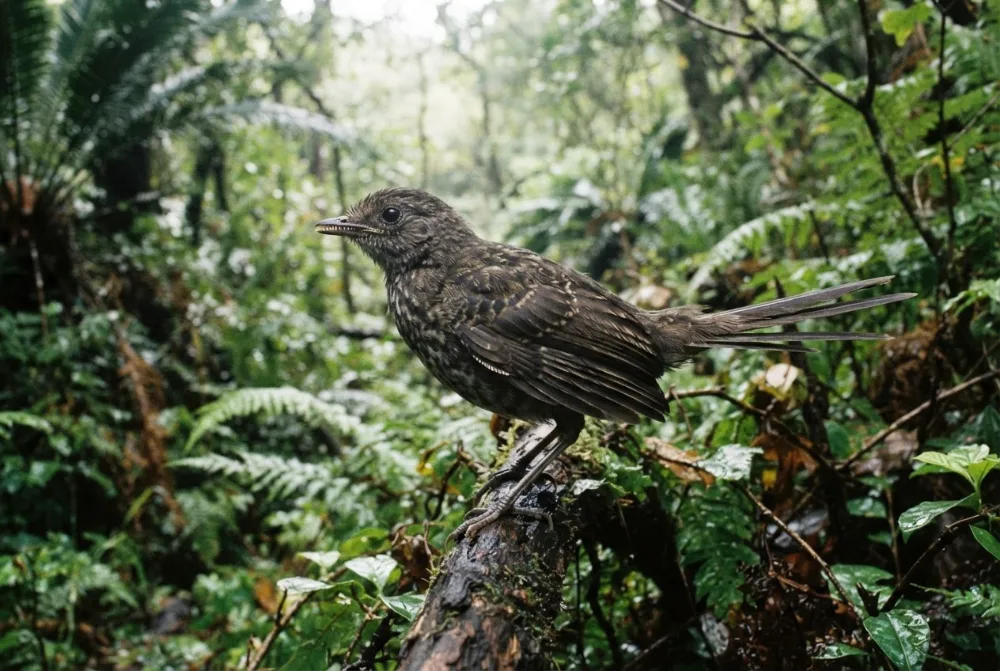
Imparavis was a tiny, toothless bird that lived about 120 million years ago in what is now China. It was one of the first of its kind to lose its teeth, and it had strong wings that might have let it flap really fast, like a modern quail or puffin.2
Yabayeho ryari?
Yanganaga ite?
Yari ndende ite?
Ubutumburuke bwayo bwanganaga iki?
igereranya
Imparavis yanganaga ite ugereranyije NAWE?
Ni imibare gusa ibarirwa muri mushakisha yawe. Nta kintu kibikwa cyangwa cyoherezwa ahandi.
Yihutaga ite?


Utuntu dushimishije
Imparavis is the earliest known toothless bird from a group called enantiornithines, or 'opposite birds'. Scientists used to think toothlessness in this group appeared only about 72 million years ago, but Imparavis pushes that back by 48 to 50 million years.2
Its name means 'odd bird' in Latin, and it was named after the famous naturalist Sir David Attenborough.1
Imparavis had a large bony crest on its upper arm bone where muscles attached. This might have let it flap its wings with extra power, similar to modern birds like puffins or quails.2
The fossil was found by an amateur collector and donated to the Shandong Tianyu Museum of Nature in China.2
Imparavis lived alongside many other early birds and dinosaurs in the Early Cretaceous period, about 120 million years ago.13
Unlike most other enantiornithines, which lived mainly in trees, Imparavis might have spent time on the ground foraging for food, like a modern robin.2
Gusenya ibinyoma
Ibivugwa: All early birds had teeth.
Ukuri: Imparavis shows that some early birds, like enantiornithines, lost their teeth much earlier than scientists thought. It was toothless about 120 million years ago.2
Ku bazobereye muri dinozore
- Izina rya siyansi
- Imparavis
- Yiswe na
- Wang et al. 20244
- Itsinda
- Inyoni za mbere
- Umuryango / ishami
- Enantiornithes4
- Ishyirwa mu byiciro
- Theropoda > Avialae4
- Imyaka y'amabuye
- imyaka miliyoni 121 kugeza 120 (Aptian)4
- Inzego z'amabuye
- Jiufotang4
- Ibihugu
- Ubushinwa4
- Ibisigazwa byanditswe
- 1 muri The Paleobiology Database4
- Ivumburwa
- Imparavis was named in 2024 by Wang and colleagues. The fossil was found by an amateur collector near Toudaoyingzi village in China and later studied by scientists at the Field Museum and Shandong Tianyu Museum.12
- Biracyagibwaho impaka
- Scientists are still debating why Imparavis lost its teeth and what it ate, since its toothless beak and lack of a gizzard make its diet unclear.2
Aho amakuru yakuwe
- Imparavis (en.wikipedia.org)
- Fossil named “Attenborough’s strange bird” was the first of its kind without teeth - Field Museum (fieldmuseum.org)
- PBDB Taxon (paleobiodb.org)
- Imparavis in The Paleobiology Database (CC BY 4.0): imyaka, ahantu, inzego z'amabuye, ishyirwa mu byiciro.
Buri kintu kiri kuri uru rupapuro gifite nimero yerekana aho cyakuwe. Niba hari icyo twibeshye, tubabarire, turi abakunzi ba dinozore, ntituri ikinyamakuru cya siyansi. Tubwire kuri [email protected] tuzagikosora.
 Rex arashonje! Dino Wiki ni umushinga wa papa umwe yakoreye umuhungu we ukunda dinozore, ni ubuntu, nta matangazo kandi nta bigukurikirana. Abantu bakuru bashobora guha Rex akantu ko kurya kugira ngo Dino Wiki ikomeze kuboneka kuri interineti.Gaburira Rex
 Archaeopteryx
 Hesperornis
 Ichthyornis
 Baptornis
 Jurapteryx
 Gobipteryx
 Stegosaurus
 Iguanodon
 Giganotosaurus
 Microraptor
 Deinonychus
 Baryonyx