 Uri dinozore iyihe? Umukino w'ibibazo
 Intambara ya dinozore
 Isiganwa rya dinozore
 Imikino mito ya dinozore
 Alubumu ya sitikeri
 Intonde za TOP za dinozore
 Ntungura!
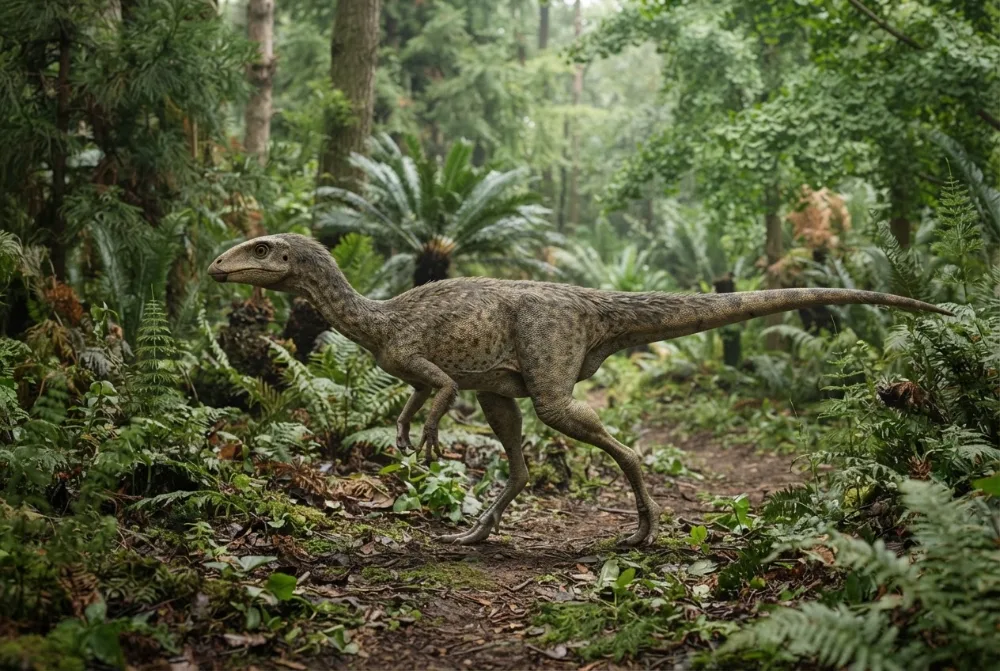
Jeholosaurus
Jeholosaurus was a small, speedy plant-eater that lived in ancient China. It had a beak and cheek teeth for chomping plants, but its front teeth were sharp like a meat-eater's, so it might have eaten a few bugs too!1
Yabayeho ryari?
Yanganaga ite?
Yari ndende ite?
Jeholosaurus yanganaga ite ugereranyije NAWE?
Ni imibare gusa ibarirwa muri mushakisha yawe. Nta kintu kibikwa cyangwa cyoherezwa ahandi.
Yihutaga ite?


Utuntu dushimishije
Jeholosaurus had a very fast tooth replacement rate, with new teeth growing every 46 days, faster than most early plant-eaters.1
Its eye socket was huge, making up 40% of the skull length, which is a sign it was a young animal.1
The front teeth were narrow and long, like a meat-eater's, but the back teeth were fan-shaped for chewing plants.1
The hip bone pointed backward, which is typical for ornithischian dinosaurs, but it also had a forward-pointing bone that supported its belly.1
All known fossils are from young animals, so scientists don't know exactly how big an adult could get.1
Ibibazo bibazwa cyane kuri Jeholosaurus
?How big was Jeholosaurus?
The known fossils are from young animals, so the adult size is unknown. The largest specimen is about 71 centimetres long, with a skull of 6.3 centimetres.1
?What did Jeholosaurus eat?
It mostly ate plants, using its beak and fan-shaped cheek teeth. But its front teeth were sharp like a meat-eater's, so it might have also eaten small animals or bugs.1
?Was Jeholosaurus a dinosaur?
Yes, Jeholosaurus was a small ornithischian dinosaur, a group of plant-eating dinosaurs with bird-like hips.1
?Why did Jeholosaurus have a beak?
The beak helped it nip off plants. Its cheek teeth were fan-shaped for grinding them up, and it may have had fleshy cheeks to hold food while chewing.1
Gusenya ibinyoma
Ibivugwa: Jeholosaurus was a meat-eater because it had sharp front teeth.
Ukuri: Its back teeth were for chewing plants, and it likely ate plants, though it might have eaten some insects or small animals too.1
Ku bazobereye muri dinozore
- Izina rya siyansi
- Jeholosaurus
- Yiswe na
- Xu et al. 20003
- Itsinda
- Izirya ibimera zifite umunwa w'inyoni
- Umuryango / ishami
- Thescelosauridae3
- Ishyirwa mu byiciro
- Ornithischia3
- Imyaka y'amabuye
- imyaka miliyoni 126 kugeza 120 (Barremian / Aptian)3
- Inzego z'amabuye
- Yixian3
- Ibihugu
- Ubushinwa3
- Ibisigazwa byanditswe
- 2 muri The Paleobiology Database3
- Ivumburwa
- The first fossils were found in 2000 at Lujiatun near Beipiao City, China, and named by Xu Xing and colleagues the same year.1
- Biracyagibwaho impaka
- Scientists still debate whether Jeholosaurus was a plant-eater or an omnivore, because its front teeth were sharp and its back teeth were for plants.1
Aho amakuru yakuwe
- Jeholosaurus (en.wikipedia.org)
- Cranial anatomy of Jeholosaurus shangyuanensis (Dinosauria: Ornithischia) from the Early Cretaceous of China | Zootaxa (mapress.com)
- Jeholosaurus in The Paleobiology Database (CC BY 4.0): imyaka, ahantu, inzego z'amabuye, ishyirwa mu byiciro.
Buri kintu kiri kuri uru rupapuro gifite nimero yerekana aho cyakuwe. Niba hari icyo twibeshye, tubabarire, turi abakunzi ba dinozore, ntituri ikinyamakuru cya siyansi. Tubwire kuri [email protected] tuzagikosora.
 Rex arashonje! Dino Wiki ni umushinga wa papa umwe yakoreye umuhungu we ukunda dinozore, ni ubuntu, nta matangazo kandi nta bigukurikirana. Abantu bakuru bashobora guha Rex akantu ko kurya kugira ngo Dino Wiki ikomeze kuboneka kuri interineti.Gaburira Rex
 Iguanodon
 Tenontosaurus
 Thescelosaurus
 Zalmoxes
 Camptosaurus
 Rhabdodon
 Stegosaurus
 Archaeopteryx
 Giganotosaurus
 Microraptor
 Deinonychus
 Baryonyx