 Uri dinozore iyihe? Umukino w'ibibazo
 Intambara ya dinozore
 Isiganwa rya dinozore
 Imikino mito ya dinozore
 Alubumu ya sitikeri
 Intonde za TOP za dinozore
 Ntungura!
Kentrosaurus
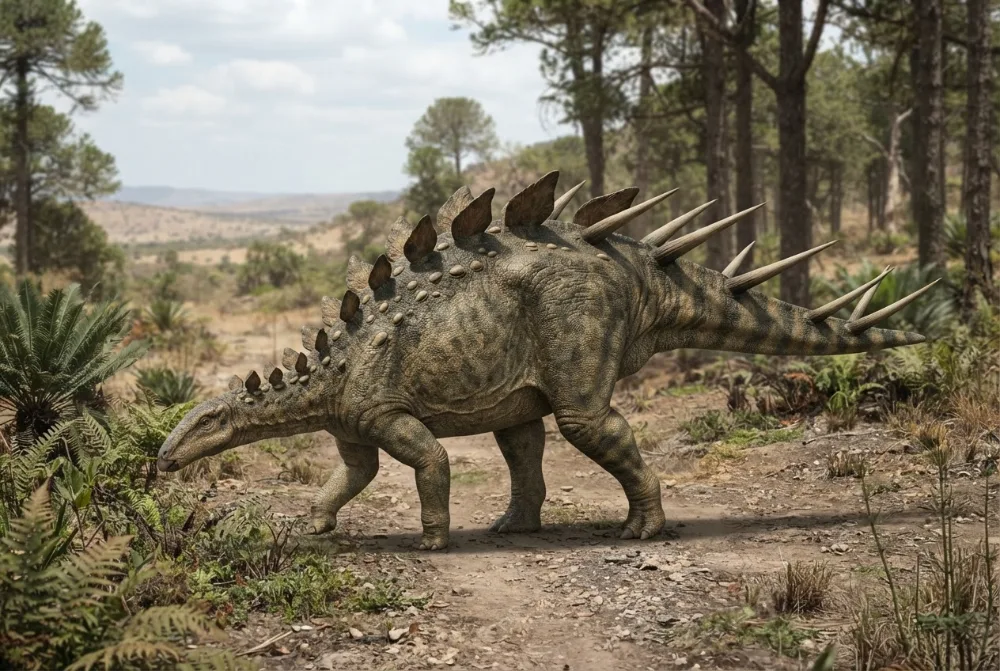
Kentrosaurus was a plated dinosaur that lived in what is now Tanzania, Africa, about 152 million years ago. It had a row of small plates on its neck and back that turned into long, sharp spikes on its tail. It used those tail spikes to fight off hungry meat-eaters!1
Yabayeho ryari?
Yanganaga ite?
Yari ndende ite?
Ubutumburuke bwayo bwanganaga iki?
Yari iremereye ite?

 ndende nk'imbwa 5 zikurikiranye🍌ndende nk'imineke 28 ikurikiranyeiremereye nk'imbwa 80🍉iremereye nk'imbuto 320 za watermelon🧸iremereye nk'abana 84 bo mu ishuri ry'incuke🎒iremereye nk'abanyeshuri 50🐻❄️iremereye nk'idubu 4 zo mu rubura🏃yashoboraga kwiruka metero 100 mu masegonda 18 (umuntu wihuta kurusha abandi akenera 9,6)
Kentrosaurus yanganaga ite ugereranyije NAWE?
Ni imibare gusa ibarirwa muri mushakisha yawe. Nta kintu kibikwa cyangwa cyoherezwa ahandi.
Yihutaga ite?


Utuntu dushimishije
Kentrosaurus had a long spike on each shoulder, in addition to the spikes on its tail.1
The name Kentrosaurus was almost changed because it sounded like Centrosaurus, a horned dinosaur. But the spelling is different, so Kentrosaurus stayed.1
Scientists think there were two types of Kentrosaurus, one with stouter thigh bones and one with slimmer ones. This might mean males and females looked different.1
Over 1200 bones of Kentrosaurus were found in Tanzania by German expeditions between 1909 and 1912.1
Kentrosaurus lived alongside giant long-necked sauropods like Giraffatitan and Tornieria.1
The plates on its neck and back were probably covered in horn, like a cow's horn.1
Ibibazo bibazwa cyane kuri Kentrosaurus
?How big was Kentrosaurus?
Kentrosaurus was about 4 to 5 metres (13 to 16 feet) long and weighed roughly 700 to 1,600 kilograms (1,500 to 3,500 pounds). Some specimens suggest even larger individuals existed.13
?What did Kentrosaurus eat?
Kentrosaurus was a herbivore, meaning it ate plants. It used its toothless beak to bite off leaves and other plant material, which it swallowed in large chunks without much chewing.14
?Did Kentrosaurus have spikes?
Yes, Kentrosaurus had a double row of spikes along its back, from its mid-section to the tip of its tail, plus a long spike on each shoulder. These spikes were likely used for defense.14
?Could Kentrosaurus swim?
There is no direct evidence that Kentrosaurus could swim. It was a land-dwelling dinosaur that walked on four legs, and its body was not specially adapted for swimming.1
?Was Kentrosaurus bigger than a T. rex?
No, Kentrosaurus was much smaller than Tyrannosaurus rex. Kentrosaurus was about 4 to 5 metres long, while T. rex could be over 12 metres long; they lived in different times and places.1
?Did Kentrosaurus have feathers?
No, Kentrosaurus did not have feathers. It had bony plates and spikes covered in horn, and its skin was likely scaly, like other stegosaurs.1
?When did Kentrosaurus live?
Kentrosaurus lived during the Late Jurassic period, about 152 million years ago, in what is now Tanzania, Africa.1
?Why did Kentrosaurus have plates?
The plates on Kentrosaurus's neck and back might have been for temperature regulation, since they contained blood vessels, or for protection and display. No one knows for sure.4
Gusenya ibinyoma
Ibivugwa: Some people think Kentrosaurus had all its spikes and plates in a single row down its back.
Ukuri: Scientists think Kentrosaurus had two rows of plates and spikes, one on each side of its back.1
Ku bazobereye muri dinozore
- Izina rya siyansi
- Kentrosaurus
- Yiswe na
- Hennig 19155
- Itsinda
- Dinozore zifite ibisate
- Umuryango / ishami
- Stegosauridae5
- Ishyirwa mu byiciro
- Ornithischia > Stegosauria > Thyreophora5
- Imyaka y'amabuye
- imyaka miliyoni 162 kugeza 143 (Oxfordian / Tithonian)5
- Inzego z'amabuye
- Tendaguru5
- Ibihugu
- Tanzaniya5
- Ibisigazwa byanditswe
- 27 muri The Paleobiology Database5
- Izwi kandi ku izina rya
- Doryphorosaurus, Kentrurosaurus (amazina ya kera ubu abarwa nk'inyamaswa imwe)5
- Ivumburwa
- German paleontologist Edwin Hennig named Kentrosaurus in 1915. The first fossils were found by the German Tendaguru Expedition in 1909.15
- Biracyagibwaho impaka
- Scientists are not sure exactly where each plate and spike was placed on the body, because most were found scattered.1
Aho amakuru yakuwe
- Kentrosaurus (en.wikipedia.org)
- Kentrosaurus | Natural History Museum (nhm.ac.uk)
- Kentrosaurus | dinosaur genus | Britannica (britannica.com)
- Kentrosaurus - Dinosaur - Enchanted Learning Software (enchantedlearning.com)
- Kentrosaurus in The Paleobiology Database (CC BY 4.0): imyaka, ahantu, inzego z'amabuye, ishyirwa mu byiciro.
Buri kintu kiri kuri uru rupapuro gifite nimero yerekana aho cyakuwe. Niba hari icyo twibeshye, tubabarire, turi abakunzi ba dinozore, ntituri ikinyamakuru cya siyansi. Tubwire kuri [email protected] tuzagikosora.
 Rex arashonje! Dino Wiki ni umushinga wa papa umwe yakoreye umuhungu we ukunda dinozore, ni ubuntu, nta matangazo kandi nta bigukurikirana. Abantu bakuru bashobora guha Rex akantu ko kurya kugira ngo Dino Wiki ikomeze kuboneka kuri interineti.Gaburira Rex
 Stegosaurus
 Diracodon
 Hypsirophus
 Dacentrurus
 Miragaia
 Hesperosaurus
 Brachiosaurus
 Diplodocus
 Allosaurus
 Brontosaurus
 Compsognathus
 Camarasaurus