 Uri dinozore iyihe? Umukino w'ibibazo
 Intambara ya dinozore
 Isiganwa rya dinozore
 Imikino mito ya dinozore
 Alubumu ya sitikeri
 Intonde za TOP za dinozore
 Ntungura!
Kunbarrasaurus
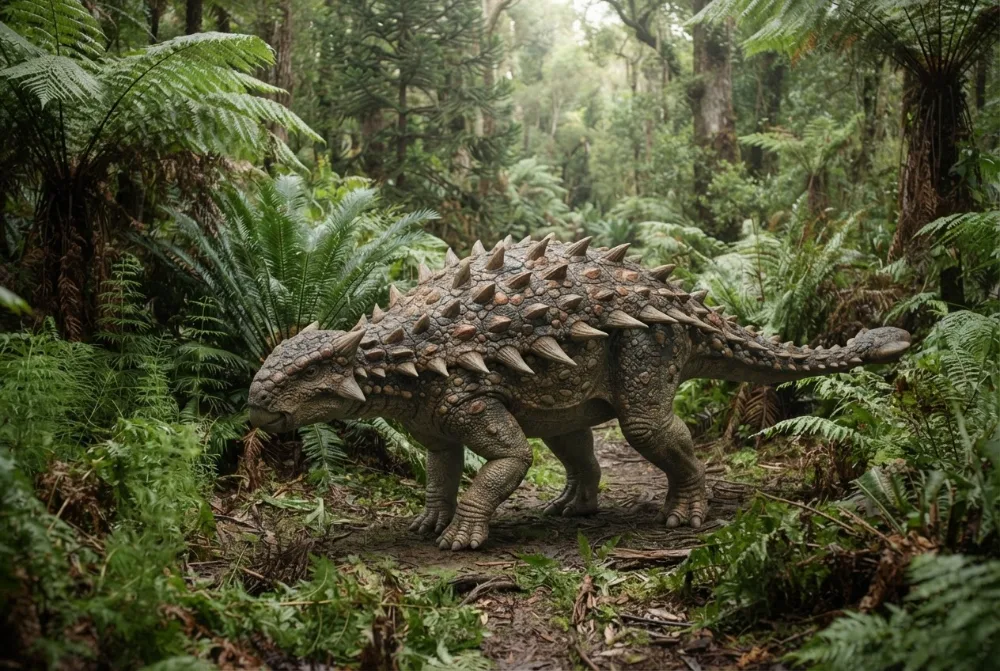
Kunbarrasaurus was a small, armoured dinosaur that walked on four legs and munched on plants. It had bony plates and spikes all over its body, like a walking tank. This dinosaur lived in Australia during the Early Cretaceous, about 105 million years ago.13
Yabayeho ryari?
Yanganaga ite?
Yari ndende ite?
Ubutumburuke bwayo bwanganaga iki?
igereranya
 ndende nk'imbwa 4 zikurikiranye🍌ndende nk'imineke 19 ikurikiranye🏃yashoboraga kwiruka metero 100 mu masegonda 16 (umuntu wihuta kurusha abandi akenera 9,6)
Kunbarrasaurus yanganaga ite ugereranyije NAWE?
Ni imibare gusa ibarirwa muri mushakisha yawe. Nta kintu kibikwa cyangwa cyoherezwa ahandi.
Yihutaga ite?


Utuntu dushimishije
Kunbarrasaurus is one of the most complete armoured dinosaurs ever found, with most of its skeleton and skull preserved.1
Its gut contents show it ate fibrous plant parts, seeds, and fruiting bodies, and it probably chopped food in its mouth instead of using stomach stones.1
The dinosaur had a ring of scutes around its neck, and its body was covered with small, keeled plates and spikes.1
Kunbarrasaurus had a very large inner ear, unlike any other dinosaur known, which may have helped with balance or hearing.2
The fossil was found in marine rocks, so the dinosaur may have washed out to sea after death.1
It is the second genus of armoured dinosaur from Australia, and its name means 'shield lizard' in the local Aboriginal language.1
Ibibazo bibazwa cyane kuri Kunbarrasaurus
?How big was Kunbarrasaurus?
About 2.5 to 3.5 metres long. That is roughly the size of a large motorcycle.1
?What did Kunbarrasaurus eat?
It ate plants, including fibrous leaves, seeds and fruiting bodies. Scientists know this because its last meal was preserved inside its fossil.1
?Did Kunbarrasaurus have a tail club?
Probably not. Its tail is not fully preserved, but some of its relatives had a flat, blade-like structure at the tail tip instead of a club.1
?Where was Kunbarrasaurus found?
In Queensland, Australia, near Richmond. The fossil was discovered in marine rocks, so the dinosaur may have washed out to sea after death.1
?When did Kunbarrasaurus live?
It lived during the Early Cretaceous, about 105 million years ago.1
?Is Kunbarrasaurus a dinosaur?
Yes, it is a small armoured dinosaur called an ankylosaurian.1
Gusenya ibinyoma
Ibivugwa: Kunbarrasaurus used its tail like a club to defend itself.
Ukuri: There is no evidence of a tail club in Kunbarrasaurus. Its tail had triangular plates and scutes, but no club.1
Ku bazobereye muri dinozore
- Izina rya siyansi
- Kunbarrasaurus
- Yiswe na
- Leahey et al. 20153
- Itsinda
- Dinozore zifite igikingira
- Umuryango / ishami
- Parankylosauria3
- Ishyirwa mu byiciro
- Ornithischia > Ankylosauria > Thyreophora3
- Imyaka y'amabuye
- imyaka miliyoni 106 kugeza 100 (Albian)3
- Inzego z'amabuye
- Toolebuc3
- Ibihugu
- Ositaraliya3
- Ibisigazwa byanditswe
- 2 muri The Paleobiology Database3
- Ivumburwa
- The skeleton was found in 1989 by Ian Ievers on Marathon Station in Queensland, Australia. It was named Kunbarrasaurus ieversi in 2015 by scientists including Lucy Leahey.1
- Biracyagibwaho impaka
- Scientists are still debating whether Kunbarrasaurus is a primitive or derived ankylosaur, because it has a mix of both ancient and advanced features.2
Aho amakuru yakuwe
- Kunbarrasaurus (en.wikipedia.org)
- doi:10.7717/peerj.1475 (people.ohio.edu)
- Kunbarrasaurus in The Paleobiology Database (CC BY 4.0): imyaka, ahantu, inzego z'amabuye, ishyirwa mu byiciro.
Buri kintu kiri kuri uru rupapuro gifite nimero yerekana aho cyakuwe. Niba hari icyo twibeshye, tubabarire, turi abakunzi ba dinozore, ntituri ikinyamakuru cya siyansi. Tubwire kuri [email protected] tuzagikosora.
 Rex arashonje! Dino Wiki ni umushinga wa papa umwe yakoreye umuhungu we ukunda dinozore, ni ubuntu, nta matangazo kandi nta bigukurikirana. Abantu bakuru bashobora guha Rex akantu ko kurya kugira ngo Dino Wiki ikomeze kuboneka kuri interineti.Gaburira Rex
 Ankylosaurus
 Sauropelta
 Pinacosaurus
 Scutellosaurus
 Struthiosaurus
 Euoplocephalus
 Stegosaurus
 Iguanodon
 Archaeopteryx
 Giganotosaurus
 Microraptor
 Deinonychus