 Uri dinozore iyihe? Umukino w'ibibazo
 Intambara ya dinozore
 Isiganwa rya dinozore
 Imikino mito ya dinozore
 Alubumu ya sitikeri
 Intonde za TOP za dinozore
 Ntungura!
Yabayeho ryari?

Yanganaga ite?
Yari ndende ite?
Ubutumburuke bwayo bwanganaga iki?
Yari iremereye ite?
 ndende nk'injangwe 4 zo mu rugo zikurikiranye🍌ndende nk'imineke 10 ikurikiranyeiremereye nk'injangwe yo mu rugo🍌iremereye nk'imineke 33🪑nto ku buryo yanyura munsi y'intebe🏃yashoboraga kwiruka metero 100 mu masegonda 14 (umuntu wihuta kurusha abandi akenera 9,6)
Leaellynasaura yanganaga ite ugereranyije NAWE?
Ni imibare gusa ibarirwa muri mushakisha yawe. Nta kintu kibikwa cyangwa cyoherezwa ahandi.
Yihutaga ite?


Utuntu dushimishije
Leaellynasaura lived inside the Antarctic Circle during the Early Cretaceous, about 118 to 110 million years ago, when the climate was warmer than today.1
Its tail was extremely long, about three times the length of the rest of its body, and had more tail bones than most other plant-eating dinosaurs.1
It had enlarged eye sockets and large optic lobes in its brain, which helped it see in the dim light of polar winters.21
Bone growth lines show that Leaellynasaura grew continuously all year, meaning it did not hibernate or slow down much during the cold, dark winter.2
It may have lived in small herds or flocks, and dinosaur burrows found in Victoria suggest some small ornithopods might have sheltered underground in the coldest months.2
Its teeth had five ridges on each side, fewer than other small Victorian ornithopods like Qantassaurus and Atlascopcosaurus, which had at least eight.2
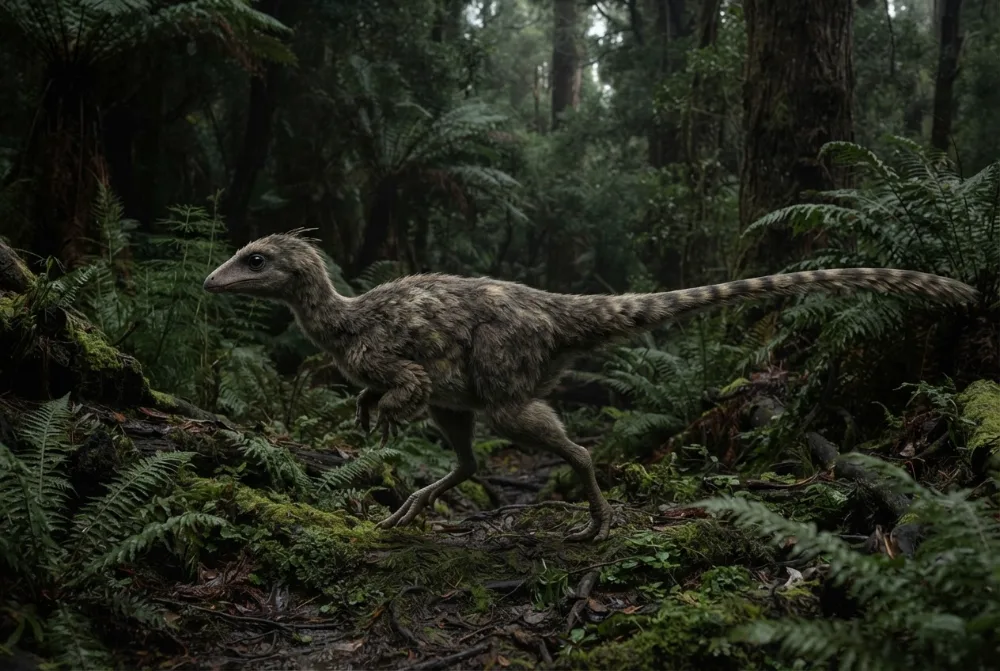
Ibibazo bibazwa cyane kuri Leaellynasaura
?How big was Leaellynasaura?
About 1.8 metres (6 feet) long including its tail, but some estimates based on a juvenile specimen suggest about 1 metre (3.3 feet).12
?What did Leaellynasaura eat?
It was a plant-eater that ate low-growing plants like horsetails, cycads, and ferns.12
?Did Leaellynasaura have feathers?
Scientists think it might have had hair-like filaments on its skin, but no feathers have been found yet.4
?Where was Leaellynasaura found?
It was discovered in Dinosaur Cove, Victoria, Australia, in rocks that were once inside the Antarctic Circle.12
?How fast could Leaellynasaura run?
Nobody knows for sure, but as a small, lightweight dinosaur it was probably quick and agile.1
Ku bazobereye muri dinozore
- Izina rya siyansi
- Leaellynasaura
- Yiswe na
- Rich and Vickers-Rich 19895
- Itsinda
- Izirya ibimera zifite umunwa w'inyoni
- Umuryango / ishami
- Elasmaria5
- Ishyirwa mu byiciro
- Ornithischia > Ornithopoda > Iguanodontia5
- Imyaka y'amabuye
- imyaka miliyoni 113 kugeza 110 (Albian)5
- Inzego z'amabuye
- Eumeralla5
- Ibihugu
- Ositaraliya5
- Ibisigazwa byanditswe
- 4 muri The Paleobiology Database5
- Ivumburwa
- Leaellynasaura was discovered in Dinosaur Cove, Australia, and named in 1989 by Tom Rich and Patricia Vickers-Rich. They named it after their daughter Leaellyn.15
- Biracyagibwaho impaka
- Scientists are not sure which fossils belong to Leaellynasaura, because most were found scattered, and some long-tailed skeletons may belong to a different dinosaur.1
Aho amakuru yakuwe
- Leaellynasaura (en.wikipedia.org)
- Dinosaurs - Leaellynasaura amicagraphica - The Australian Museum (australian.museum)
- LEAELLYNASAURA - DinoChecker dinosaur archive (dinochecker.com)
- Leaellynasaura | Western Australian Museum (museum.wa.gov.au)
- Leaellynasaura in The Paleobiology Database (CC BY 4.0): imyaka, ahantu, inzego z'amabuye, ishyirwa mu byiciro.
Buri kintu kiri kuri uru rupapuro gifite nimero yerekana aho cyakuwe. Niba hari icyo twibeshye, tubabarire, turi abakunzi ba dinozore, ntituri ikinyamakuru cya siyansi. Tubwire kuri [email protected] tuzagikosora.
 Rex arashonje! Dino Wiki ni umushinga wa papa umwe yakoreye umuhungu we ukunda dinozore, ni ubuntu, nta matangazo kandi nta bigukurikirana. Abantu bakuru bashobora guha Rex akantu ko kurya kugira ngo Dino Wiki ikomeze kuboneka kuri interineti.Gaburira Rex
 Iguanodon
 Tenontosaurus
 Thescelosaurus
 Zalmoxes
 Camptosaurus
 Rhabdodon
 Stegosaurus
 Archaeopteryx
 Giganotosaurus
 Microraptor
 Deinonychus
 Baryonyx