 Uri dinozore iyihe? Umukino w'ibibazo
 Intambara ya dinozore
 Isiganwa rya dinozore
 Imikino mito ya dinozore
 Alubumu ya sitikeri
 Intonde za TOP za dinozore
 Ntungura!
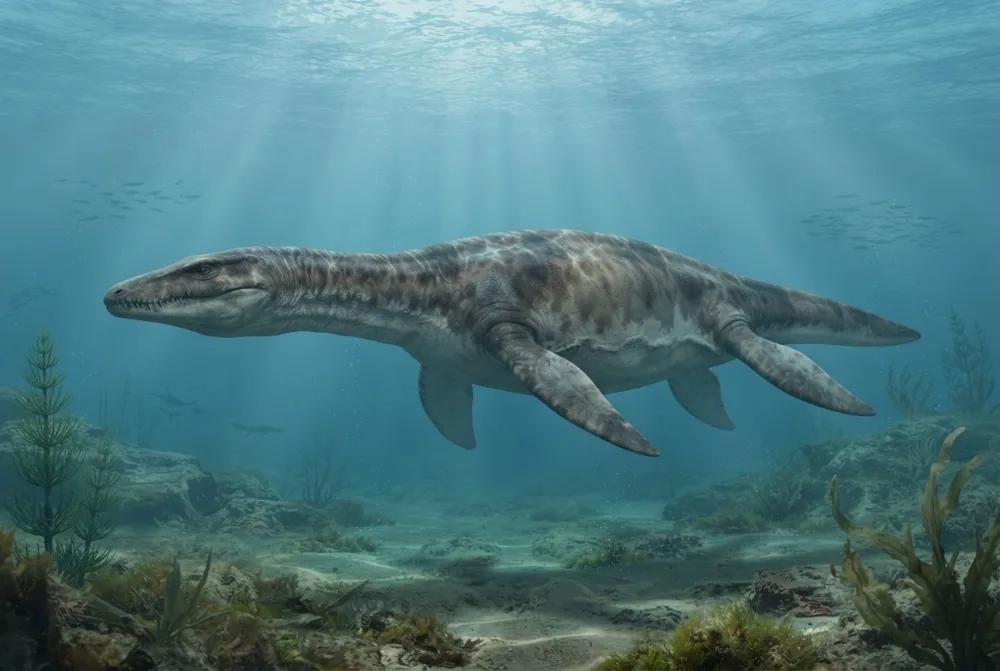
Liopleurodon
Liopleurodon was a huge marine reptile that swam in the Jurassic seas. It had four flippers like paddles and a long head with a short neck. It was an ambush predator that ate fish, squid, and other reptiles.1
Yabayeho ryari?
Yanganaga ite?
Yari ndende ite?
 ndende nk'imbwa 8 zikurikiranye🍌ndende nk'imineke 45 ikurikiranye🏊yashoboraga koga uburebure bwa pisine nini (50 m) mu masegonda 7,5
Liopleurodon yanganaga ite ugereranyije NAWE?
Ni imibare gusa ibarirwa muri mushakisha yawe. Nta kintu kibikwa cyangwa cyoherezwa ahandi.
Yihutaga ite?


Utuntu dushimishije
Liopleurodon had four strong flippers that helped it accelerate quickly to catch prey.1
A study using a swimming robot showed that its four-flipper swimming style gave it great acceleration, perfect for ambushing prey.1
Fossils of Liopleurodon have been found with stomach contents including fish bones, squid hooklets, and even a reptile tooth.1
The BBC show Walking with Dinosaurs made Liopleurodon look 25 metres long, but real fossils show it was much smaller, up to about 8 metres.1
Liopleurodon could probably smell underwater by sniffing through its nostrils to find food.1
The first Liopleurodon fossil was just a single tooth, which makes it hard for scientists to tell different species apart.1
Ibibazo bibazwa cyane kuri Liopleurodon
?How big was Liopleurodon?
Liopleurodon reached a maximum length of just over 8 metres (about 26 feet), based on the most complete fossils. Earlier claims of 25 metres were exaggerated.12
?Was Liopleurodon a dinosaur?
No, Liopleurodon was a marine reptile called a pliosaur, not a dinosaur. Dinosaurs lived on land.1
?What did Liopleurodon eat?
Liopleurodon ate fish, squid, and other marine reptiles. It was an ambush predator that used its four flippers to accelerate quickly and catch prey.1
?When did Liopleurodon live?
Liopleurodon lived during the Middle and Late Jurassic Period, about 166 to 155 million years ago.1
?Could Liopleurodon swim fast?
Liopleurodon was a powerful swimmer with four paddle-like flippers. A swimming robot study showed its four-flipper style gave it great acceleration, perfect for ambushing prey.1
?How did Liopleurodon get its name?
Liopleurodon means 'smooth-sided tooth' in Greek, because its teeth were smooth on the sides. The species name ferox means 'fierce' in Latin.1
?Where were Liopleurodon fossils found?
Most Liopleurodon fossils come from Europe, especially England and France. One possible fossil was also found in Mexico.1
?Why did Liopleurodon have a big head?
Liopleurodon had an unusually large skull, making up about a quarter of its total body length. This helped it tackle large prey.2
Gusenya ibinyoma
Ibivugwa: Liopleurodon was a dinosaur.
Ukuri: Liopleurodon was a plesiosaur, a marine reptile that lived in the sea, not a dinosaur.1
Ku bazobereye muri dinozore
- Izina rya siyansi
- Liopleurodon
- Yiswe na
- Sauvage 18733
- Itsinda
- Plesiyozore
- Umuryango / ishami
- Pliosauridae3
- Ishyirwa mu byiciro
- Plesiosauria > Pliosauridae > Sauropterygia3
- Imyaka y'amabuye
- imyaka miliyoni 165 kugeza 137 (Callovian / Berriasian)3
- Inzego z'amabuye
- Oxford Clay, Ornatenton, Ampthill Clay3
- Ibihugu
- Ubwongereza, Ubudage, Ubufaransa, Arijantine3
- Ibisigazwa byanditswe
- 13 muri The Paleobiology Database3
- Ivumburwa
- Liopleurodon was named by Sauvage in 1873 based on a tooth from France. Later, more complete skeletons were found in England and Germany.31
- Biracyagibwaho impaka
- Scientists are not sure if Liopleurodon pachydeirus is a separate species or just the same as Liopleurodon ferox.1
Aho amakuru yakuwe
- Liopleurodon (en.wikipedia.org)
- Jurassic sea monster was smaller than once thought, but no less formidable | University of Portsmouth (port.ac.uk)
- Liopleurodon in The Paleobiology Database (CC BY 4.0): imyaka, ahantu, inzego z'amabuye, ishyirwa mu byiciro.
Buri kintu kiri kuri uru rupapuro gifite nimero yerekana aho cyakuwe. Niba hari icyo twibeshye, tubabarire, turi abakunzi ba dinozore, ntituri ikinyamakuru cya siyansi. Tubwire kuri [email protected] tuzagikosora.
 Rex arashonje! Dino Wiki ni umushinga wa papa umwe yakoreye umuhungu we ukunda dinozore, ni ubuntu, nta matangazo kandi nta bigukurikirana. Abantu bakuru bashobora guha Rex akantu ko kurya kugira ngo Dino Wiki ikomeze kuboneka kuri interineti.Gaburira Rex
 Elasmosaurus
 Pliosaurus
 Plesiosaurus
 Cimoliasaurus
 Colymbosaurus
 Trinacromerum
 Brachiosaurus
 Diplodocus
 Allosaurus
 Brontosaurus
 Compsognathus
 Camarasaurus