 Uri dinozore iyihe? Umukino w'ibibazo
 Intambara ya dinozore
 Isiganwa rya dinozore
 Imikino mito ya dinozore
 Alubumu ya sitikeri
 Intonde za TOP za dinozore
 Ntungura!
Yabayeho ryari?

Yanganaga ite?
Yari ndende ite?
Ubutumburuke bwayo bwanganaga iki?
igereranya
Yari iremereye ite?
 ndende nk'imbwa 4 zikurikiranye🍌ndende nk'imineke 25 ikurikiranye🍉iremereye nk'imbuto 32 za watermelon🧸iremereye nk'abana 8 bo mu ishuri ry'incuke🎒iremereye nk'abanyeshuri 5🏃yashoboraga kwiruka metero 100 mu masegonda 7,2 (umuntu wihuta kurusha abandi akenera 9,6)
Lourinhanosaurus yanganaga ite ugereranyije NAWE?
Ni imibare gusa ibarirwa muri mushakisha yawe. Nta kintu kibikwa cyangwa cyoherezwa ahandi.
Yihutaga ite?


Utuntu dushimishije
Lourinhanosaurus was the first non-bird theropod dinosaur ever found with gastroliths, or stomach stones. Scientists found 32 smooth pebbles in its rib cage.21
The holotype specimen was a sub-adult, about 14 to 17 years old when it died. It measured about 4.5 metres (15 feet) long and weighed around 160 kilograms (350 pounds).1
Its name means 'Lourinhã lizard', after the town of Lourinhã in Portugal where its fossils were found. The species name antunesi honors Portuguese paleontologist Miguel Telles Antunes.12
The first fossils were discovered in 1982, but the dinosaur was not named and described until 1998 by Portuguese paleontologist Octávio Mateus.1
Lourinhanosaurus lived alongside other large predators like Torvosaurus gurneyi, Allosaurus europaeus, and Ceratosaurus in the Lourinhã Formation.1
Scientists are not sure exactly which group of theropods Lourinhanosaurus belongs to. It has been placed in Allosauroidea, Carnosauria, Megalosaurinidae, Sinraptoridae, and even Coelurosauria by different experts.3
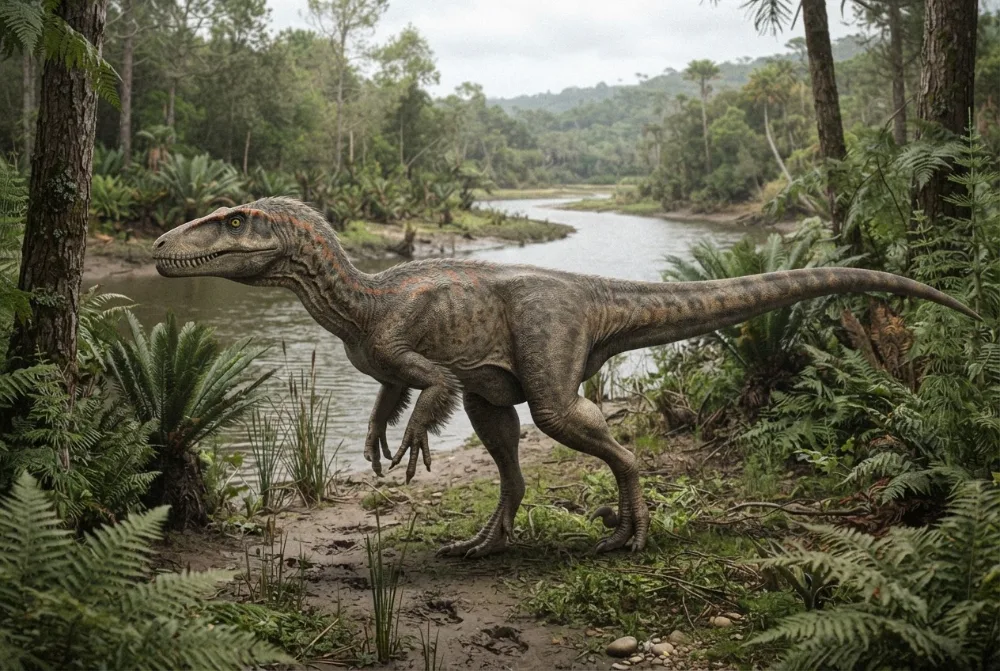
Ibibazo bibazwa cyane kuri Lourinhanosaurus
?How big was Lourinhanosaurus?
About 4.5 metres (15 feet) long and weighed around 160 kilograms (350 pounds). That is about as long as a small car.1
?What did Lourinhanosaurus eat?
It was a meat-eater that probably hunted other dinosaurs. It also swallowed stones called gastroliths to help grind up food in its stomach.12
?Did Lourinhanosaurus have feathers?
Nobody knows for sure. No feathers have been found with its fossils, and scientists are not sure which group of theropods it belongs to.1
?When did Lourinhanosaurus live?
It lived during the Late Jurassic Period, about 152 to 145 million years ago.1
?Where was Lourinhanosaurus found?
Its fossils were found near the town of Lourinhã in Portugal, at a place called Peralta.12
?Is Lourinhanosaurus a dinosaur?
Yes, it is a carnivorous theropod dinosaur.1
Ku bazobereye muri dinozore
- Izina rya siyansi
- Lourinhanosaurus
- Yiswe na
- Mateus 19984
- Itsinda
- Dinozore zirya inyama
- Umuryango / ishami
- Coelurosauria4
- Ishyirwa mu byiciro
- Theropoda4
- Imyaka y'amabuye
- imyaka miliyoni 152 kugeza 145 (Kimmeridgian / Tithonian)4
- Inzego z'amabuye
- Lourinhã4
- Ibihugu
- Porutugali4
- Ibisigazwa byanditswe
- 2 muri The Paleobiology Database4
- Ivumburwa
- The first remains of Lourinhanosaurus were found in 1982 at Peralta, near Lourinhã, Portugal. Portuguese paleontologist Octávio Mateus named and described the dinosaur in 1998, naming the species L. antunesi after paleontologist Miguel Telles Antunes.12
- Biracyagibwaho impaka
- Scientists still debate which group of theropods Lourinhanosaurus belongs to. It has been classified as an allosauroid, a carnosaur, a megalosaurinid, a sinraptorid, and even a coelurosaur.3
Aho amakuru yakuwe
- Lourinhanosaurus (en.wikipedia.org)
- Lourinhanosaurus antunesi, A New Upper Jurassic Allosauroid (Dinosauria: Theropoda) from Lourinhã, Portugal (docentes.fct.unl.pt)
- PBDB Taxon (paleobiodb.org)
- Lourinhanosaurus in The Paleobiology Database (CC BY 4.0): imyaka, ahantu, inzego z'amabuye, ishyirwa mu byiciro.
Buri kintu kiri kuri uru rupapuro gifite nimero yerekana aho cyakuwe. Niba hari icyo twibeshye, tubabarire, turi abakunzi ba dinozore, ntituri ikinyamakuru cya siyansi. Tubwire kuri [email protected] tuzagikosora.
 Rex arashonje! Dino Wiki ni umushinga wa papa umwe yakoreye umuhungu we ukunda dinozore, ni ubuntu, nta matangazo kandi nta bigukurikirana. Abantu bakuru bashobora guha Rex akantu ko kurya kugira ngo Dino Wiki ikomeze kuboneka kuri interineti.Gaburira Rex
 Allosaurus
 Carnotaurus
 Dilophosaurus
 Giganotosaurus
 Compsognathus
 Paronychodon
 Brachiosaurus
 Diplodocus
 Brontosaurus
 Camarasaurus
 Morosaurus
 Apatosaurus