 Uri dinozore iyihe? Umukino w'ibibazo
 Intambara ya dinozore
 Isiganwa rya dinozore
 Imikino mito ya dinozore
 Alubumu ya sitikeri
 Intonde za TOP za dinozore
 Ntungura!
Ornithopsis
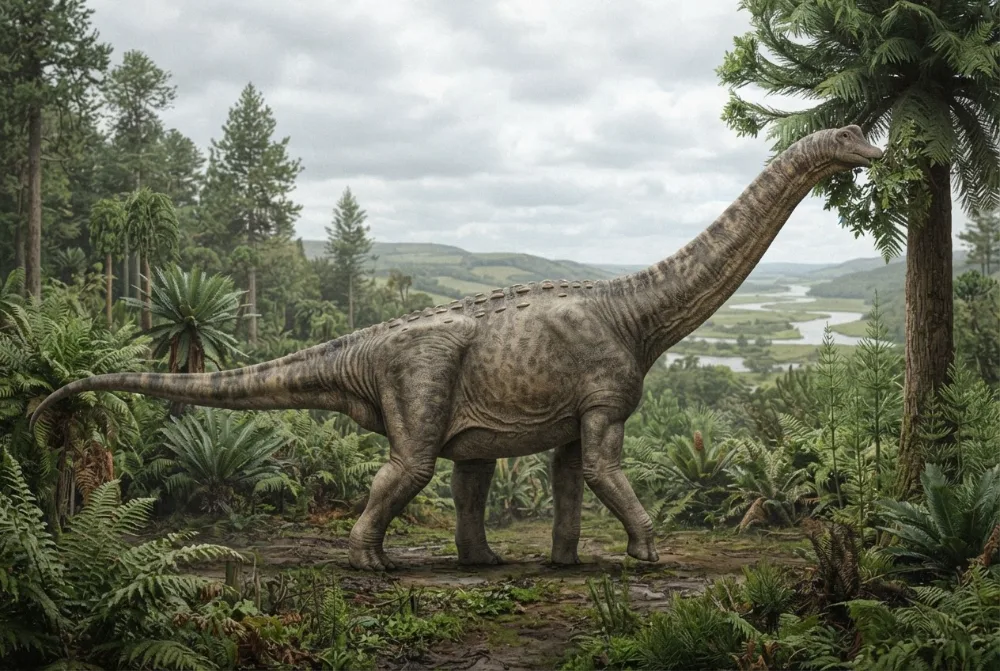
Ornithopsis was a huge, long-necked plant-eater that stomped through England and Germany during the Early Cretaceous. Its name means 'bird-likeness' because its back bones were hollow and filled with air sacs, just like birds have today.1
Yabayeho ryari?
Yanganaga ite?
Yari ndende ite?
Ubutumburuke bwayo bwanganaga iki?
igereranya
 ndende nk'imodoka 4 ziparitse ku murongo🍌ndende nk'imineke 100 ikurikiranye🏃yashoboraga kwiruka metero 100 mu masegonda 28 (umuntu wihuta kurusha abandi akenera 9,6)
Ornithopsis yanganaga ite ugereranyije NAWE?
Ni imibare gusa ibarirwa muri mushakisha yawe. Nta kintu kibikwa cyangwa cyoherezwa ahandi.
Yihutaga ite?


Utuntu dushimishije
Ornithopsis was one of the first dinosaurs whose bones were recognized as having air sacs, like modern birds and pterosaurs.1
The only known species is Ornithopsis hulkei, named after the scientist John Whitaker Hulke.1
Its back bones were very light because they were filled with big cavities called camellae.1
Scientists think Ornithopsis was about 16 to 18 metres long, as long as two school buses.1
A possible German fossil of Ornithopsis came from a slightly smaller individual.1
Ornithopsis belongs to a group of sauropods called Titanosauriformes, which includes some of the biggest land animals ever.1
Ibibazo bibazwa cyane kuri Ornithopsis
?What does the name Ornithopsis mean?
Ornithopsis means 'bird-likeness' in Greek, named for its bird-like hollow bones. The name comes from 'ornis' (bird) and 'opsis' (likeness).12
?How big was Ornithopsis?
Ornithopsis was about 16 to 18 metres long. A possible German fossil came from a slightly smaller individual.13
?What did Ornithopsis eat?
Ornithopsis was a herbivore, eating tough vegetation with its chisel-like teeth. It was a long-necked browser.3
Gusenya ibinyoma
Ibivugwa: Ornithopsis was a flying animal like a pterosaur.
Ukuri: Ornithopsis was a sauropod dinosaur that walked on land. Its name 'bird-likeness' refers to its air-filled bones, not to flying.1
Ku bazobereye muri dinozore
- Izina rya siyansi
- Ornithopsis
- Yiswe na
- Seeley 18704
- Itsinda
- Izifite amajosi maremare
- Umuryango / ishami
- Titanosauriformes4
- Ishyirwa mu byiciro
- Sauropodomorpha > Sauropoda > Macronaria4
- Imyaka y'amabuye
- imyaka miliyoni 145 kugeza 120 (Tithonian / Aptian)4
- Inzego z'amabuye
- Wessex, Portland Stone4
- Ibihugu
- Ubwongereza, Ubudage4
- Ibisigazwa byanditswe
- 6 muri The Paleobiology Database4
- Ivumburwa
- Harry Govier Seeley named Ornithopsis in 1870 based on two vertebrae from the Isle of Wight, England. He thought it was a creature between pterosaurs and birds, but later scientists showed it was a sauropod dinosaur.1
- Biracyagibwaho impaka
- Scientists are not sure if the German fossil really belongs to Ornithopsis because it is poorly preserved.1
Aho amakuru yakuwe
- Ornithopsis (en.wikipedia.org)
- ORNITHOPSIS - DinoChecker dinosaur archive (dinochecker.com)
- Ornithopsis, an Isle of Wight Brachiosaur - DinoWight (dinowight.org.uk)
- Ornithopsis in The Paleobiology Database (CC BY 4.0): imyaka, ahantu, inzego z'amabuye, ishyirwa mu byiciro.
Buri kintu kiri kuri uru rupapuro gifite nimero yerekana aho cyakuwe. Niba hari icyo twibeshye, tubabarire, turi abakunzi ba dinozore, ntituri ikinyamakuru cya siyansi. Tubwire kuri [email protected] tuzagikosora.
 Rex arashonje! Dino Wiki ni umushinga wa papa umwe yakoreye umuhungu we ukunda dinozore, ni ubuntu, nta matangazo kandi nta bigukurikirana. Abantu bakuru bashobora guha Rex akantu ko kurya kugira ngo Dino Wiki ikomeze kuboneka kuri interineti.Gaburira Rex
 Brachiosaurus
 Diplodocus
 Brontosaurus
 Argentinosaurus
 Camarasaurus
 Morosaurus
 Stegosaurus
 Iguanodon
 Archaeopteryx
 Giganotosaurus
 Microraptor
 Deinonychus