 Uri dinozore iyihe? Umukino w'ibibazo
 Intambara ya dinozore
 Isiganwa rya dinozore
 Imikino mito ya dinozore
 Alubumu ya sitikeri
 Intonde za TOP za dinozore
 Ntungura!
Yabayeho ryari?

Yanganaga ite?
Yari ndende ite?
Ubutumburuke bwayo bwanganaga iki?
igereranya
Yari iremereye ite?
 ndende nk'imbwa 5 zikurikiranye🍌ndende nk'imineke 28 ikurikiranye🍉iremereye nk'imbuto 100 za watermelon🧸iremereye nk'abana 26 bo mu ishuri ry'incuke🎒iremereye nk'abanyeshuri 16🏃yashoboraga kwiruka metero 100 mu masegonda 9,5 (umuntu wihuta kurusha abandi akenera 9,6)
Owenodon yanganaga ite ugereranyije NAWE?
Ni imibare gusa ibarirwa muri mushakisha yawe. Nta kintu kibikwa cyangwa cyoherezwa ahandi.
Yihutaga ite?


Utuntu dushimishije
Owenodon is known mostly from a partial lower jaw with ten teeth, found in a limestone block.1
It was first named Iguanodon hoggii by Richard Owen in 1874, honoring naturalist A.J. Hogg who collected the fossil.1
The jaw was damaged while stored in a museum collection, breaking one tooth crown and part of the bone.1
Owenodon lived in a warm, Mediterranean-like climate with lakes, lagoons, and salty marshes.1
Scientists think Owenodon was an intermediate ornithopod, between Camptosaurus and Iguanodon in evolution.1
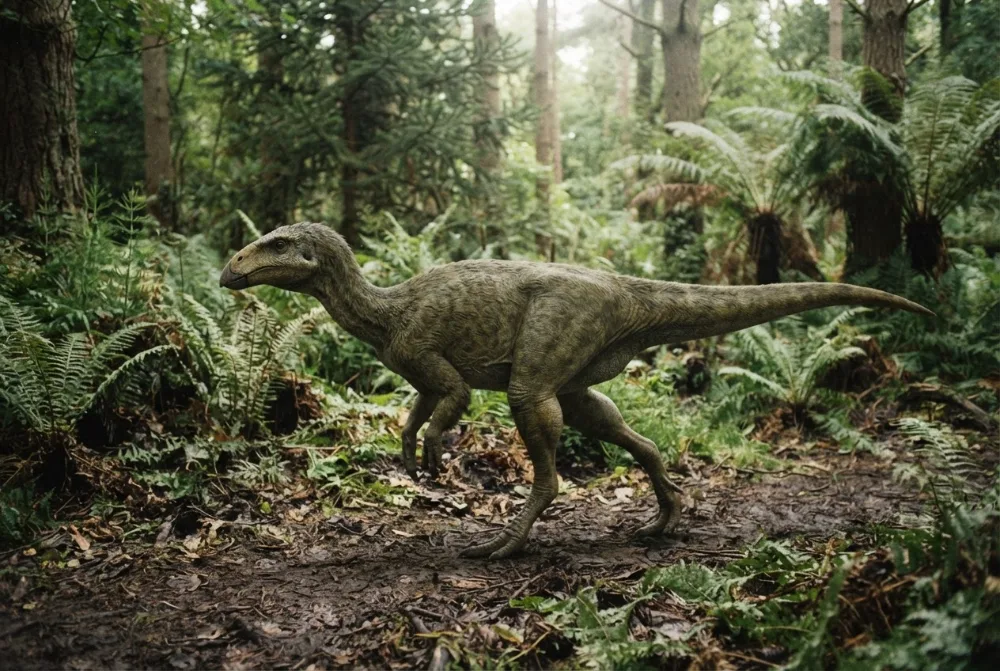
Ibibazo bibazwa cyane kuri Owenodon
?How big was Owenodon?
Scientists do not know for sure, because only a partial lower jaw has been found. It was probably a small ornithopod, but no exact size is known.1
?When did Owenodon live?
Owenodon lived during the Early Cretaceous, about 140 million years ago, in the Berriasian stage.1
?Where was Owenodon found?
The only definite Owenodon fossil was found in Dorset, United Kingdom, in the Lulworth Formation. Some teeth from Romania and Spain may also belong to it.1
Ku bazobereye muri dinozore
- Izina rya siyansi
- Owenodon
- Yiswe na
- Galton 20093
- Itsinda
- Izirya ibimera zifite umunwa w'inyoni
- Umuryango / ishami
- Dryomorpha3
- Ishyirwa mu byiciro
- Ornithischia > Ornithopoda > Iguanodontia3
- Imyaka y'amabuye
- imyaka miliyoni 149 kugeza 137 (Tithonian / Berriasian)3
- Inzego z'amabuye
- Lower Bauxite, Lulworth3
- Ibihugu
- Rumaniya, Ubwongereza3
- Ibisigazwa byanditswe
- 6 muri The Paleobiology Database3
- Ivumburwa
- The fossil was discovered by A.J. Hogg in the Purbeck Limestone of Dorset, England, and described by Richard Owen in 1874 as Iguanodon hoggii. It was given its own genus Owenodon by Peter Galton in 2009.1
- Biracyagibwaho impaka
- Scientists are not sure exactly where Owenodon fits in the ornithopod family tree, because the fossils are so few and incomplete.1
Aho amakuru yakuwe
- Owenodon (en.wikipedia.org)
- Owenodon hoggii | Dinosaur Database by DinoAnimals.com (dinoanimals.com)
- Owenodon in The Paleobiology Database (CC BY 4.0): imyaka, ahantu, inzego z'amabuye, ishyirwa mu byiciro.
Buri kintu kiri kuri uru rupapuro gifite nimero yerekana aho cyakuwe. Niba hari icyo twibeshye, tubabarire, turi abakunzi ba dinozore, ntituri ikinyamakuru cya siyansi. Tubwire kuri [email protected] tuzagikosora.
 Rex arashonje! Dino Wiki ni umushinga wa papa umwe yakoreye umuhungu we ukunda dinozore, ni ubuntu, nta matangazo kandi nta bigukurikirana. Abantu bakuru bashobora guha Rex akantu ko kurya kugira ngo Dino Wiki ikomeze kuboneka kuri interineti.Gaburira Rex
 Iguanodon
 Tenontosaurus
 Thescelosaurus
 Zalmoxes
 Camptosaurus
 Rhabdodon
 Stegosaurus
 Archaeopteryx
 Giganotosaurus
 Microraptor
 Deinonychus
 Baryonyx