 Uri dinozore iyihe? Umukino w'ibibazo
 Intambara ya dinozore
 Isiganwa rya dinozore
 Imikino mito ya dinozore
 Alubumu ya sitikeri
 Intonde za TOP za dinozore
 Ntungura!
Yabayeho ryari?

Yanganaga ite?
Yari ndende ite?
Ubutumburuke bwayo bwanganaga iki?
Yari iremereye ite?
 ndende nk'imbwa 2,5 zikurikiranye🍌ndende nk'imineke 14 ikurikiranye🍉iremereye nk'imbuto 14 za watermelon🧸iremereye nk'abana 4 bo mu ishuri ry'incuke🎒iremereye nk'abanyeshuri 2🏃yashoboraga kwiruka metero 100 mu masegonda 8 (umuntu wihuta kurusha abandi akenera 9,6)
Parksosaurus yanganaga ite ugereranyije NAWE?
Ni imibare gusa ibarirwa muri mushakisha yawe. Nta kintu kibikwa cyangwa cyoherezwa ahandi.
Yihutaga ite?


Utuntu dushimishije
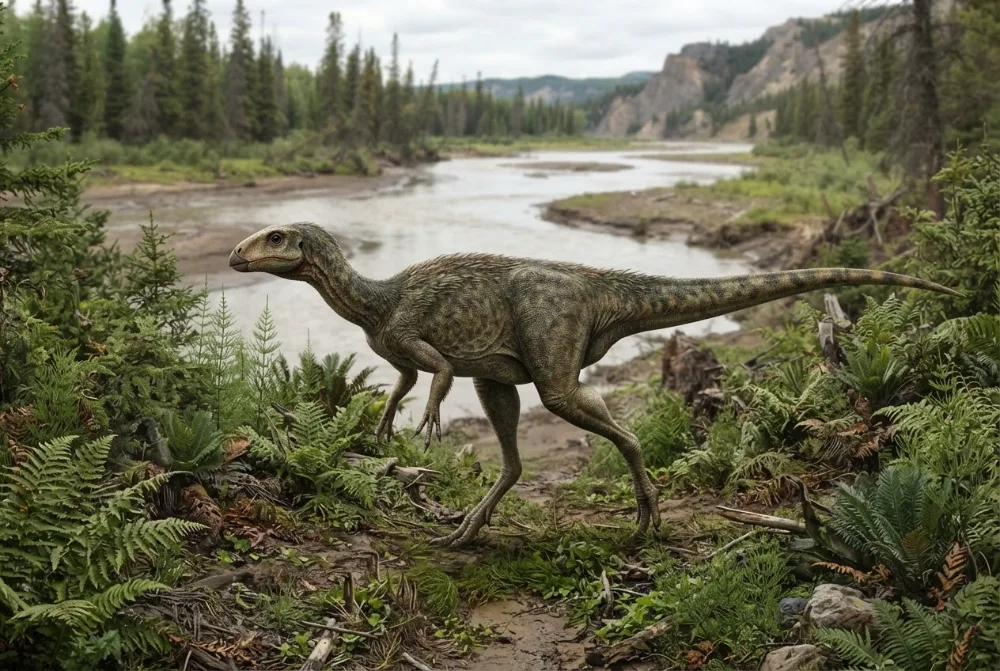
Parksosaurus had a longer shin bone than thigh bone, which helped it run fast.1
Its long toes may have helped it walk on muddy ground near rivers.1
Parksosaurus had strong arms that scientists think it might have used for digging burrows.1
It lived alongside the big meat-eater Albertosaurus and the duck-billed dinosaur Saurolophus.1
Only one partial skeleton of Parksosaurus has been found, including a skull missing the beak.1
The first fossil was discovered in 1922 near the Red Deer River in Alberta, Canada.1
Ibibazo bibazwa cyane kuri Parksosaurus
?How big was Parksosaurus?
It was about 2.5 meters long and weighed around 45 kilograms.1
?When did Parksosaurus live?
Parksosaurus lived during the Late Cretaceous period, about 70 million years ago.12
?Where was Parksosaurus found?
Its fossils were found in Alberta, Canada, in the Horseshoe Canyon Formation.13
?Could Parksosaurus run fast?
Yes, it was a speedy bipedal dinosaur with a longer shin than thigh, which helped it run quickly.1
?Did Parksosaurus have feathers?
The sources do not mention feathers on Parksosaurus, so it is not known if it had them.1
Ku bazobereye muri dinozore
- Izina rya siyansi
- Parksosaurus
- Yiswe na
- Sternberg 19373
- Itsinda
- Izirya ibimera zifite umunwa w'inyoni
- Umuryango / ishami
- Thescelosauridae3
- Ishyirwa mu byiciro
- Ornithischia3
- Imyaka y'amabuye
- imyaka miliyoni 72 kugeza 66 (Maastrichtian)3
- Inzego z'amabuye
- Horseshoe Canyon3
- Ibihugu
- Kanada3
- Ibisigazwa byanditswe
- 3 muri The Paleobiology Database3
- Ivumburwa
- William Parks first described the fossil in 1926 as a species of Thescelosaurus. Charles M. Sternberg gave it its own genus name Parksosaurus in 1937.1
- Biracyagibwaho impaka
- Scientists are not sure how many teeth Parksosaurus had in the upper front part of its mouth.1
Aho amakuru yakuwe
- Parksosaurus (en.wikipedia.org)
- Parksosaurus Fact Sheet (enchantedlearning.com)
- Parksosaurus in The Paleobiology Database (CC BY 4.0): imyaka, ahantu, inzego z'amabuye, ishyirwa mu byiciro.
Buri kintu kiri kuri uru rupapuro gifite nimero yerekana aho cyakuwe. Niba hari icyo twibeshye, tubabarire, turi abakunzi ba dinozore, ntituri ikinyamakuru cya siyansi. Tubwire kuri [email protected] tuzagikosora.
 Rex arashonje! Dino Wiki ni umushinga wa papa umwe yakoreye umuhungu we ukunda dinozore, ni ubuntu, nta matangazo kandi nta bigukurikirana. Abantu bakuru bashobora guha Rex akantu ko kurya kugira ngo Dino Wiki ikomeze kuboneka kuri interineti.Gaburira Rex
 Iguanodon
 Tenontosaurus
 Thescelosaurus
 Zalmoxes
 Camptosaurus
 Rhabdodon
 Tyrannosaurus
 Triceratops
 Velociraptor
 Spinosaurus
 Ankylosaurus
 Parasaurolophus