 Uri dinozore iyihe? Umukino w'ibibazo
 Intambara ya dinozore
 Isiganwa rya dinozore
 Imikino mito ya dinozore
 Alubumu ya sitikeri
 Intonde za TOP za dinozore
 Ntungura!
Yabayeho ryari?

Yanganaga ite?
Yari ndende ite?
Ubutumburuke bwayo bwanganaga iki?
igereranya
Yari iremereye ite?

 ndende nk'imbwa 2,5 zikurikiranye🍌ndende nk'imineke 14 ikurikiranye🍉iremereye nk'imbuto 6 za watermelon🏃yashoboraga kwiruka metero 100 mu masegonda 6,2 (umuntu wihuta kurusha abandi akenera 9,6)
Pelecanimimus yanganaga ite ugereranyije NAWE?
Ni imibare gusa ibarirwa muri mushakisha yawe. Nta kintu kibikwa cyangwa cyoherezwa ahandi.
Yihutaga ite?


Utuntu dushimishije
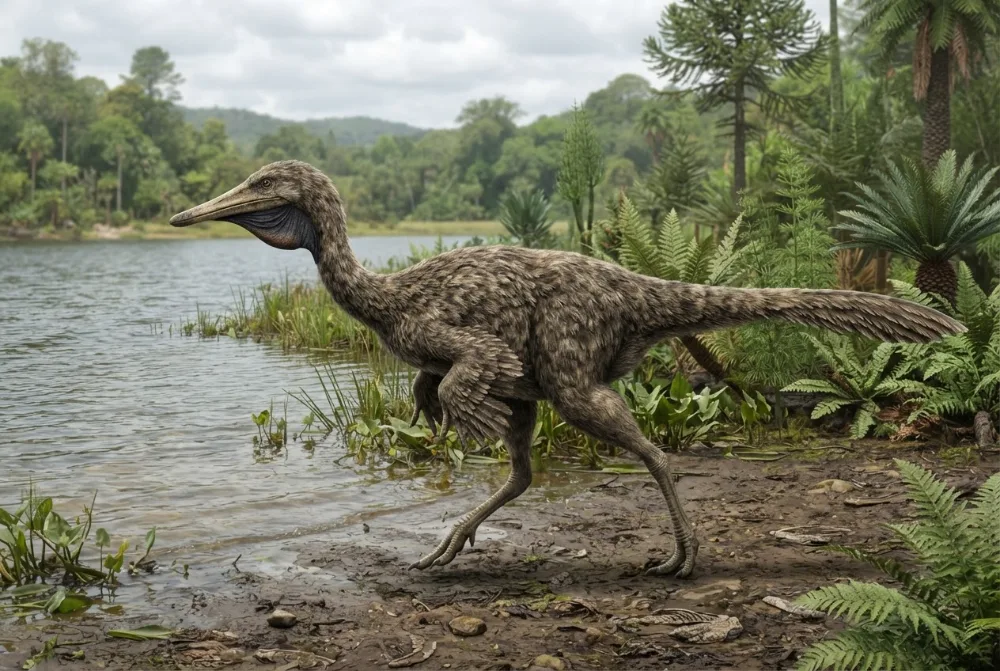
Pelecanimimus had about 220 tiny teeth in its mouth, more than any other meat-eating dinosaur.1
Its teeth were different shapes: front teeth were broad and D-shaped, while back teeth were blade-like.1
It also had a small crest on the back of its head, made of skin or keratin.1
Pelecanimimus lived about 125 million years ago during the Early Cretaceous in what is now Spain.13
Only the front half of one skeleton has been found, but it includes amazing details like skin impressions and throat bones.1
Ibibazo bibazwa cyane kuri Pelecanimimus
?How big was Pelecanimimus?
About 1.9 to 2.5 metres long and weighed 17 to 30 kilograms. That is about as long as a large bicycle.12
?What did Pelecanimimus eat?
It was carnivorous, meaning it ate meat. It probably waded in lakes or ponds to catch fish with its claws and many teeth, storing them in its throat pouch.12
?Did Pelecanimimus have feathers?
No, the preserved skin impressions show wrinkled skin that lacked scales or feathers. Some filament-like structures were once thought to be feathers, but they are now seen as muscle fibers.1
?When did Pelecanimimus live?
It lived during the Early Cretaceous period, about 127 to 121 million years ago.2
Gusenya ibinyoma
Ibivugwa: Some people think Pelecanimimus could fly because of its large chest bones.
Ukuri: Scientists are not sure, but most think it was a ground dinosaur, not a flier.1
Ku bazobereye muri dinozore
- Izina rya siyansi
- Pelecanimimus
- Yiswe na
- Pérez-Moreno et al. 19943
- Itsinda
- Dinozore zisa n'imbuni
- Umuryango / ishami
- Ornithomimosauria3
- Ishyirwa mu byiciro
- Theropoda > Ornithomimosauria3
- Imyaka y'amabuye
- imyaka miliyoni 126 kugeza 121 (Barremian)3
- Inzego z'amabuye
- La Huérguina3
- Ibihugu
- Esipanye3
- Ibisigazwa byanditswe
- 1 muri The Paleobiology Database3
- Ivumburwa
- Armando Díaz Romeral found the first skeleton in 1993 in Spain. Scientists named it Pelecanimimus polyodon in 1994.12
- Biracyagibwaho impaka
- Scientists still debate whether Pelecanimimus could fly or if its large chest muscles were for something else.1
Aho amakuru yakuwe
- Pelecanimimus (en.wikipedia.org)
- Pelecanimimus | Natural History Museum (nhm.ac.uk)
- Pelecanimimus in The Paleobiology Database (CC BY 4.0): imyaka, ahantu, inzego z'amabuye, ishyirwa mu byiciro.
Buri kintu kiri kuri uru rupapuro gifite nimero yerekana aho cyakuwe. Niba hari icyo twibeshye, tubabarire, turi abakunzi ba dinozore, ntituri ikinyamakuru cya siyansi. Tubwire kuri [email protected] tuzagikosora.
 Rex arashonje! Dino Wiki ni umushinga wa papa umwe yakoreye umuhungu we ukunda dinozore, ni ubuntu, nta matangazo kandi nta bigukurikirana. Abantu bakuru bashobora guha Rex akantu ko kurya kugira ngo Dino Wiki ikomeze kuboneka kuri interineti.Gaburira Rex
 Gallimimus
 Ornithomimus
 Struthiomimus
 Deinocheirus
 Dromiceiomimus
 Archaeornithomimus
 Stegosaurus
 Iguanodon
 Archaeopteryx
 Giganotosaurus
 Microraptor
 Deinonychus