 Uri dinozore iyihe? Umukino w'ibibazo
 Intambara ya dinozore
 Isiganwa rya dinozore
 Imikino mito ya dinozore
 Alubumu ya sitikeri
 Intonde za TOP za dinozore
 Ntungura!
Pilmatueia
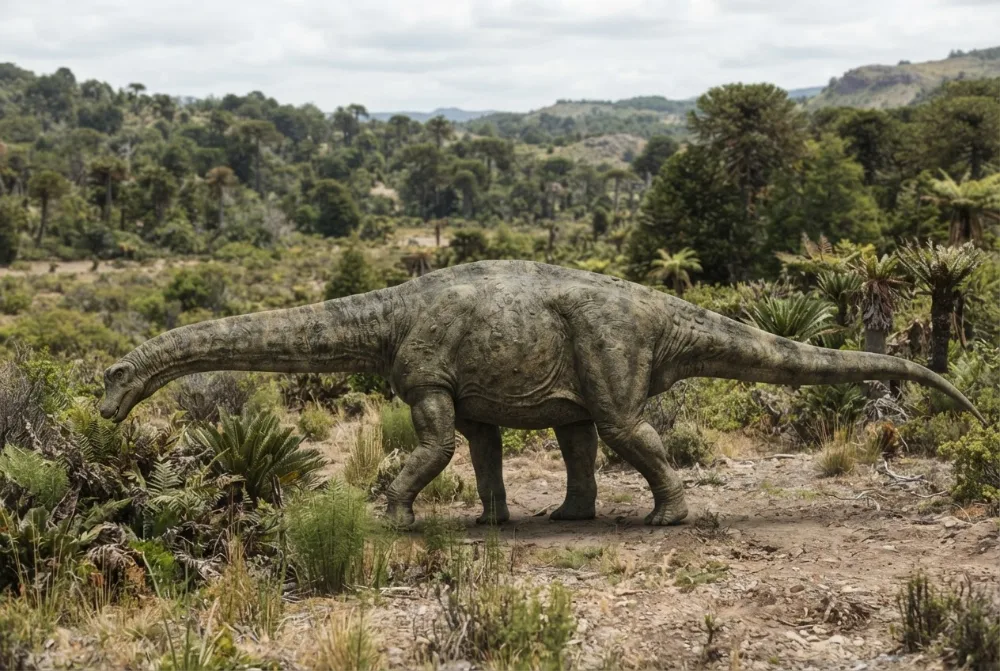
Pilmatueia was a small, long-necked dinosaur that lived in what is now Argentina. It had tall, forked spines on its backbone, like a spiky fence. This plant-eater was a cousin of the famous Amargasaurus.1
Yabayeho ryari?
Yanganaga ite?
Yari ndende ite?
Ubutumburuke bwayo bwanganaga iki?
igereranya
 ndende nk'imodoka 2,5 ziparitse ku murongo🍌ndende nk'imineke 67 ikurikiranye🏃yashoboraga kwiruka metero 100 mu masegonda 19 (umuntu wihuta kurusha abandi akenera 9,6)
Pilmatueia yanganaga ite ugereranyije NAWE?
Ni imibare gusa ibarirwa muri mushakisha yawe. Nta kintu kibikwa cyangwa cyoherezwa ahandi.
Yihutaga ite?


Utuntu dushimishije
Pilmatueia lived during the Valanginian age of the Early Cretaceous, a time when dinosaur fossils are rare.1
Its backbone had air sacs that made the bones lighter, unlike most other dicraeosaurids.1
The forked spines on its neck vertebrae were low compared to its relative Amargasaurus.1
Pilmatueia shared its home with a small meat-eater called Lajasvenator and a type of podocarp tree.1
Its fossils were first dug up in 2009, but the dinosaur was named in 2019.1
Ibibazo bibazwa cyane kuri Pilmatueia
?How big was Pilmatueia?
It was a relatively small sauropod, perhaps less than 12 metres (about 39 feet) long.1
?What did Pilmatueia eat?
It was a plant-eater, like other sauropods.1
?When did Pilmatueia live?
It lived during the Valanginian age of the Early Cretaceous, about 140 to 136 million years ago.1
?Did Pilmatueia have feathers?
No, it was a sauropod dinosaur, and there is no evidence that sauropods had feathers.1
Ku bazobereye muri dinozore
- Izina rya siyansi
- Pilmatueia
- Yiswe na
- Coria et al. 20192
- Itsinda
- Izifite amajosi maremare
- Umuryango / ishami
- Dicraeosauridae2
- Ishyirwa mu byiciro
- Sauropodomorpha > Sauropoda > Diplodocoidea2
- Imyaka y'amabuye
- imyaka miliyoni 137 kugeza 133 (Valanginian)2
- Inzego z'amabuye
- Mulichinco2
- Ibihugu
- Arijantine2
- Ibisigazwa byanditswe
- 1 muri The Paleobiology Database2
- Ivumburwa
- Pilmatueia was named in 2019 by Rodolfo Coria and colleagues. The species name honors Ramón Faúndez, who helped with the excavations.1
- Biracyagibwaho impaka
- Scientists are not sure exactly how Pilmatueia is related to other dicraeosaurids. Some think it is close to Amargasaurus, while others think it is more primitive.1
Aho amakuru yakuwe
- Pilmatueia (en.wikipedia.org)
- Pilmatueia in The Paleobiology Database (CC BY 4.0): imyaka, ahantu, inzego z'amabuye, ishyirwa mu byiciro.
Buri kintu kiri kuri uru rupapuro gifite nimero yerekana aho cyakuwe. Niba hari icyo twibeshye, tubabarire, turi abakunzi ba dinozore, ntituri ikinyamakuru cya siyansi. Tubwire kuri [email protected] tuzagikosora.
 Rex arashonje! Dino Wiki ni umushinga wa papa umwe yakoreye umuhungu we ukunda dinozore, ni ubuntu, nta matangazo kandi nta bigukurikirana. Abantu bakuru bashobora guha Rex akantu ko kurya kugira ngo Dino Wiki ikomeze kuboneka kuri interineti.Gaburira Rex
 Brachiosaurus
 Diplodocus
 Brontosaurus
 Argentinosaurus
 Camarasaurus
 Morosaurus
 Stegosaurus
 Iguanodon
 Archaeopteryx
 Giganotosaurus
 Microraptor
 Deinonychus