 Uri dinozore iyihe? Umukino w'ibibazo
 Intambara ya dinozore
 Isiganwa rya dinozore
 Imikino mito ya dinozore
 Alubumu ya sitikeri
 Intonde za TOP za dinozore
 Ntungura!
Proa
Proa was a plant-eating dinosaur that lived about 112 million years ago in what is now Spain. It had a pointed beak and walked on two legs, but could probably also drop to all fours. It was a relative of the bigger duck-billed dinosaurs.12
Yabayeho ryari?
Yanganaga ite?
Yari ndende ite?
Ubutumburuke bwayo bwanganaga iki?
Yari iremereye ite?
 ndende nk'imbwa 6 zikurikiranye🍌ndende nk'imineke 36 ikurikiranye🍉iremereye nk'imbuto 200 za watermelon🧸iremereye nk'abana 53 bo mu ishuri ry'incuke🎒iremereye nk'abanyeshuri 31🐻❄️iremereye nk'idubu 2 zo mu rubura🏃yashoboraga kwiruka metero 100 mu masegonda 10 (umuntu wihuta kurusha abandi akenera 9,6)
Proa yanganaga ite ugereranyije NAWE?
Ni imibare gusa ibarirwa muri mushakisha yawe. Nta kintu kibikwa cyangwa cyoherezwa ahandi.
Yihutaga ite?


Utuntu dushimishije
Proa's beak bone had a pointed tip with side prongs that stuck out, which is unique among its relatives.1
It lived during the Early Cretaceous, about 112 million years ago, which was a time when many new dinosaur groups were appearing.1
Proa is known from at least three partial skeletons and several skull pieces, so scientists have a good idea of what it looked like.1
It was a basal iguanodont, meaning it was an early relative of the bigger iguanodons and duck-billed dinosaurs.3
Proa helps fill a gap in the fossil record of European iguanodonts, which was missing for millions of years.3
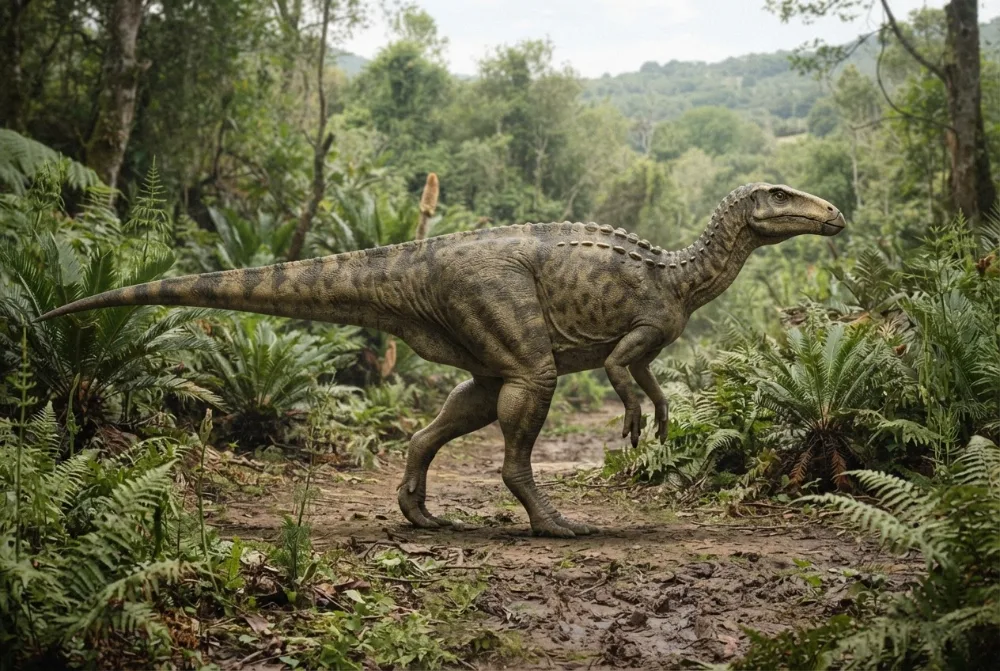
Ku bazobereye muri dinozore
- Izina rya siyansi
- Proa
- Yiswe na
- McDonald et al. 20124
- Itsinda
- Izirya ibimera zifite umunwa w'inyoni
- Umuryango / ishami
- Hadrosauriformes4
- Ishyirwa mu byiciro
- Ornithischia > Ornithopoda > Iguanodontia4
- Imyaka y'amabuye
- imyaka miliyoni 113 kugeza 110 (Albian)4
- Inzego z'amabuye
- Escucha4
- Ibihugu
- Esipanye4
- Ibisigazwa byanditswe
- 1 muri The Paleobiology Database4
- Ivumburwa
- Proa was named by Andrew T. McDonald and colleagues in 2012, based on fossils from coal mines near Val de Ariño in Spain.1
- Biracyagibwaho impaka
- Scientists are still debating exactly where Proa sits on the dinosaur family tree, with some placing it close to Iguanodon and others with Asian relatives.1
Aho amakuru yakuwe
- Proa valdearinnoensis (en.wikipedia.org)
- PBDB Taxon (paleobiodb.org)
- An unusual new basal iguanodont (Dinosauria: Ornithopoda) from the Lower Cretaceous of Teruel, Spain | Zootaxa (mapress.com)
- Proa in The Paleobiology Database (CC BY 4.0): imyaka, ahantu, inzego z'amabuye, ishyirwa mu byiciro.
Buri kintu kiri kuri uru rupapuro gifite nimero yerekana aho cyakuwe. Niba hari icyo twibeshye, tubabarire, turi abakunzi ba dinozore, ntituri ikinyamakuru cya siyansi. Tubwire kuri [email protected] tuzagikosora.
 Rex arashonje! Dino Wiki ni umushinga wa papa umwe yakoreye umuhungu we ukunda dinozore, ni ubuntu, nta matangazo kandi nta bigukurikirana. Abantu bakuru bashobora guha Rex akantu ko kurya kugira ngo Dino Wiki ikomeze kuboneka kuri interineti.Gaburira Rex
 Iguanodon
 Tenontosaurus
 Thescelosaurus
 Zalmoxes
 Camptosaurus
 Rhabdodon
 Stegosaurus
 Archaeopteryx
 Giganotosaurus
 Microraptor
 Deinonychus
 Baryonyx