 Uri dinozore iyihe? Umukino w'ibibazo
 Intambara ya dinozore
 Isiganwa rya dinozore
 Imikino mito ya dinozore
 Alubumu ya sitikeri
 Intonde za TOP za dinozore
 Ntungura!
Scansoriopteryx
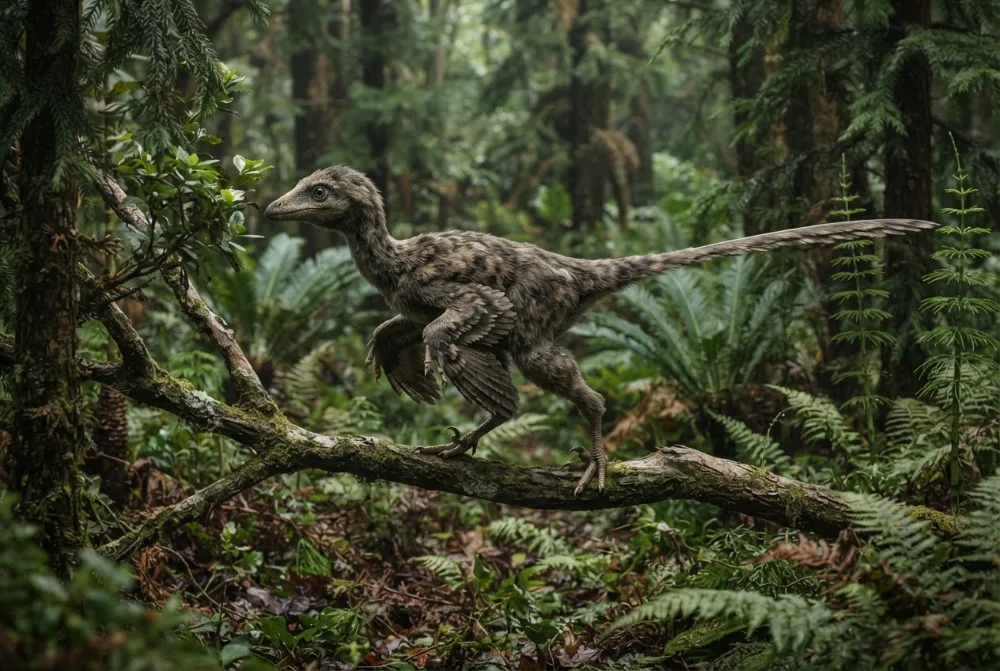
Scansoriopteryx was a tiny, sparrow-sized dinosaur that lived in trees. It had a super long third finger that may have helped it glide from branch to branch. This little dinosaur was covered in fluffy, down-like feathers.1
Yabayeho ryari?
Yihutaga ite?


Utuntu dushimishije
Scansoriopteryx had a very unusual hand: its third finger was nearly twice as long as its second finger, unlike most other meat-eating dinosaurs.1
Its long third finger may have supported a membrane like a bat's wing, helping it glide between trees.1
The only known fossil is a baby, so scientists are not sure how big a full-grown Scansoriopteryx was.1
Scansoriopteryx had a backward-pointing toe, like modern birds, which helped it grip branches tightly.1
Its tail was short and stiff, and may have been used as a prop when climbing, like a woodpecker's tail.1
The name Scansoriopteryx means 'climbing wing', because scientists think it was a tree-climber that could glide.1
Ibibazo bibazwa cyane kuri Scansoriopteryx
?How big was Scansoriopteryx?
The only known fossil is a baby, so scientists are not sure how big a full-grown Scansoriopteryx was. The baby was about the size of a sparrow.1
?Did Scansoriopteryx have feathers?
Yes. The type specimen of Scansoriopteryx contains fossilized impressions of wispy, down-like feathers, especially on the forearm and hand.1
?Could Scansoriopteryx fly?
No, it could not fly. Scientists think it could only leap or glide from branch to branch using its long fingers and feathers.1
?What did Scansoriopteryx eat?
Nobody knows for sure. It had at least twelve teeth in its lower jaw, so it probably ate small animals or insects.1
?When did Scansoriopteryx live?
Scansoriopteryx lived during the mid to late Jurassic Period, about 160 million years ago.1
?Why did Scansoriopteryx have a long finger?
Its third finger was nearly twice as long as the second finger. It may have supported a membranous wing, like a bat's, to help it glide between trees.1
Gusenya ibinyoma
Ibivugwa: Some people think Scansoriopteryx could fly like a bird.
Ukuri: Scansoriopteryx probably could not fly. It may have glided short distances using its long fingers and feathers, but it did not have powered flight.1
Ku bazobereye muri dinozore
- Izina rya siyansi
- Scansoriopteryx
- Yiswe na
- Czerkas and Yuan 20023
- Itsinda
- Dinozore zirya inyama
- Umuryango / ishami
- Scansoriopterygidae3
- Ishyirwa mu byiciro
- Theropoda3
- Imyaka y'amabuye
- imyaka miliyoni 126 kugeza 120 (Barremian / Aptian)3
- Inzego z'amabuye
- Yixian3
- Ibihugu
- Ubushinwa3
- Ibisigazwa byanditswe
- 1 muri The Paleobiology Database3
- Ivumburwa
- Scansoriopteryx was named in 2002 by Stephen Czerkas and Yuan Chongxi. The only fossil was bought from a dealer and likely came from the Yixian Formation in Liaoning, China.1
- Biracyagibwaho impaka
- Scientists debate whether Scansoriopteryx is the same animal as another dinosaur called Epidendrosaurus. They are very similar, and both may be the same species.1
Aho amakuru yakuwe
- Scansoriopteryx (en.wikipedia.org)
- PBDB Taxon (paleobiodb.org)
- Scansoriopteryx in The Paleobiology Database (CC BY 4.0): imyaka, ahantu, inzego z'amabuye, ishyirwa mu byiciro.
Buri kintu kiri kuri uru rupapuro gifite nimero yerekana aho cyakuwe. Niba hari icyo twibeshye, tubabarire, turi abakunzi ba dinozore, ntituri ikinyamakuru cya siyansi. Tubwire kuri [email protected] tuzagikosora.
 Rex arashonje! Dino Wiki ni umushinga wa papa umwe yakoreye umuhungu we ukunda dinozore, ni ubuntu, nta matangazo kandi nta bigukurikirana. Abantu bakuru bashobora guha Rex akantu ko kurya kugira ngo Dino Wiki ikomeze kuboneka kuri interineti.Gaburira Rex
 Allosaurus
 Carnotaurus
 Dilophosaurus
 Giganotosaurus
 Compsognathus
 Paronychodon
 Stegosaurus
 Iguanodon
 Archaeopteryx
 Microraptor
 Deinonychus
 Baryonyx