 Uri dinozore iyihe? Umukino w'ibibazo
 Intambara ya dinozore
 Isiganwa rya dinozore
 Imikino mito ya dinozore
 Alubumu ya sitikeri
 Intonde za TOP za dinozore
 Ntungura!
Sciurumimus
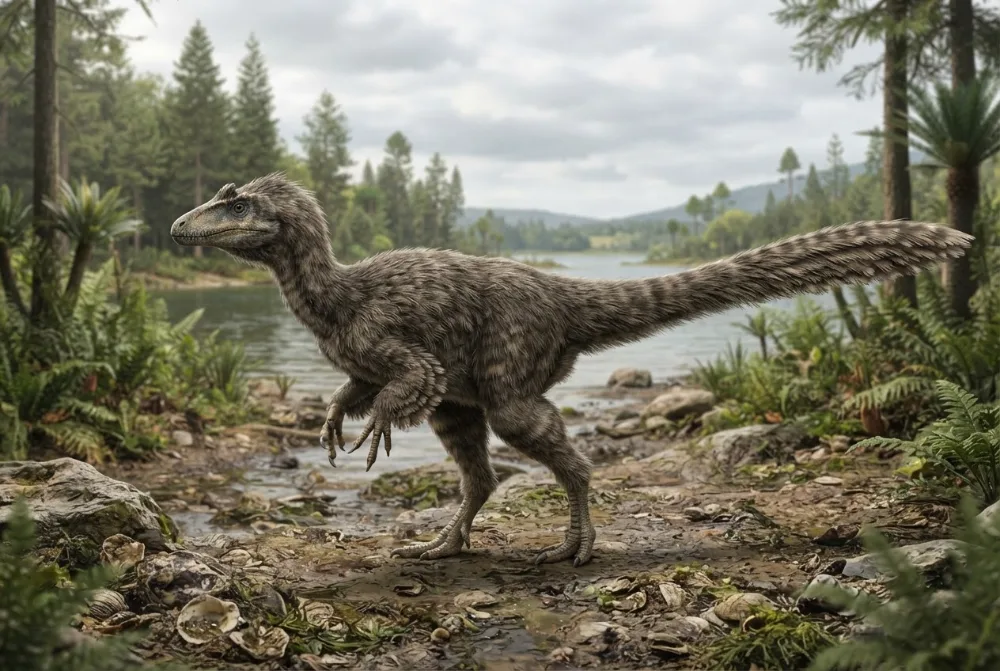
Sciurumimus was a small meat-eating dinosaur that lived in what is now Germany. It looked a bit like a tiny squirrel because it had a long, fluffy tail. Even though it was a young dinosaur, it was already a fast hunter.1
Yabayeho ryari?
Yanganaga ite?
Yari ndende ite?
Ubutumburuke bwayo bwanganaga iki?
igereranya
Sciurumimus yanganaga ite ugereranyije NAWE?
Ni imibare gusa ibarirwa muri mushakisha yawe. Nta kintu kibikwa cyangwa cyoherezwa ahandi.
Yihutaga ite?


Utuntu dushimishije
Sciurumimus is known from just one beautifully preserved baby skeleton.1
Its tail had long, fuzzy filaments that looked like a squirrel's tail, which is how it got its name.1
The fossil even shows some muscle tissue along the back of its leg.1
Sciurumimus had big eyes and a large head compared to its body, like a baby animal.1
Scientists are not sure where Sciurumimus belongs on the dinosaur family tree. Some say it is a megalosauroid, others think it is a coelurosaur.1
Ibibazo bibazwa cyane kuri Sciurumimus
?How big was Sciurumimus?
The only known fossil is a baby about 70 cm (2.3 ft) long. Adults probably reached 6 metres (19.7 ft) or more.2
?Did Sciurumimus have feathers?
Yes. The fossil shows long, hair-like filaments on the tail and body that are identical to stage 1 feathers found in other dinosaurs.13
?What did Sciurumimus eat?
The baby probably ate insects and other small prey, based on its slender, pointed teeth. Adults likely hunted larger dinosaurs.2
?Is Sciurumimus a dinosaur?
Yes, it is a theropod dinosaur, a meat-eater that lived about 150 million years ago in what is now Germany.1
?Why is it called Sciurumimus?
Its name means 'squirrel mimic' because its fluffy tail looks like a tree squirrel's tail.1
?How fast could Sciurumimus run?
Scientists do not know its exact speed, but as a small, fast hunter it was probably quick on its feet.1
Gusenya ibinyoma
Ibivugwa: Because it had feathery filaments, Sciurumimus was a bird-like dinosaur.
Ukuri: Sciurumimus was a meat-eating theropod dinosaur, not a bird, and its filaments were simple stage 1 feathers similar to those found in some ornithischian dinosaurs and early tyrannosaurs.1
Ku bazobereye muri dinozore
- Izina rya siyansi
- Sciurumimus
- Yiswe na
- Rauhut et al. 20124
- Itsinda
- Dinozore zirya inyama
- Umuryango / ishami
- Megalosauroidea4
- Ishyirwa mu byiciro
- Theropoda4
- Imyaka y'amabuye
- imyaka miliyoni 152 kugeza 149 (Kimmeridgian)4
- Inzego z'amabuye
- Torleite4
- Ibihugu
- Ubudage4
- Ibisigazwa byanditswe
- 1 muri The Paleobiology Database4
- Ivumburwa
- The first and only Sciurumimus fossil was found in a limestone quarry near Painten, Germany, and named by scientists Rauhut, Foth, Tischlinger, and Norell in 2012.14
- Biracyagibwaho impaka
- Scientists still debate whether Sciurumimus is a basal megalosauroid or a coelurosaur, because its only known skeleton is from a very young animal, making its adult features hard to guess.1
Aho amakuru yakuwe
- Sciurumimus (en.wikipedia.org)
- A new, juvenile predatory dinosaur from Bavaria (snsb.de)
- Exceptionally preserved juvenile megalosauroid theropod ... (pubmed.ncbi.nlm.nih.gov)
- Sciurumimus in The Paleobiology Database (CC BY 4.0): imyaka, ahantu, inzego z'amabuye, ishyirwa mu byiciro.
Buri kintu kiri kuri uru rupapuro gifite nimero yerekana aho cyakuwe. Niba hari icyo twibeshye, tubabarire, turi abakunzi ba dinozore, ntituri ikinyamakuru cya siyansi. Tubwire kuri [email protected] tuzagikosora.
 Rex arashonje! Dino Wiki ni umushinga wa papa umwe yakoreye umuhungu we ukunda dinozore, ni ubuntu, nta matangazo kandi nta bigukurikirana. Abantu bakuru bashobora guha Rex akantu ko kurya kugira ngo Dino Wiki ikomeze kuboneka kuri interineti.Gaburira Rex
 Allosaurus
 Carnotaurus
 Dilophosaurus
 Giganotosaurus
 Compsognathus
 Paronychodon
 Brachiosaurus
 Diplodocus
 Brontosaurus
 Camarasaurus
 Morosaurus
 Apatosaurus