 Uri dinozore iyihe? Umukino w'ibibazo
 Intambara ya dinozore
 Isiganwa rya dinozore
 Imikino mito ya dinozore
 Alubumu ya sitikeri
 Intonde za TOP za dinozore
 Ntungura!
Serikornis
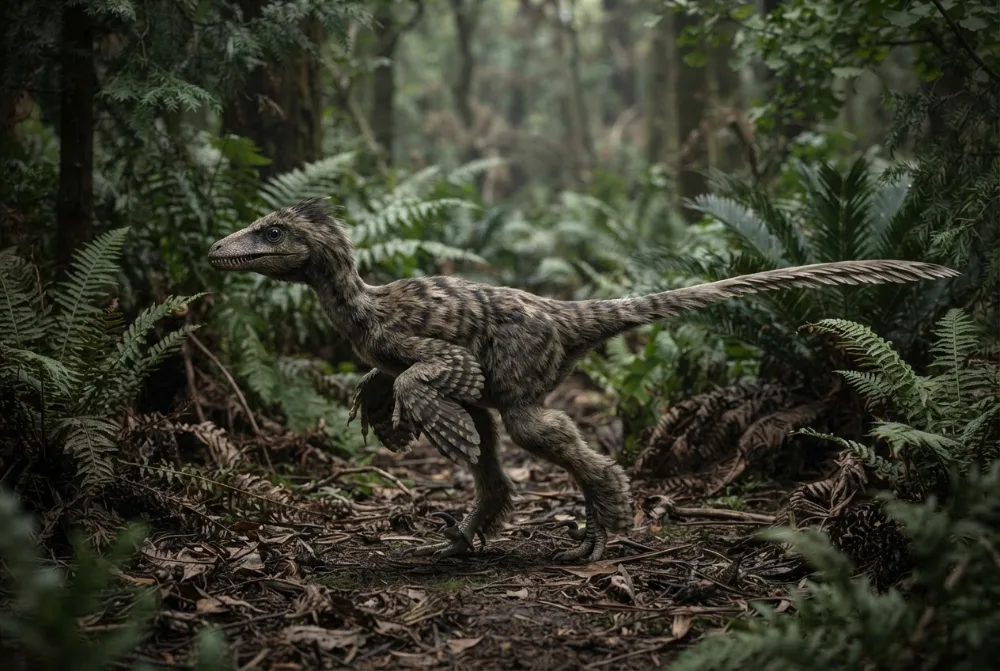
Serikornis was a small, feathered dinosaur that lived about 160 million years ago. It had long feathers on its arms and legs, but it couldn't fly. Instead, it probably used its feathers for display or to help it run.1
Yabayeho ryari?
Yanganaga ite?
Yari ndende ite?
Ubutumburuke bwayo bwanganaga iki?
igereranya
Serikornis yanganaga ite ugereranyije NAWE?
Ni imibare gusa ibarirwa muri mushakisha yawe. Nta kintu kibikwa cyangwa cyoherezwa ahandi.
Yihutaga ite?


Utuntu dushimishije
The name Serikornis means 'silken bird' because of its beautiful, feathery coat.1
It had long feathers on its hind legs all the way down to its toes, which is unusual for a ground-dwelling dinosaur.1
The feathers on its arms were symmetrical and didn't have tiny hooks called barbules, so they weren't good for flying.1
Serikornis lived during the Late Jurassic period, about 161 to 155 million years ago.2
Scientists think Serikornis was a ground-dwelling dinosaur that did not climb trees or fly.1
Ibibazo bibazwa cyane kuri Serikornis
?How big was Serikornis?
About 45 cm (1.5 feet) long, about the size of a pheasant.3
?Could Serikornis fly?
No, it could not fly. Its feathers lacked tiny hooks called barbules, so they couldn't hold air for flight.31
?What did Serikornis eat?
It was a meat-eating theropod dinosaur, so it likely ate small animals like insects or lizards.4
Gusenya ibinyoma
Ibivugwa: Serikornis was a flying dinosaur with four wings.
Ukuri: Serikornis had long feathers on its legs and arms, but it could not fly and probably lived on the ground.1
Ku bazobereye muri dinozore
- Izina rya siyansi
- Serikornis
- Yiswe na
- Lefèvre et al. 20175
- Itsinda
- Dinozore zirya inyama
- Umuryango / ishami
- Paraves5
- Ishyirwa mu byiciro
- Theropoda5
- Imyaka y'amabuye
- imyaka miliyoni 162 kugeza 155 (Oxfordian)5
- Inzego z'amabuye
- Tiaojishan5
- Ibihugu
- Ubushinwa5
- Ibisigazwa byanditswe
- 1 muri The Paleobiology Database5
- Ivumburwa
- Serikornis was named in 2017 by a team of scientists including Ulysse Lefèvre and Andrea Cau. The only fossil was found in the Tiaojishan Formation of Liaoning, China.15
- Biracyagibwaho impaka
- Scientists are still debating whether Serikornis is a very early bird relative or a more primitive dinosaur, and exactly how its feathers evolved.1
Aho amakuru yakuwe
- A new Jurassic theropod from China documents a transitional step in the macrostructure of feathers (pubmed.ncbi.nlm.nih.gov)
- PBDB Taxon (paleobiodb.org)
- New Feathered Dinosaur Had Four Wings but Couldn't Fly | National Geographic (nationalgeographic.com)
- Serikornis (en.wikipedia.org)
- Serikornis in The Paleobiology Database (CC BY 4.0): imyaka, ahantu, inzego z'amabuye, ishyirwa mu byiciro.
Buri kintu kiri kuri uru rupapuro gifite nimero yerekana aho cyakuwe. Niba hari icyo twibeshye, tubabarire, turi abakunzi ba dinozore, ntituri ikinyamakuru cya siyansi. Tubwire kuri [email protected] tuzagikosora.
 Rex arashonje! Dino Wiki ni umushinga wa papa umwe yakoreye umuhungu we ukunda dinozore, ni ubuntu, nta matangazo kandi nta bigukurikirana. Abantu bakuru bashobora guha Rex akantu ko kurya kugira ngo Dino Wiki ikomeze kuboneka kuri interineti.Gaburira Rex
 Allosaurus
 Carnotaurus
 Dilophosaurus
 Giganotosaurus
 Compsognathus
 Paronychodon
 Brachiosaurus
 Diplodocus
 Brontosaurus
 Camarasaurus
 Morosaurus
 Apatosaurus