 Uri dinozore iyihe? Umukino w'ibibazo
 Intambara ya dinozore
 Isiganwa rya dinozore
 Imikino mito ya dinozore
 Alubumu ya sitikeri
 Intonde za TOP za dinozore
 Ntungura!
Shenqiornis
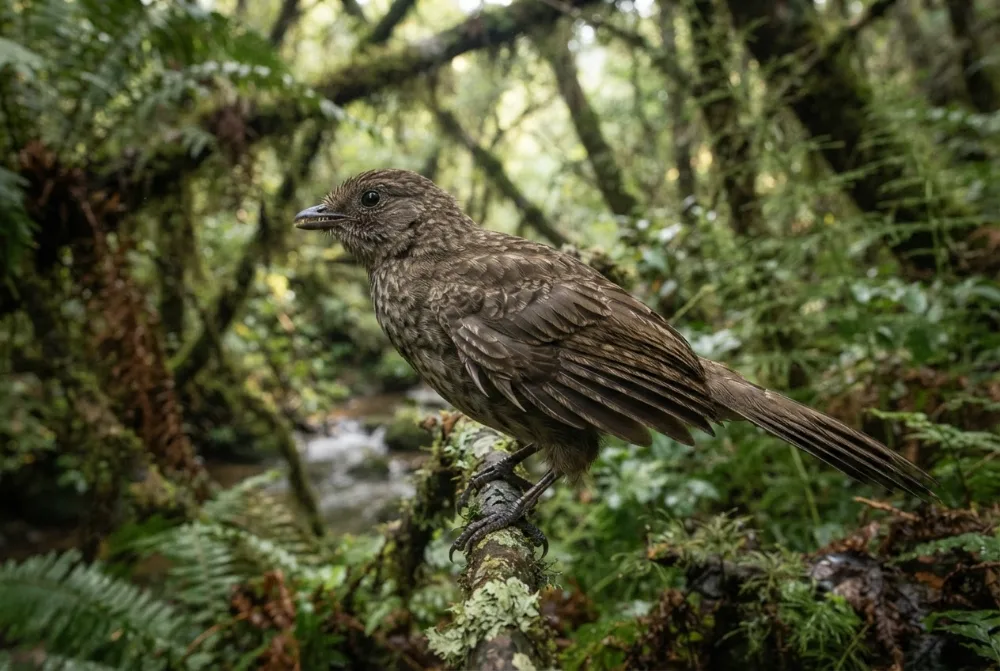
Shenqiornis was a small, toothed bird that lived in what is now China. It had a strong beak and sharp teeth, and it probably hunted insects and other small animals. Its skull was built like a reptile's, with two openings behind the eye.13
Yabayeho ryari?
Yihutaga ite?


Utuntu dushimishije
Shenqiornis is known from a nearly complete skeleton with carbonized feather traces, found in China.2
It belonged to a group of ancient birds called enantiornithines, which had teeth and clawed wings.1
Shenqiornis had a large postorbital bone with a long, tapering jugal process, meaning its skull might have been fully diapsid (with two openings behind each eye) like some early birds.1
Its tooth shape is unique among enantiornithines and suggests it had a special diet, possibly eating different prey than its relatives.1
The fossils were found in rocks that are between about 161 and 121 million years old, from the Late Jurassic to the Early Cretaceous.2
Ku bazobereye muri dinozore
- Izina rya siyansi
- Shenqiornis
- Yiswe na
- Wang et al. 20103
- Itsinda
- Inyoni za mbere
- Umuryango / ishami
- Bohaiornithidae3
- Ishyirwa mu byiciro
- Theropoda > Avialae3
- Imyaka y'amabuye
- imyaka miliyoni 162 kugeza 121 (Oxfordian / Barremian)3
- Inzego z'amabuye
- Qiaotou3
- Ibihugu
- Ubushinwa3
- Ibisigazwa byanditswe
- 1 muri The Paleobiology Database3
- Ivumburwa
- Shenqiornis was named by Xuri Wang and colleagues in 2010. The type specimen, a nearly complete skeleton with feather traces, was found at Shenjitu in the Qiaotou Formation of northern Hebei, China.31
- Biracyagibwaho impaka
- Scientists are not sure exactly what Shenqiornis ate. Its unusual teeth hint at a special diet, but no one knows for sure what that was.1
Aho amakuru yakuwe
- New Species of Enantiornithes (Aves: Ornithothoraces) from the Qiaotou Formation in Northern Hebei, China (onlinelibrary.wiley.com)
- paleobiodb.org (paleobiodb.org)
- Shenqiornis in The Paleobiology Database (CC BY 4.0): imyaka, ahantu, inzego z'amabuye, ishyirwa mu byiciro.
Buri kintu kiri kuri uru rupapuro gifite nimero yerekana aho cyakuwe. Niba hari icyo twibeshye, tubabarire, turi abakunzi ba dinozore, ntituri ikinyamakuru cya siyansi. Tubwire kuri [email protected] tuzagikosora.
 Rex arashonje! Dino Wiki ni umushinga wa papa umwe yakoreye umuhungu we ukunda dinozore, ni ubuntu, nta matangazo kandi nta bigukurikirana. Abantu bakuru bashobora guha Rex akantu ko kurya kugira ngo Dino Wiki ikomeze kuboneka kuri interineti.Gaburira Rex
 Archaeopteryx
 Hesperornis
 Ichthyornis
 Baptornis
 Jurapteryx
 Gobipteryx
 Stegosaurus
 Iguanodon
 Giganotosaurus
 Microraptor
 Deinonychus
 Baryonyx